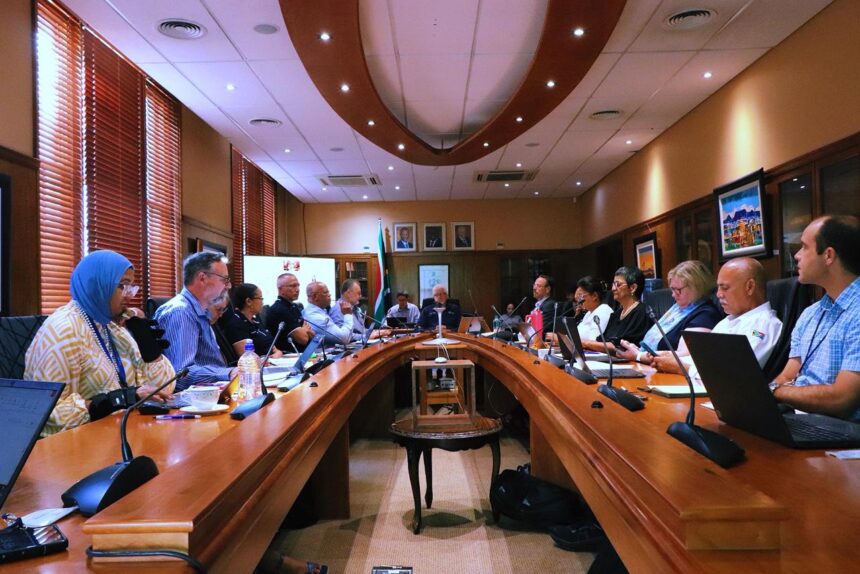
From global conflict to livestock disease and growing pressure on water infrastructure, the Western Cape is facing a range of threats that could impact everything from food supply to emergency services. This week, provincial leaders gathered behind closed doors in Cape Town to test contingency plans, review progress, and ensure the province remains ready should any of those risks become reality.
Alan Winde has moved to strengthen the province’s readiness against multiple emerging risks after chairing an extended Premier’s Coordinating Forum in Cape Town this week, bringing together provincial departments, municipal leaders, agricultural stakeholders, and emergency management officials.
The high-level meeting, held on Tuesday, formed part of the Western Cape Government’s regular strategic planning cycle and focused on three key areas currently under close monitoring, fuel supply security, Foot-and-Mouth Disease containment, and long-term water resilience.
The extended forum works closely with the province’s multi-hazard Joint Operations Centre, coordinated by the Provincial Disaster Management Centre, which continues to track domestic and international developments that could affect the province’s economy, food systems, transport networks, and public services.
One of the main areas under review was fuel security.
With continued instability in the Middle East raising global concerns over supply routes and oil markets, the forum reviewed contingency plans designed to protect the Western Cape should disruptions affect South Africa’s fuel chain.
Provincial officials confirmed that no fuel shortages have affected the Western Cape, but emergency planning remains active.
Preparedness measures include clear coordination between government departments, emergency services, healthcare facilities, transport operators, and food distribution networks to ensure essential services can continue if market conditions change.
Premier Winde said, “While there have not been any disruptions to the Western Cape’s fuel supplies, we cannot let our guard down. Through the good work of our Provincial Disaster Management Centre, I am confident we have the best plan in place should this situation change.”
Agriculture also featured prominently during the meeting.
Officials reported encouraging progress in the province’s response to Foot-and-Mouth Disease, with no new cases recorded in the past thirty-nine days, suggesting that containment measures may be stabilising the outbreak.
The province’s twenty-one-point response plan remains active, with a total of one hundred and sixty-four thousand, four hundred and twenty-five vaccine doses administered across seven hundred and fifty-six sites.
An additional one hundred and fifty thousand vaccine doses are expected to arrive in the coming days to strengthen immunity in vulnerable farming regions.
Water security formed the third major focus.
Recent rainfall has pushed average dam storage across the province to forty-four point two seven percent, an increase of around two percent, while infrastructure interventions, including sediment removal projects in partnership with national authorities, continue to expand long-term storage capacity.
Premier Winde said the province’s coordinated planning approach is not only addressing immediate risks, but building long-term resilience to protect residents, agriculture, the economy, and essential services across the Western Cape.
Source: Western Cape Government – Media Release.