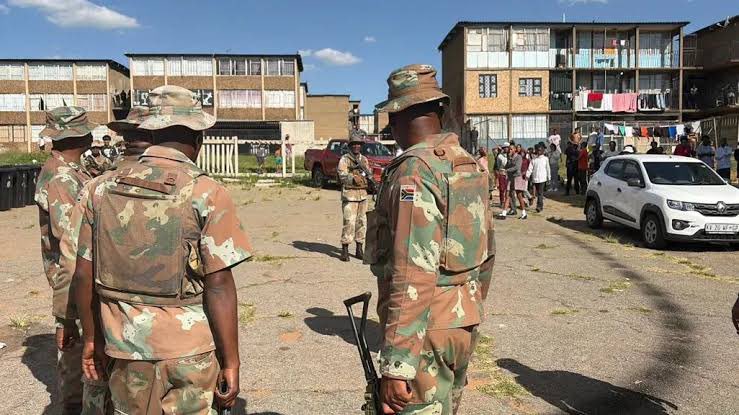
For months, the sight of armoured vehicles, camouflage uniforms, and heavily armed soldiers moving through the narrow streets of the Cape Flats has become part of daily life for thousands of Capetonians. For some families, it initially brought a sense of comfort. For others, it offered hope that years of gang violence, turf wars, and nightly gunfire might finally begin to ease. But as fresh shootings continue to surface across multiple hotspot areas, a difficult question is now being asked in homes, schools, and community halls across the Flats, if the army is here, why are the bullets still flying?
The deployment of the South African National Defence Force across gang-affected communities in Cape Town was intended to send a strong message, that the state was prepared to reclaim neighbourhoods that for years have been caught in the grip of organised crime.
Military personnel were deployed alongside police in some of the province’s most violence-stricken communities, including Manenberg (Mah-nen-berg), Hanover Park (Han-over Park), Bishop Lavis (Bishop Lah-vis), and several surrounding areas where gang-related shootings, extortion, and drug trafficking have shaped daily life for decades.
In the early weeks of the operation, many residents welcomed the increased visibility. Community leaders spoke of quieter evenings, children spending more time outdoors, and local businesses experiencing a brief sense of normality. For neighbourhoods long defined by fear, even temporary calm was seen as progress.
That early optimism, however, has come under growing pressure.
Despite the continued presence of soldiers on the ground, violent incidents have continued to be reported across several parts of the Cape Flats in recent weeks. Community groups say gunfire, intimidation, and gang movement have not disappeared, but in some cases have simply shifted to different streets, different corners, and different times of the day.
Alan Winde has again voiced concern over the continued violence, warning that communities cannot be expected to live under constant fear while criminal networks continue operating in broad daylight. The Western Cape Government has repeatedly called for stronger intelligence-led policing, faster prosecution of gang leaders, and a long-term crime strategy focused on dismantling criminal structures rather than relying only on short-term deployments.
Security analysts have echoed similar concerns. While military deployments can create an immediate visible deterrent, several experts have warned that soldiers are not designed to replace specialised detectives, anti-gang investigators, witness protection programmes, or the prosecutorial systems needed to secure lasting convictions.
Community organisations working on the Cape Flats have also warned against confusing visibility with victory. For families who still hear gunshots after sunset, who still rush children indoors when vehicles slow outside, and who still sleep behind multiple locks, the true measure of success is not whether soldiers can be seen on patrol.
It is whether communities are genuinely becoming safer.
As winter approaches and daylight hours grow shorter across the Cape Flats, pressure on both national and provincial leaders is only expected to intensify, with many Capetonians now demanding not just presence, but measurable results.
Source: Eyewitness News – Staff Reporter.