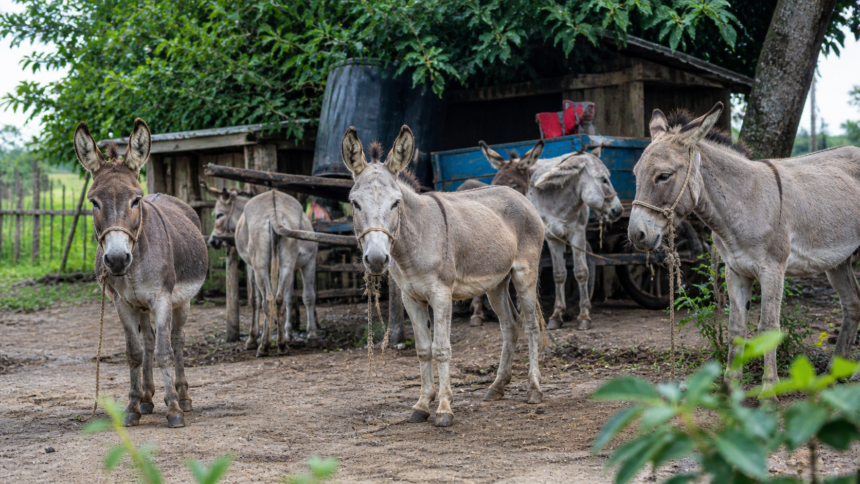
Hidden behind South Africa’s agricultural regulations is a trade many believed had already been outlawed. While much of Africa has moved to shut down the commercial slaughter of donkeys for their skins, new evidence shows South Africa remains one of the continent’s last legal exporters, and Western Cape animal welfare campaigners now say the price is being paid by some of the country’s most vulnerable animals.
South Africa’s continued legal slaughter of donkeys has come under renewed scrutiny after Karoo Donkey Sanctuary launched an urgent campaign calling for an outright national ban.
Based in De Rust in the Klein Karoo, the sanctuary has joined a growing coalition of animal welfare organisations warning that South Africa’s current regulatory system is failing to protect donkeys, despite the African Union adopting a fifteen-year moratorium in February 2024 aimed at ending the commercial donkey skin trade across Africa.
The moratorium, while historic, required individual member states to incorporate the ban into domestic legislation before it could become enforceable. South Africa chose a different path.
According to a new investigation by Brooke, South Africa currently operates under what is described as a “controlled export model,” legally allowing the export of up to 10,500 donkey hides every year. The report places South Africa alongside Egypt as one of the last African nations still permitting regulated commercial trade in donkey skins.
Public outrage intensified earlier this month after inspectors from the National Council of SPCAs uncovered nearly 180 starving donkeys at the Brievo equine abattoir in Schweizer-Reneke in North West Province.
According to the NSPCA, many of the animals were unable to stand, visibly emaciated, injured, and heavily infested with parasites. Several donkeys had to be humanely euthanised on site due to their condition, while criminal charges have reportedly been prepared against the owner and management of the facility.
Jonno Sherwin, founder of Karoo Donkey Sanctuary, says the case exposes major weaknesses in South Africa’s legal framework.
He argues that while donkey slaughter itself remains legal, the country still lacks legislation specifically targeting the international donkey skin trade, forcing authorities to rely largely on the Animals Protection Act of 1962 when pursuing cruelty or neglect cases.
Brooke’s wider African investigation paints an increasingly concerning picture. Between 2012 and 2020, the organisation estimates that roughly four million donkeys were slaughtered annually to meet demand for ejiao, a gelatin product derived from donkey hides and widely used in Chinese traditional medicine and cosmetic products.
In some regions of Africa, donkey populations have already declined by 40 to 60 percent since 2016. On page four of the report, researchers warn that Africa’s total donkey population could fall to just 14 million by 2040 if illegal and regulated trade continues at current levels.
Animal welfare groups are now calling on Agriculture Minister John Steenhuisen to align South Africa with the African Union’s position by moving beyond quotas and implementing a full domestic ban.
Campaigners have launched a public petition and are urging South Africans to contact the Department of Agriculture directly as pressure mounts on government to close what activists describe as one of the country’s last major loopholes in animal welfare protection.
Source: Karoo Donkey Sanctuary – Media Release / Brooke – Policy Report / NSPCA.