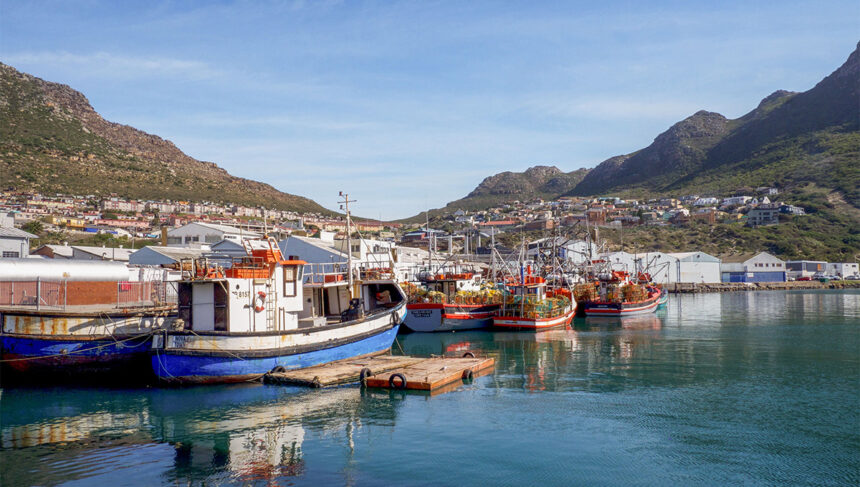
For generations, Hout Bay’s working harbour has been defined by fishing boats, salty air, and the daily rhythm of a community built around the sea. But behind the weathered quays, industrial sheds, and busy slipways, a very different conversation is now taking shape, one that could reshape not only the future of the harbour itself, but potentially one of Cape Town’s most recognisable coastal communities.
What has long been regarded as one of Cape Town’s most underutilised waterfront assets may soon find itself at the centre of one of the city’s most closely watched redevelopment projects, as plans to transform Hout Bay harbour into a mixed-use economic and tourism precinct begin gathering serious political and commercial momentum.
The project, which has drawn growing support from both national and local leadership, is being positioned as far more than a cosmetic facelift. Instead, officials say the long-term vision could unlock new commercial opportunities, revitalise aging infrastructure, attract private investment, and create a destination capable of generating employment while preserving the harbour’s historic maritime identity.
At the centre of those discussions is Dean Macpherson, who has identified strategic state-owned land and underperforming public infrastructure as key drivers of economic renewal.
Speaking about the broader redevelopment vision, Macpherson said government can no longer afford to allow prime public assets to remain economically dormant while communities continue facing unemployment, limited investment, and deteriorating infrastructure.
Closer to home, Geordin Hill-Lewis has also expressed strong interest in unlocking greater economic value from coastal precincts, with city planners increasingly focused on projects that combine tourism, public access, heritage conservation, and commercial development.
That has inevitably drawn comparisons with Cape Town’s V&A Waterfront, one of South Africa’s most successful mixed-use property developments, which transformed what was once a purely industrial harbour into a globally recognised tourism, retail, hospitality, and residential destination.
But in Hout Bay, the stakes are different.
Unlike the V&A, Hout Bay remains deeply connected to a working fishing economy, family-run businesses, local traders, and generations of residents whose livelihoods remain tied directly to the harbour.
That reality has already sparked important conversations around who stands to benefit from any future redevelopment.
Community representatives and fishing sector stakeholders have made it clear that investment cannot come at the cost of displacement. Instead, they are calling for development that creates jobs, protects access to traditional harbour operations, and ensures long-standing residents are not priced out of the very community they helped build.
Property analysts say that if redevelopment moves ahead, surrounding residential and commercial land values could see significant upward movement, particularly as investors begin looking at hospitality, short-term rentals, retail, and marine-related business opportunities.
For now, formal timelines remain under discussion, but one thing is becoming increasingly clear, what happens next in Hout Bay may shape not only the future of one harbour, but the next chapter of Cape Town’s coastal property story.
Source: Financial Mail – Ryk van Niekerk.