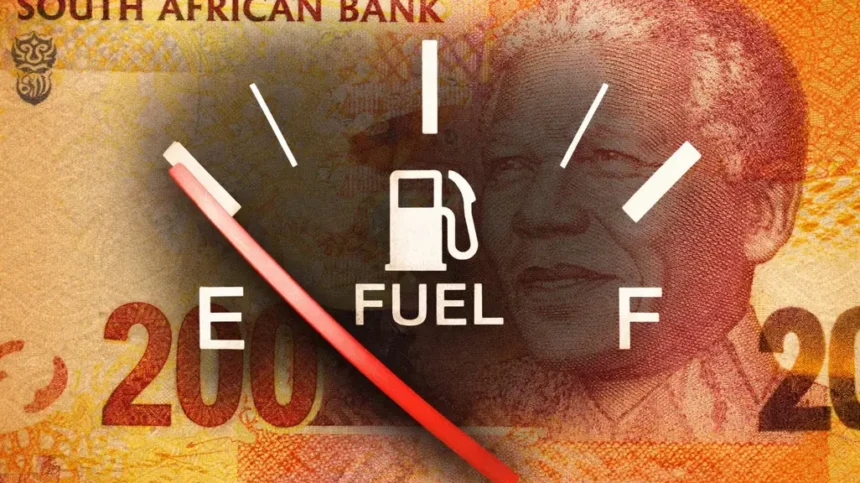
For millions of South Africans, relief at the fuel pumps has offered some welcome breathing room during another period of global uncertainty. But behind the lower petrol price lies a much bigger warning, one that energy leaders say can no longer be ignored. Temporary tax relief may ease today’s pain, but it does little to protect the country from the next global oil shock, and experts now believe South Africa’s transport economy is approaching a critical crossroads.
South Africa’s latest fuel levy relief may be easing pressure on households, commuters, logistics operators, and businesses for now, but energy leaders are warning that the intervention offers only temporary comfort in the face of a much deeper structural challenge.
As announced by National Treasury, the temporary fuel levy reduction of up to three rand per litre for petrol, alongside additional support for diesel, has now been extended until the end of June. The move comes as governments around the world continue monitoring instability in global energy markets, rising shipping costs, and ongoing geopolitical tension in oil-producing regions.
While the extension has been welcomed by motorists and businesses already battling inflationary pressure, the organisation CHARGE says the latest intervention highlights just how vulnerable South Africa remains to imported fuel dependence.
Speaking this week, CHARGE co-founder and chair Joubert Roux welcomed the government’s short-term support, but warned that tax relief alone cannot shield the economy from repeated fuel price shocks.
“Government’s intervention is necessary and welcome in the short term, but it highlights the reality that South Africans remain exposed to global oil price volatility,” Roux said.
He added that South Africa currently spends an estimated three hundred billion rand every year on petrol and diesel, much of it linked to imported energy, exposing both businesses and consumers to events entirely beyond local control.
According to CHARGE, the long-term answer lies not in repeated tax interventions, but in fundamentally changing how the country powers its transport systems.
The organisation says electric mobility, supported by locally generated renewable energy, is increasingly becoming both an environmental and economic necessity.
Using its internal ownership models, CHARGE says the cost difference between petrol vehicles and electric vehicles is already becoming significant.
Over a typical seven-year ownership cycle, the company estimates that a petrol hatchback can cost between twenty-five and thirty percent more over its lifetime when fuel, servicing, and maintenance are included.
Equivalent electric vehicles, meanwhile, benefit from lower running costs, fewer moving parts, and reduced maintenance requirements, delivering potential lifetime savings of between twenty and thirty percent.
As fuel prices continue to rise, Roux says that gap is only expected to widen.
“Electric vehicles are not just an environmental choice anymore, they are increasingly the financially rational one,” he said.
To support that transition, CHARGE has now begun rolling out a national network of off-grid, solar-powered electric vehicle charging stations designed to support passenger vehicles and heavy transport alike.
The rollout will begin with sixty charging stations positioned along major transport corridors, eventually expanding to one hundred and twenty sites nationwide.
Two of the first strategic locations along the N3 corridor between Johannesburg and Durban are scheduled to open in mid-May.
Each site will generate electricity on location using solar power combined with battery storage, reducing dependence not only on imported oil, but also on South Africa’s strained electricity grid.
For energy analysts, the message is becoming increasingly clear. Temporary fuel relief may ease the immediate pain, but unless South Africa accelerates its transition toward locally generated transport energy, the country could remain trapped in the same cycle of global price shocks for years to come.
Source: Cape Business News – Editorial Desk.