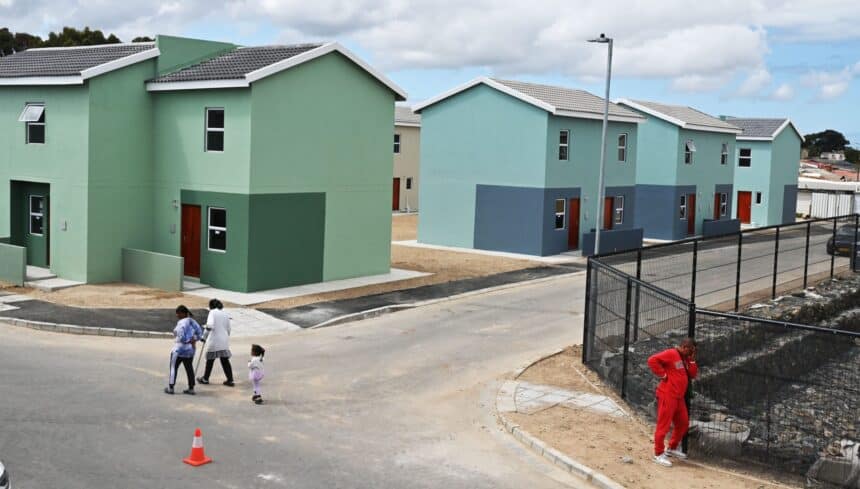
Cape Town’s housing challenge is entering a new phase, not defined by how many homes are built, but by how the city responds to rising demand, limited land, and the need for long-term, integrated development.
The Western Cape Government has pushed back against claims that housing delivery in Cape Town is declining, arguing that the issue is being misunderstood in the context of rapid population growth and shifting policy priorities.
At the centre of the debate is the scale of inward migration. Approximately 15,000 people move to Cape Town each year, placing continuous pressure on housing supply and adding to an already significant backlog. This sustained demand means that even when delivery continues, it may not immediately reduce the overall housing deficit.
Infrastructure MEC Tertius Simmers has emphasised that comparisons with earlier decades fail to reflect the current reality. Between 1995 and 2006, nearly 99,000 homes were delivered. Over the past two decades, just over 100,000 subsidised housing opportunities have been provided, but under very different conditions.
Today’s housing environment is considerably more complex. Well-located land is increasingly scarce and costly, while development requires extensive investment in bulk infrastructure, including water, sanitation, and transport networks. In addition, environmental approvals and regulatory compliance processes have become more stringent, extending project timelines.
A key shift in policy has been the move away from building large volumes of housing on the urban periphery. Instead, the focus has turned to integrated developments located closer to economic hubs, transport routes, and social services.
Projects in the Cape Town central business district, alongside developments such as Welmoed and Ithemba, are part of this approach, aimed at creating more sustainable and inclusive communities rather than simply increasing housing numbers.
Despite these efforts, a significant gap remains in the so-called “missing middle”, households that earn too much to qualify for fully subsidised housing but cannot access the formal property market. Addressing this segment is widely seen as one of the most pressing structural challenges in South Africa’s housing landscape.
The provincial government has indicated that resolving this issue will require national-level reform, including adjustments to funding models and greater involvement from development finance institutions and the private sector.
While the debate around housing delivery continues, officials maintain that success should be measured not only by speed or volume, but by whether developments provide long-term access to opportunity and economic participation.
As Cape Town continues to grow, the challenge remains balancing immediate demand with sustainable planning, a tension that is likely to define the city’s housing trajectory in the years ahead.
Source: IOL – Tertius Simmers.