Anti-immigrant unrest in the Western Cape has moved from a local public-order crisis into a wider provincial safety story, with confirmed deaths in Mossel Bay, reports of families fleeing in Kleinmond and Gansbaai, and Mozambique now raising concern over what it has described as xenophobic attacks against its citizens.
Cape Town News is opening today’s First Edition with a developing story of anti-immigrant unrest spreading across parts of the Western Cape, after violence in Mossel Bay was followed by reports of fear, displacement and public-order operations in Overberg communities.
The situation remains active and sensitive. Several key facts are still under police investigation, and authorities have not confirmed every claim now circulating in public. What has been verified is serious enough: police have confirmed deaths in Mossel Bay, Mozambique has issued a stronger diplomatic claim about its nationals being killed, and GroundUp has reported that hundreds of immigrants fled homes in Kleinmond and Gansbaai.
This is no longer a single local disturbance. It now involves public safety, displacement, policing, immigration tensions, international concern and the risk of further unrest in smaller Western Cape towns.
Reuters reports that Mozambique’s government said five of its citizens died in what it described as xenophobic attacks in Mossel Bay over the weekend. South African police confirmed that the bodies of two Mozambican men were found on Saturday morning with assault injuries. Police also confirmed that a South African teenager died from stab wounds in a separate incident on Sunday.
Cape Town News is reporting those figures separately because the official positions do not fully match. SAPS has confirmed two Mozambican deaths and one South African teenager’s death. Mozambique’s government has claimed five Mozambican citizens died as a direct result of xenophobic attacks. That higher figure has not yet been confirmed by SAPS as the official police death toll.
The distinction is important. In a fast-moving and emotionally charged story, the wording must remain careful. Cape Town News is therefore using “anti-immigrant unrest” and “anti-immigrant violence” as the main description. The term “xenophobic attacks” is used only when attributed to Mozambique’s government, official statements, quoted sources or reporting that clearly uses that description.
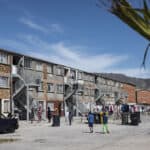
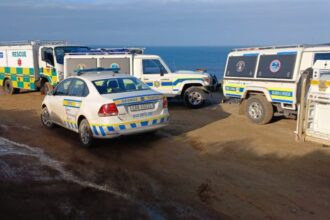
According to Reuters, police said the violence in Mossel Bay began on Friday when about 55 shacks were set alight in an informal settlement. SAPS said police deployments remained on high alert in the area as authorities worked to restore calm and order. Reuters also reported that no arrests had yet been made for the murders at the time of that report.
EWN reported earlier that Mossel Bay Municipality arranged temporary safe accommodation for around 400 foreign nationals after violence in the area. The report said several homes were set alight during the unrest, forcing people to flee. A local Community Policing Forum representative linked the unrest to xenophobic sentiment and tensions between local communities and undocumented migrants.
IOL reported that police had confirmed arrests linked to the broader unrest, while investigations into the deaths continued. Because reports differ on the status and nature of arrests, Cape Town News will update this article once SAPS releases a clearer consolidated statement on murder investigations, public-order arrests and immigration-related enforcement.
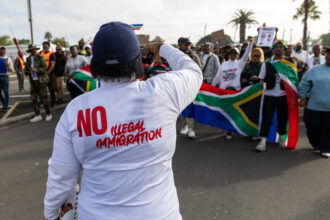
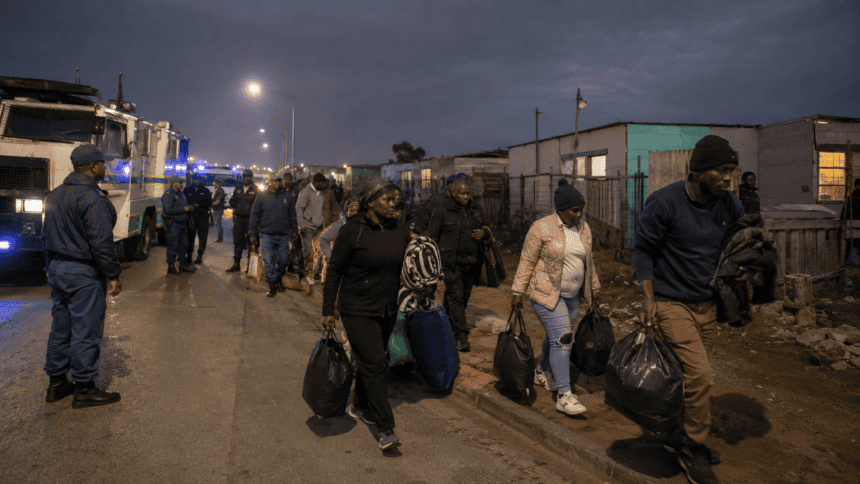
The Overberg development has now increased the scale of the story. GroundUp reports that hundreds of immigrants fled homes in Kleinmond and Gansbaai as anti-immigration protests spread. According to that reporting, some people sheltered in community halls, while others hid in the mountains or on beaches overnight. Many of those affected were reportedly from Malawi and Mozambique.
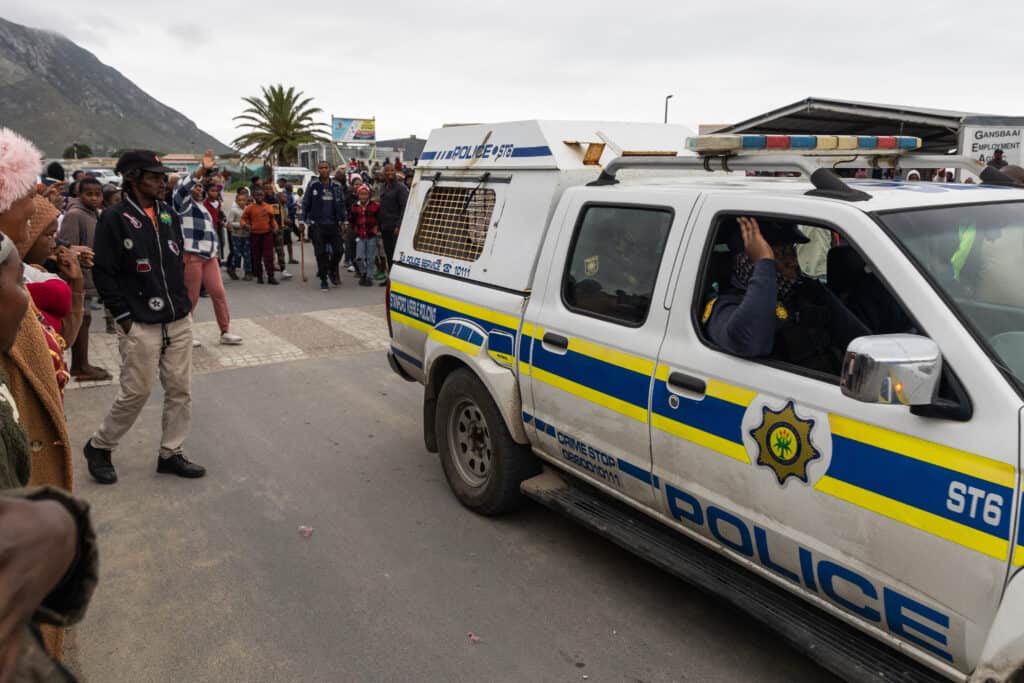
DefenceWeb, carrying the GroundUp report, cited police spokesperson Sergeant Wesley Twigg as saying about 1 500 people from Masakhane informal settlement in Gansbaai marched and handed over a memorandum to the Overberg District Commissioner. The same report said three people were arrested under the Immigration Act and three others for possession of dangerous weapons. Police reportedly said no serious crime or damage to property was reported in that Gansbaai incident.
That official police line is important because it shows a difference between the Mossel Bay violence and the Overberg protest activity. Mossel Bay includes confirmed deaths and property destruction. In Gansbaai, police reported a large march and arrests, but not the same level of confirmed serious crime or damage at the time of that report. Kleinmond and Gansbaai remain part of the wider displacement and fear story because people reportedly fled, but the confirmed criminal picture differs by area.
National government has also responded to the wider rise in anti-immigration mobilisation. A government statement reported by Xinhua said members of the public must address concerns about crime and undocumented migration through lawful processes, and not through violence, intimidation or attacks on people based on nationality, ethnicity, language or cultural identity.
President Cyril Ramaphosa also addressed the issue in Parliament. Reuters reported that he said South Africa must never give in to violence, xenophobia or vigilantism, while also saying government was dealing with illegal immigration through lawful action.
Those two points now sit at the heart of the story. Many communities are raising concerns about crime, pressure on services and undocumented migration. Those concerns are part of the public debate and must be handled by government, police, immigration authorities and courts. But violence, intimidation, arson, displacement and attacks on people because of nationality are criminal acts and cannot be treated as community enforcement.
The Western Cape now faces a difficult test. The province is already dealing with severe storm recovery, power restoration, high unemployment, housing pressure, policing shortages and service-delivery strain. These pressures can create anger and fear. But they can also become dangerous when blame is directed at vulnerable groups.
Foreign nationals, especially those living in informal settlements or working in low-income sectors, often become easy targets during periods of economic pressure. The current unrest shows how quickly anti-immigration mobilisation can move from protest language into fear, displacement and violence.
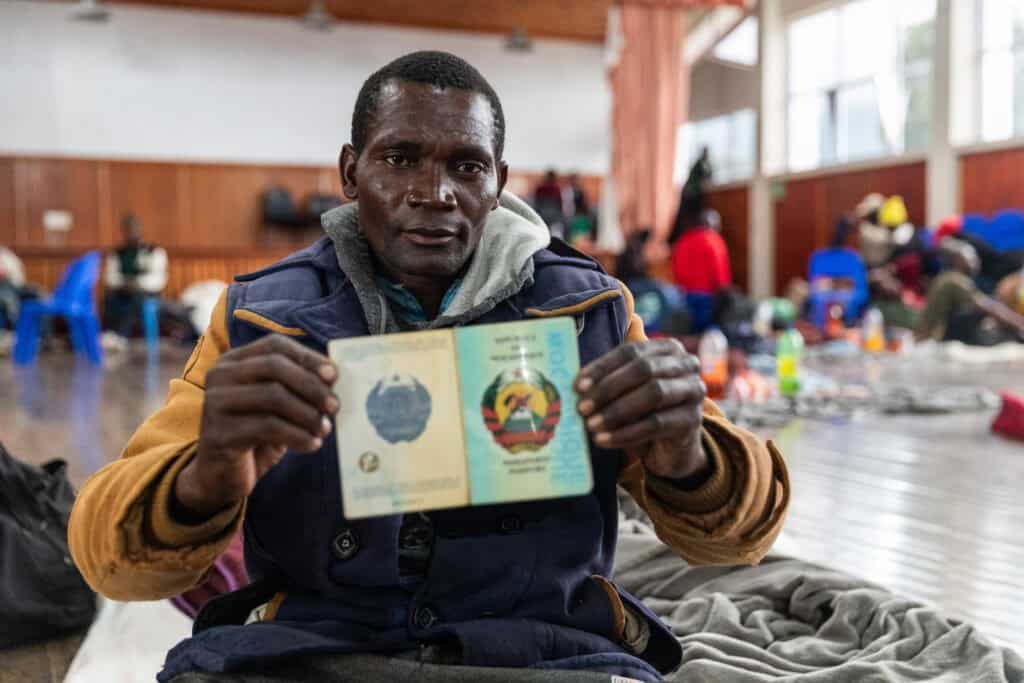
The diplomatic angle also matters. Mozambique has said 300 Mozambicans returned home by their own means on Saturday, while another group was expected to be repatriated. Reuters reported that Mozambique warned that the situation remained volatile. The report also said two Mozambicans died in a road accident while travelling back to Mozambique, separate from the deaths Mozambique attributed to the attacks.
This means the Western Cape story is now also a cross-border issue. South Africa’s relationship with neighbouring countries can be affected when foreign nationals are killed, displaced or forced to return home because they no longer feel safe. Ghana has also recently repatriated citizens from South Africa after anti-immigrant protests elsewhere in the country, according to Reuters.
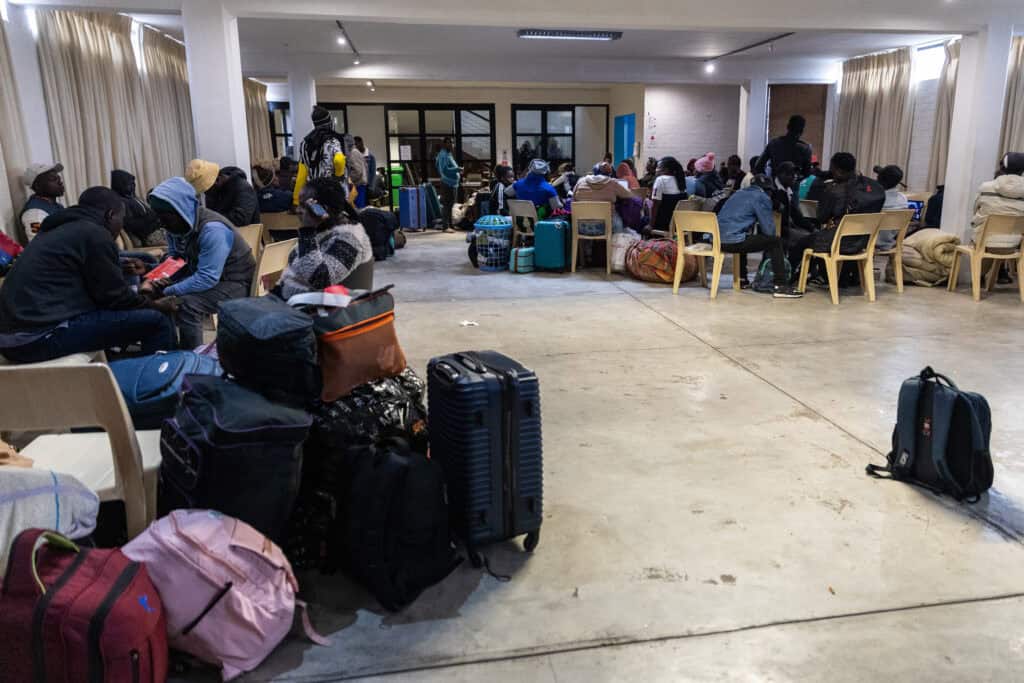
For local authorities, the immediate questions are practical. How many people have been displaced? Where are they being sheltered? How many children are affected? Have any people returned home safely? Are public-order police still deployed? Have murder suspects been identified? Are immigration arrests being separated properly from criminal investigations into violence and arson?
The answers will matter because this story sits on the line between immigration enforcement and mob violence. Lawful immigration enforcement is a state function. It belongs to Home Affairs, SAPS, prosecutors and courts. It does not belong to crowds, vigilante groups or local intimidation campaigns.
Cape Town News will treat the article as a live developing file. The next update should focus on official SAPS figures, Mossel Bay Municipality’s shelter numbers, Overberg municipal response, provincial government coordination, any confirmed arrests linked to murder or arson, and whether unrest has spread to additional Western Cape towns.
At this stage, the verified position is clear enough for a First Edition lead: anti-immigrant unrest has escalated in the Western Cape, deaths have been confirmed in Mossel Bay, Mozambique has made a stronger claim about its citizens being killed, and GroundUp reports that hundreds of immigrants have fled homes in parts of the Overberg.
Cape Town News will update this story at 12 PM if police, municipal or provincial authorities release new confirmed information.
Q&A
What has happened in the Western Cape?
Anti-immigration unrest has been reported in Mossel Bay, with further fear and displacement reported in Kleinmond and Gansbaai in the Overberg. The situation is developing and authorities are still investigating several incidents.
How many people have died?
SAPS has confirmed two Mozambican men were found dead in Mossel Bay and that a South African teenager died in a separate incident. Mozambique’s government says five of its citizens died in what it described as xenophobic attacks. That higher figure has not yet been confirmed by SAPS as the official police death toll.
Why is Cape Town News using careful wording?
Police investigations are still under way, and official accounts differ on some details. Cape Town News is using “anti-immigrant unrest” and “anti-immigrant violence” as the main wording. The term “xenophobic attacks” is used only when attributed to Mozambique’s government or other quoted sources.
Which areas are affected?
Current reports name Mossel Bay, Kleinmond and Gansbaai. Mossel Bay has confirmed deaths and property destruction. Gansbaai has confirmed protest activity and arrests, according to police reporting carried by GroundUp and DefenceWeb. Kleinmond and Gansbaai have also been named in reports of displacement and fear among immigrant communities.
What have officials said?
SAPS said police deployments remained on high alert in Mossel Bay to restore calm and order. National government has said concerns about crime and undocumented migration must be handled through lawful processes, not through violence, intimidation or attacks. President Cyril Ramaphosa has said South Africa must not give in to violence, xenophobia or vigilantism.
What happens next?
Cape Town News will look for updated police figures, arrest confirmations, shelter numbers, municipal response details, provincial government statements and confirmation on whether unrest has spread to other towns. A 12 PM update is expected if new verified information becomes available.
SAI Search Summary:
Anti-immigrant unrest in the Western Cape has escalated from Mossel Bay to parts of the Overberg. SAPS has confirmed two Mozambican deaths and the death of a South African teenager in Mossel Bay, while Mozambique’s government says five of its citizens died in what it described as xenophobic attacks. GroundUp reports that hundreds of immigrants fled homes in Kleinmond and Gansbaai, with some taking shelter in community halls and others hiding overnight. Police have reported a large march in Gansbaai, arrests under the Immigration Act and arrests for possession of dangerous weapons. Cape Town News is treating this as a developing public-safety story, with a 12 PM update expected if authorities release new confirmed information.
Source: GroundUp – Matthew Hirsch; Reuters – Staff Reporter; EWN – Ntuthuzelo Nene; Daily Maverick – GroundUp; IOL – Staff Reporter; eNCA – Staff Reporter; DefenceWeb – GroundUp; Xinhua – Staff Reporter.