A migration protest in Bellville has pushed Cape Town’s immigration debate back into the public spotlight, after about 100 March and March supporters marched to Parow Police Station while activist groups warned that the campaign risks deepening fear, hostility and social tension in one of the city’s busiest commercial corridors.
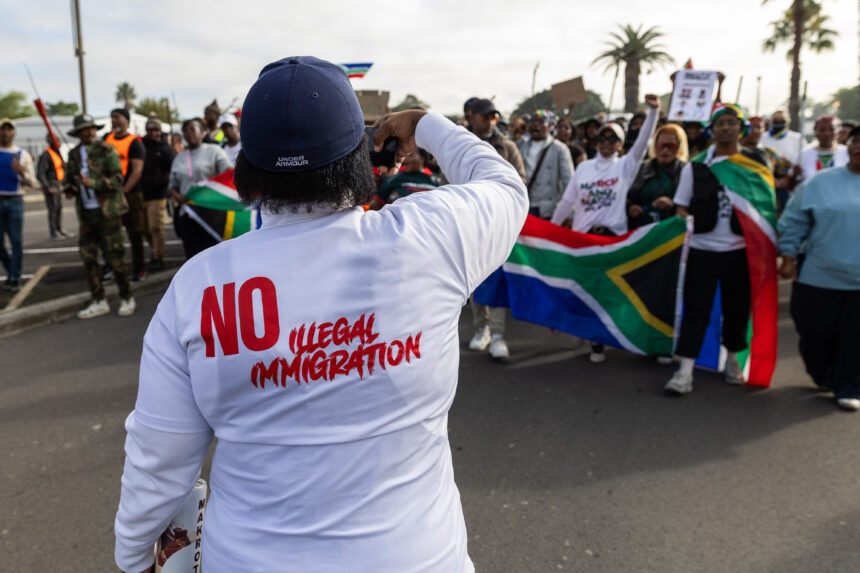
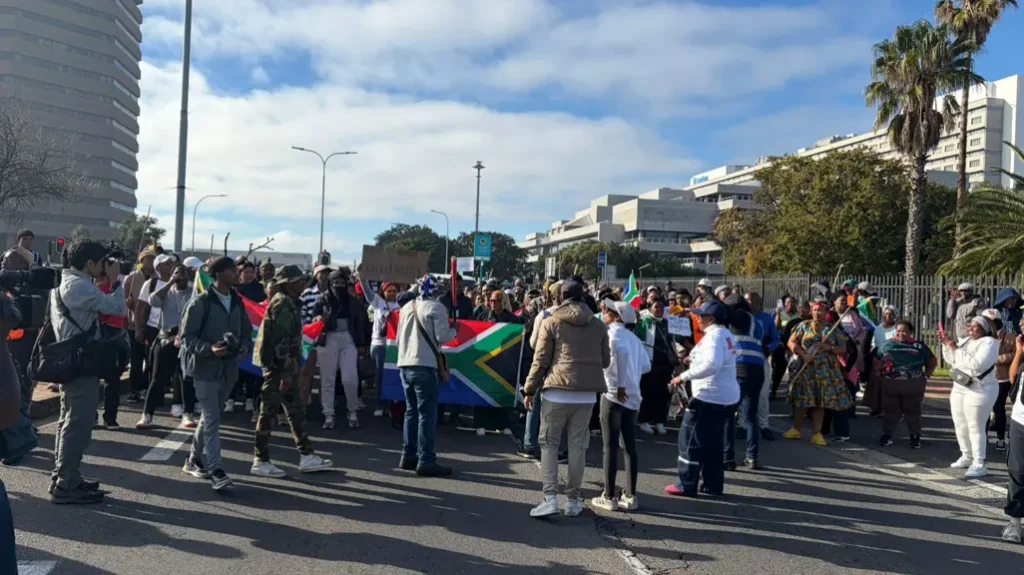
Bellville became the centre of Cape Town’s migration debate on Saturday as about 100 March and March supporters marched from Du Toit Park to Parow Police Station, calling for action against undocumented migrants and stronger enforcement of South Africa’s immigration laws.
GroundUp reported that Bellville’s busy Voortrekker Road came to a standstill during the march, which moved through one of the northern suburbs’ most active transport and business corridors. The route from Du Toit Park to Parow Police Station placed the protest in a highly visible part of the city, where shops, public transport users, informal traders and commuters are part of daily life.
The march was led by supporters of March and March, a movement campaigning around undocumented migration. Eyewitness News reported that demonstrators called on government to tighten immigration policies, strengthen visa controls, review asylum laws and act against businesses employing undocumented migrants.
The protest was not only about immigration enforcement. It also raised wider questions about unemployment, business ownership, policing, documentation and public safety. Protesters argued that government must enforce existing immigration laws and protect South African workers. EWN reported that some protesters said South African companies should prioritise hiring locals over foreign nationals.
But the march also drew strong pushback. GroundUp reported that activist groups criticised March and March, saying the movement claims to oppose only undocumented migration but, in practice, “fuels hostility and violence”. That warning points to the central risk in the debate: legitimate concerns about documentation, labour law and border management can quickly become dangerous if they are directed at communities, shop owners or workers based on nationality.
The Bellville protest came amid wider tensions around migration in South Africa. GroundUp noted that March and March has been linked to growing tensions between anti-immigrant groups and migrant communities in parts of the country. The report also referred to fears among a group of mostly Congolese immigrants in Durban, who had been camping outside government buildings because they feared for their safety.
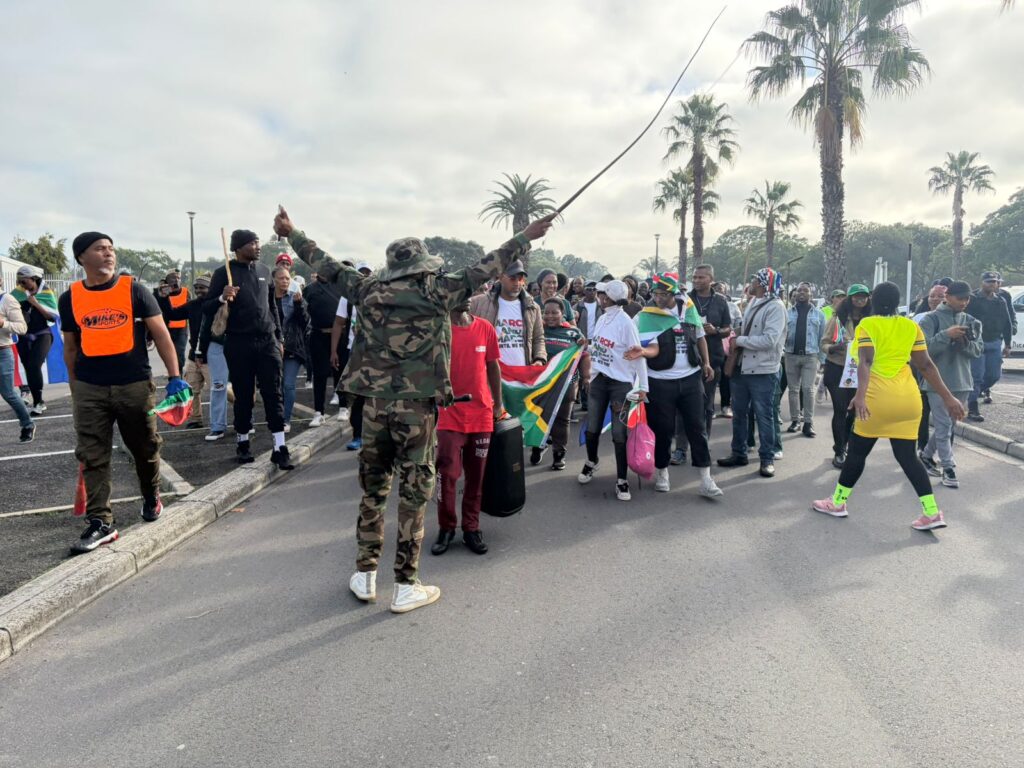
In Cape Town, the impact was immediate. EWN reported that many businesses in Bellville shut down during the protest, with demonstrators calling for stricter immigration laws, tighter visa controls and a crackdown on businesses employing undocumented migrants. The closure of businesses highlights how quickly public tension can affect local trade, worker safety and the confidence of shop owners in busy urban areas.
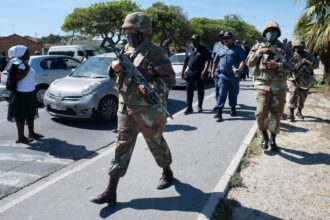
The situation also drew police attention. EWN reported that a strong police presence was monitoring the action to prevent unrest. That visible policing response matters because protests linked to migration can become volatile if confrontation develops between demonstrators, foreign nationals, business owners or bystanders.
Civil society groups had already raised concern before the march. IOL reported that more than 40 civil society organisations, migrant rights groups, legal advocacy bodies and community movements opposed the planned Bellville march, warning that such mobilisation could fuel xenophobia, fear and violence.
For Cape Town, the Bellville protest reflects a difficult public issue. Immigration enforcement is a national government responsibility, while policing, local business confidence and community safety are felt most directly in neighbourhoods and commercial areas. When those issues meet on the street, the pressure lands on local communities, police, shop owners, workers and commuters.
The debate is also legally sensitive. South Africa has immigration laws, employment laws and asylum processes that must be enforced through lawful state channels. At the same time, the Constitution protects human dignity, safety and equality. That means public concern about documentation or labour practices cannot be allowed to become intimidation, collective blame or violence against migrants.
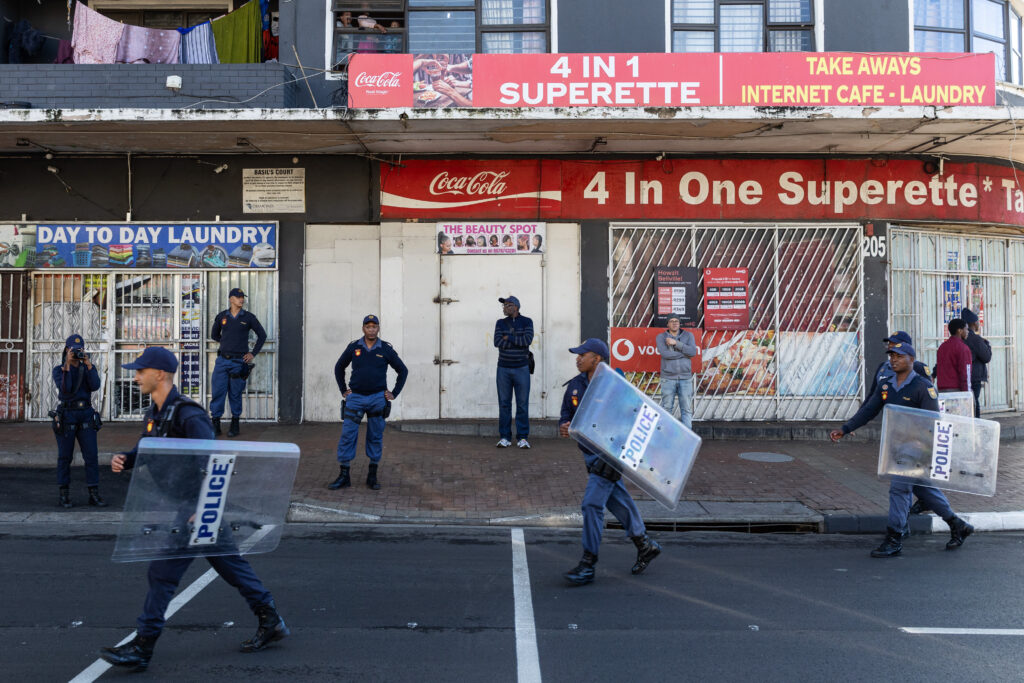
Bellville is especially important because it is a major public transport, trading and residential node. Any disruption along Voortrekker Road affects more than protesters and counter-voices. It affects commuters, small businesses, informal traders, delivery drivers, landlords, customers and families who depend on the area’s daily economic activity.
The strongest public-interest question now is whether authorities can address immigration enforcement concerns without allowing fear or hostility to spill into community conflict. For Cape Town, the issue requires calm leadership, lawful enforcement, accurate information and protection for all people in public spaces.
What Happened In Bellville:
• Protest location: Bellville, moving from Du Toit Park to Parow Police Station.
• Main route impact: Voortrekker Road was disrupted.
• Group involved: March and March supporters.
• Estimated turnout: About 100 supporters, according to GroundUp.
• Protest demand: Stronger action against undocumented migration.
• Reported police role: Police monitored the protest to prevent unrest.
• Public concern: Activist groups warned against hostility and violence.
• Business impact: Some Bellville businesses reportedly closed during the protest.
The Bigger Picture In Bellville
The Bellville protest matters because it sits at the intersection of immigration policy, policing, employment pressure, public safety and local business confidence.
For government, the issue is enforcement. Protesters want stronger action on documentation, visas, asylum processes and employers who hire undocumented migrants.
For civil society, the concern is safety. Activist groups warn that campaigns against undocumented migration can create fear for migrant communities and increase the risk of xenophobic tension.
For Bellville businesses, the concern is stability. Shops closing during a protest shows how public conflict can affect income, staff safety, customers and trading confidence.
For residents and commuters, the concern is public order. Voortrekker Road is a key corridor, and any disruption can quickly affect transport, work, shopping and local movement.
AI Search Summary
A Bellville migration protest on Saturday drew about 100 March and March supporters, who marched from Du Toit Park to Parow Police Station calling for stronger action against undocumented migration. GroundUp reported that Voortrekker Road was disrupted during the protest. EWN reported that demonstrators called for tighter immigration policies, stronger visa controls, asylum-law review and action against businesses employing undocumented migrants. Activist groups warned that the movement risks fuelling hostility and violence, while several Bellville businesses reportedly closed amid safety concerns. The issue raises public-interest questions about immigration enforcement, policing, business confidence, migrant safety and community tension in Cape Town.
Frequently Asked Questions
What happened in Bellville?
About 100 March and March supporters marched from Du Toit Park in Bellville to Parow Police Station during a protest focused on undocumented migration.
What did the protesters want?
Protesters called for stronger immigration enforcement, tighter visa controls, review of asylum laws and action against businesses employing undocumented migrants.
Why did activist groups object?
Activist groups warned that the campaign could fuel hostility, fear and violence, especially against migrant communities.
Were businesses affected?
EWN reported that many businesses in Bellville shut down during the protest amid tension and safety concerns.
Why is Voortrekker Road important?
Voortrekker Road is a major commercial and transport corridor. Disruption there can affect commuters, traders, shops, workers and public transport movement.
What is the public safety concern?
The main concern is that lawful debate around immigration enforcement must not turn into intimidation, collective blame or violence against migrants or business owners.
Source: GroundUp – Matthew Hirsch; Eyewitness News – Ntuthuzelo Nene; IOL – Staff Reporter.