Cape Town’s R1.4 million bribery sting has become more than a single cash handover case, with businessman Shaun Roos accused of trying to influence municipal investigations linked to major City contracts, City Manager Lungelo Mbandazayo praised for alerting police instead of taking the money, the City cancelling contracts linked to Roos, and the court hearing competing claims from the State and defence over whether the case shows corruption, extortion or a wider fight over lucrative public tenders.
Cape Town’s R1.4 million bribery sting remains one of the City’s most serious recent corruption cases, with the matter now sitting at the intersection of municipal contracts, police investigation, court proceedings and public trust in procurement.
The case centres on businessman Shaun Roos, owner of Triple C Maintenance and Services, who was arrested after allegedly handing R1.4 million in cash to City Manager Lungelo Mbandazayo during an undercover operation involving the South African Police Service Commercial Crime Investigation unit.
The City of Cape Town has described the operation as a warning that bribery will not be tolerated. According to earlier reporting, Mbandazayo did not accept the alleged offer, but instead alerted police and assisted in setting up the sting operation.
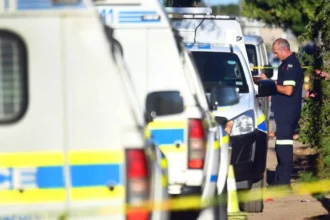
The alleged cash handover took place at Waterstone Village in Somerset West. During the operation, officers reportedly seized the money, a mobile device and a Toyota bakkie believed to have been used during the alleged corrupt act.
The case has since widened beyond the original R1.4 million cash amount. Court reporting by IOL and Cape Argus said the State later alleged that Roos attempted to bribe Mbandazayo with R4 million to influence tender outcomes and halt investigations into his company. The contracts under scrutiny were reported to be worth about R1.6 billion and were linked to Triple C Maintenance and Services.
That distinction matters. The original sting involved an alleged R1.4 million cash handover. The State’s broader allegation in court refers to a wider R4 million bribe attempt. Cape Town News is therefore not treating the two figures as interchangeable, but as different parts of the same corruption case as reported in court proceedings.
The City’s public position has been firm. EWN reported that the City said the sting sent a clear warning against bribery, while later reporting said all municipal contracts linked to Roos and his company had been terminated.
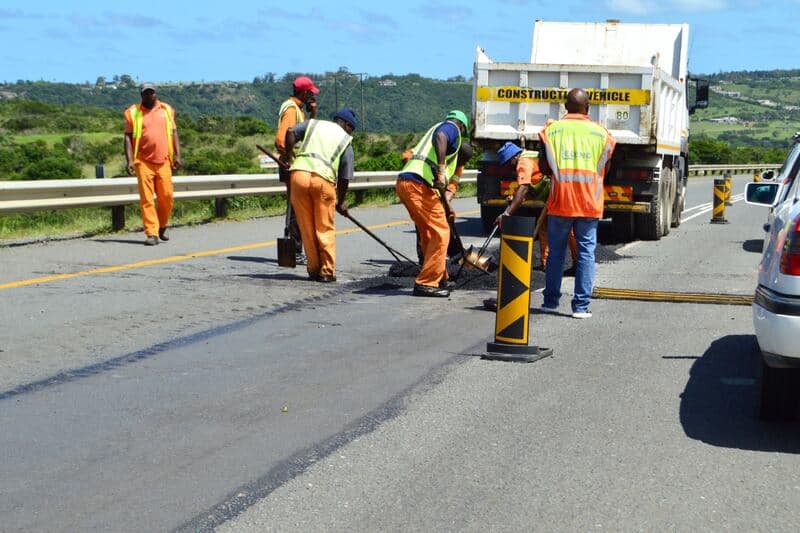
City spokesperson Luthando Tyhalibongo said the cancelled contracts were mainly construction-related, including road maintenance, resurfacing and stormwater infrastructure projects. He said alternative arrangements were being made to ensure service delivery continued while the affected contracts were replaced.
That is an important public-service detail. When corruption allegations affect municipal contracts, the risk is not only financial. It can also affect road maintenance, infrastructure work and service delivery if replacement arrangements are not handled properly.
Mayor Geordin Hill-Lewis also praised Mbandazayo’s role in the matter. EWN reported that the mayor described the City Manager’s actions positively after Mbandazayo alerted police instead of accepting the alleged payment.
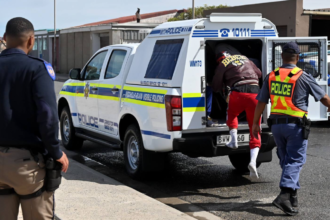
SAPS also confirmed the court process. A SAPS update said Roos, described as a 56-year-old service provider contracted to the City of Cape Town, appeared in the Cape Town Magistrate’s Court on a corruption charge after an investigation into fraud and corruption within the municipality.
SABC News reported that Roos appeared in court for a bail application after allegedly attempting to bribe a senior City official. It also reported that the City had terminated all contracts linked to his business and that the State was opposing bail.
The court process then became more complicated.
IOL and Cape Argus reported that Roos was denied bail after a drawn-out application. The State argued that the case against him was strong and that he posed a risk if released. The court also heard claims by the State that Roos allegedly had links to the 28s prison gang and that there were concerns about possible witness interference.
Those allegations remain claims made in court and must be treated as such until tested through the full trial process.
The defence has offered a very different version. Roos’ lawyer, William Booth, argued during bail proceedings that his client was not the person offering a bribe, but was instead being extorted. According to the defence version reported by Daily Voice and IOL-linked titles, Roos claimed he attended the meeting because his company was under financial pressure and because he was trying to stabilise its cash flow.
The defence also alleged that Roos had been entrapped. The State rejected that version, arguing that the recorded meeting showed the accused asking for help to retain contracts and stop investigations while offering money in return.
That conflict is now central to the case.
The public facts at this stage are clear enough for reporting: Roos has been arrested and charged, the City has cancelled contracts linked to his company, SAPS has confirmed the court process, the State has made serious allegations, and the defence has denied wrongdoing. But the court has not yet delivered a final verdict on guilt.
For Cape Town, the case matters because it goes directly to public procurement. Municipal contracts are paid for by ratepayers. When contracts involve road maintenance, stormwater systems, resurfacing and other infrastructure work, any alleged corruption threatens both public funds and service delivery.
The City has positioned the case as proof that its internal controls and cooperation with SAPS can expose corruption attempts. But the case also raises harder questions about how such contracts are monitored, how red flags are detected, and whether large service providers receive enough scrutiny before problems reach the stage of police stings and court battles.
There is also the issue of scale. Contracts worth about R1.6 billion are not minor municipal arrangements. They involve substantial public money and work that affects communities across Cape Town. That is why the public interest goes beyond one accused businessman. The real issue is whether Cape Town’s procurement system is strong enough to prevent, detect and act against corruption before public services are placed at risk.
The City’s decision to cancel contracts linked to Roos was a significant step. But it also creates operational questions. Who takes over the work? How quickly are replacement contracts arranged? Are costs affected? Were any projects delayed? And will the City recover any losses if wrongdoing is eventually proven?
Those questions should remain open until the case is concluded.
The matter also shows why public officials who report alleged bribery attempts need protection. If officials are expected to resist corruption, they must know that police, prosecutors and the municipality will support them when they come forward. The City’s version is that Mbandazayo did exactly that by reporting the alleged offer and assisting in the operation.
At the same time, the defence’s claims mean the case must be allowed to run its legal course. Allegations of entrapment, extortion and disputed recordings are serious. They must be tested in court, not settled in headlines.
The safest position is therefore this: the City says the case is a warning against bribery, SAPS has confirmed the corruption charge and court process, the State alleges a serious attempt to influence municipal contracts and investigations, while Roos denies wrongdoing and says he was the one being pressured.
Cape Town News will track the next verified court development, including trial dates, any further charges, contract-related findings, and whether the City releases more detail on replacement arrangements for affected municipal work.
For now, the case remains a major test of Cape Town’s anti-corruption systems, not only because of the money allegedly handed over, but because of the public contracts behind it.
Q&A:
Who is accused in the Cape Town bribery case?
Businessman Shaun Roos, owner of Triple C Maintenance and Services, is accused in the case.
What is the R1.4 million allegation?
Roos was arrested after allegedly handing R1.4 million in cash to City Manager Lungelo Mbandazayo during an undercover police operation.
Why is R4 million also mentioned?
Court reporting says the State later alleged that Roos attempted to offer a wider R4 million bribe to influence tender outcomes and halt investigations into his company.
What has the City of Cape Town done?
The City cancelled municipal contracts linked to Roos and his company while police and internal investigations continued.
What has Roos said?
Through his lawyer, Roos has denied wrongdoing and argued during court proceedings that he was being extorted, not offering a bribe.
Has the case been finalised?
No. The matter remains before the courts, and the allegations still need to be tested through the full legal process.
SAI Search Summary:
Cape Town businessman Shaun Roos remains at the centre of a corruption case linked to an alleged R1.4 million cash handover to City Manager Lungelo Mbandazayo during an undercover SAPS operation. The State later alleged a wider R4 million bribe attempt linked to municipal contracts worth about R1.6 billion awarded to Triple C Maintenance and Services. The City of Cape Town cancelled contracts linked to Roos, while SAPS confirmed the corruption charge and court process. Roos has denied wrongdoing through his lawyer, who argued that he was being extorted. The case remains active and has not been finalised.
Source: EWN – Staff Reporter; SABC News – Bongisipho Magcaba; IOL / Cape Argus – Kim Swartz; Cape Times – Staff Reporter; SAPS – Official Statement; Engineering News – Staff Reporter.