For nearly a year, homeowners, landlords, pensioners, businesses, and ratepayer groups across Cape Town have challenged what many described as one of the most aggressive municipal billing changes in the city’s recent history, arguing that fixed charges linked to property values were pushing ordinary residents beyond financial breaking point, and now in a landmark judgment that could reshape municipal billing in the Mother City for years to come, the Western Cape High Court has ruled that Cape Town’s controversial fixed tariffs are unlawful, invalid, and inconsistent with both the Constitution and national legislation.
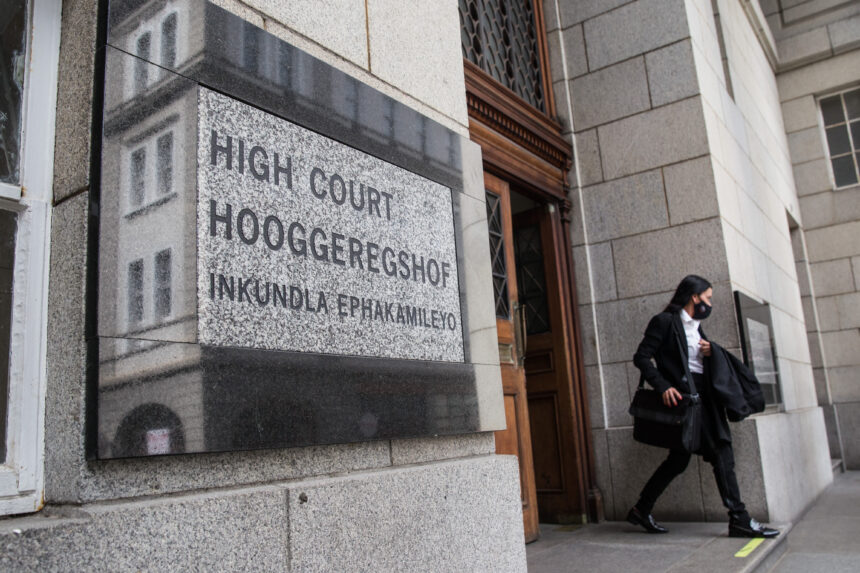
In a judgment that sent immediate shockwaves through local government circles, property owners, business organisations, and ratepayer groups across the Western Cape, a full bench of the Western Cape High Court on Thursday ruled against the City of Cape Town in its defence of controversial fixed municipal tariffs introduced as part of the city’s twenty twenty five and twenty twenty six budget.
The ruling was handed down by Judge President Nolwazi Mabindla-Boqwana, alongside Judges André le Grange and Katharine Savage, following months of legal argument over whether the City had acted within its legal powers when it introduced new fixed charges linked directly to property value.
At the centre of the dispute were fixed charges imposed on residents for city-wide cleaning, water infrastructure, and sewerage services, all of which came into effect on the 1st of July last year as part of the City’s revised budget.
Unlike traditional consumption-based billing, these charges were linked directly to the municipal value of each property rather than actual household usage.
Critics argued that the model unfairly penalised homeowners whose property values had risen sharply through market demand, even where household income, pension income, or actual service consumption had remained unchanged.
The legal challenge was brought by the South African Property Owners Association and AfriForum, both of whom argued that the City’s billing structure effectively created a second property tax under the guise of service charges.
They maintained that once charges are directly linked to property value, they begin to function as rates rather than service tariffs, and therefore must comply with a different legal framework.
A collective of Cape Town ratepayer associations later joined the proceedings as friends of the court, arguing that residents across multiple income brackets were already experiencing significant affordability pressure.
As Cape Town News reported earlier this weekend in its investigation into municipal billing, some homeowners say fixed portions of their municipal bills have risen by as much as four hundred to five hundred percent over the past decade, far outpacing both inflation and salary growth.
In Thursday’s ruling, the High Court agreed that the City’s fixed tariff model was inconsistent with the Constitution, national legislation, and even the City’s own tariff by-law.
The court declared the fixed charges unlawful and invalid, ordering that the affected tariffs be formally set aside with effect from 30 June 2026.
The judgment specifically affects fixed charges linked to:
• City-wide cleaning
• Fixed water infrastructure charges
• Fixed sewerage charges
The ruling also dismissed the City’s counter-application, in which municipal lawyers had argued that if the tariffs were found unlawful, portions of the national Municipal Systems Act should themselves be declared unconstitutional or that the implementation of any ruling should be suspended for two years.
The court rejected both arguments.
The City had warned during proceedings that removing the tariffs could create a significant budget shortfall and potentially impact service delivery, infrastructure funding, and long-term financial planning.
Municipal officials argued that fixed charges were necessary to ensure wealthier property owners contributed proportionally to infrastructure costs and that consumption-based billing alone could not sustainably fund Cape Town’s growing service network.
But for many homeowners, Thursday’s ruling represents far more than a technical legal victory.
It represents validation.
Across neighbourhood WhatsApp groups, community forums, civic associations, and ratepayer organisations, frustration over fixed charges has become one of the most politically sensitive issues in Cape Town over the past year.
Retirees living on fixed pensions, long-term homeowners in rapidly gentrifying suburbs, and middle-income families have all warned that rising municipal bills are slowly making the city unaffordable.
And the timing of the ruling could not be more significant.
Only days before the judgment, Cape Town unveiled its new GV2025 property valuation roll, showing average residential valuation growth of seventeen percent, with some homeowners reporting increases of more than one hundred percent.
As Cape Town News also reported this weekend, those valuations directly influence not only rates but many of the fixed charges now under legal scrutiny.
What happens next remains uncertain.
The City has already indicated it is studying the judgment and may consider an appeal, a move that could extend the legal battle for months.
But for now, one thing is clear.
For property owners across Cape Town, one of the most controversial municipal billing models in recent memory has suffered a major legal blow.
And for thousands of Capetonians already asking whether they can still afford to stay in the city they call home…
Thursday’s ruling may mark the beginning of a much bigger financial reckoning.
Source: News24 – Marvin Charles; GroundUp – Steve Kretzmann; Western Cape High Court reporting.