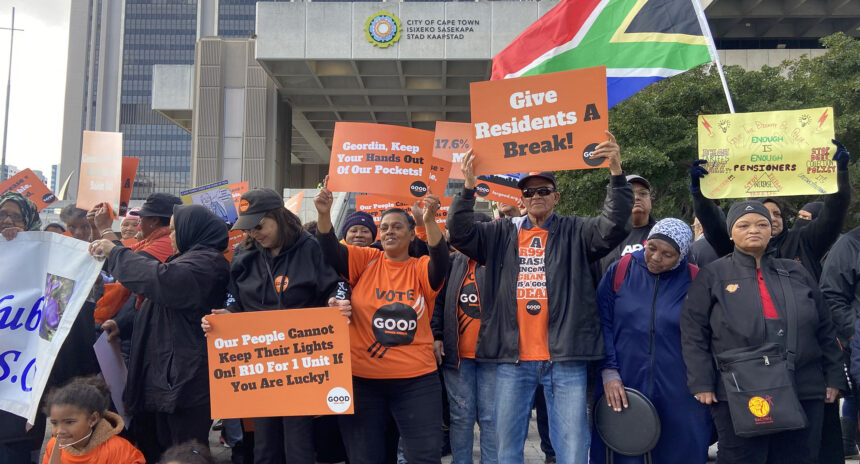
The City of Cape Town is facing increasing pressure following a court ruling that declared parts of the municipality’s fixed tariff structure unlawful, triggering renewed debate around municipal affordability, household finances and the long-term impact of rising service charges on residents across the metro.
The ruling has placed fresh attention on how municipalities calculate and recover service-related costs at a time when many households are already struggling with rising living expenses, elevated property prices and broader economic pressure.
The matter centres around fixed municipal tariffs and charges applied to residents regardless of actual service usage, an issue that has become increasingly controversial among ratepayer organisations and property owners over recent years.
Critics argue that the tariff structure disproportionately impacts lower and middle-income households by increasing monthly municipal costs even when residents attempt to reduce consumption in areas such as electricity and water usage.
The court ruling has now intensified calls for greater transparency around how municipal tariffs are calculated and implemented.
Ratepayer groups and residents are increasingly questioning whether existing billing structures remain sustainable for households facing continued financial pressure.
The issue is particularly sensitive in Cape Town, where rising property values and increasing municipal costs have already contributed to growing affordability concerns throughout many parts of the metro.
Business analysts warn that escalating municipal charges can also influence investment decisions, rental prices and broader property market behaviour over time.
For landlords and property investors, higher municipal tariffs are often passed on through rental increases, placing additional strain on tenants already battling with rising accommodation costs.
The ruling also arrives at a politically sensitive time for the City, as officials continue attempting to balance infrastructure investment, service delivery demands and financial sustainability.
Municipal leaders have repeatedly argued that Cape Town requires major long-term infrastructure spending to maintain service standards, improve electricity resilience, expand water security and support rapid urban growth.
At the same time, residents continue expressing frustration over rising monthly costs attached to municipal accounts.
Affordability has increasingly become one of the defining economic issues facing Cape Town households, particularly among middle-class residents who previously viewed the city as offering stronger value and better governance compared to other metros.
The tariff debate is now likely to place additional pressure on the City to justify future pricing adjustments and explain how municipal revenue structures may evolve following the court decision.
Analysts say the outcome of the broader tariff debate could eventually influence how other South African municipalities approach fixed service charges and cost recovery models in the years ahead.
For many residents, however, the issue remains deeply practical rather than political, with households increasingly focused on whether they can continue absorbing rising costs attached to electricity, water, sanitation and municipal services while broader living expenses continue climbing across Cape Town.
Source: Moneyweb – Stephen Grootes.