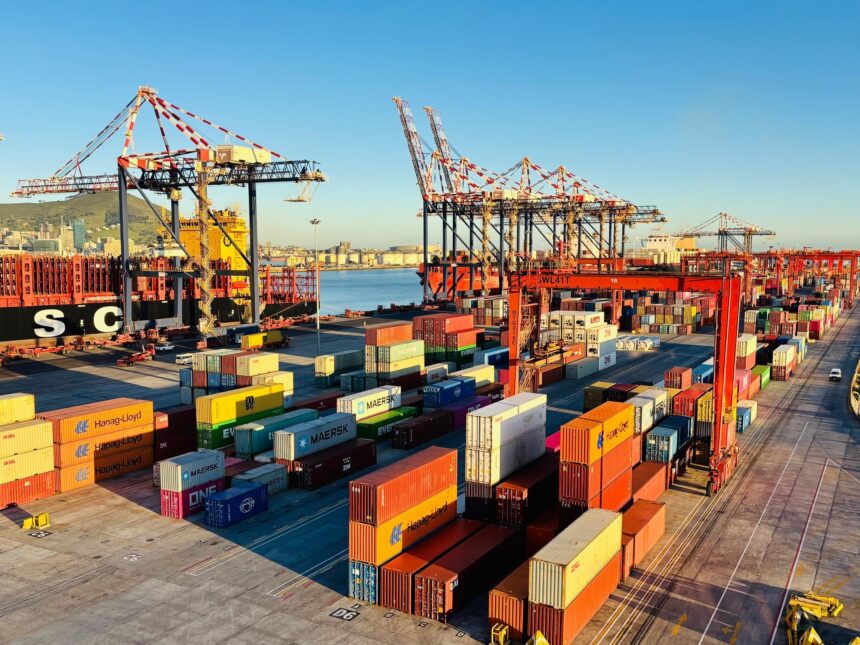
For much of the past two years, the Port of Cape Town has become a symbol of South Africa’s wider logistics crisis, a gateway plagued by vessel queues, wind shutdowns, ageing equipment, and mounting export delays that cost businesses millions. For fruit growers, wine exporters, manufacturers, and freight operators across the Western Cape, every lost day at port translated into rising costs, damaged reputations, and missed international opportunities. But now, after months of operational pressure, fresh signs of recovery are beginning to emerge, and for many in the province’s business sector, that recovery could not have come at a more critical time.
New operational data from the logistics sector suggests that the Port of Cape Town is beginning to stabilise after one of its most difficult export seasons in recent years.
Industry updates published during April show that container throughput has improved, weather-related delays have reduced, and congestion levels have eased compared with the severe bottlenecks experienced during the peak deciduous fruit export season earlier this year. Recent logistics bulletins indicate Cape Town recorded zero weather-related delays during parts of April, while vessel movement and container handling remained within planned operating parameters.
For the Western Cape economy, the significance is enormous.
The Port of Cape Town remains one of South Africa’s most strategically important trade gateways, particularly for agricultural exports. From the orchards of Ceres and Grabouw to vineyards in Stellenbosch and Paarl, thousands of jobs depend on cargo moving efficiently through Cape Town’s container terminal.
When the port slows down, the impact is felt far beyond the harbour.
Growers face missed shipping windows, exporters risk quality claims from overseas buyers, and logistics companies absorb additional storage, trucking, and demurrage costs. Earlier this year, industry reports warned that wind shutdowns and operational inefficiencies had cost fruit producers millions while damaging confidence among international customers.
Now, however, there are early signs that reforms are starting to deliver results.
Transnet, working alongside private sector partners, introduced additional equipment, expanded operational support during the peak season, and increased coordination between terminal management and export stakeholders. Industry reports show these interventions helped boost container handling capacity during the busiest export months between December and March.
The wider economic impact could be substantial.
According to the Western Cape Government, the Port of Cape Town logistics chain contributes approximately sixty-nine billion rand to the provincial economy and supports more than two hundred and twenty-five thousand jobs across transport, warehousing, agriculture, manufacturing, and related services.
Business analysts say sustained improvement at the port could help lower freight uncertainty, improve export planning, and restore confidence among global buyers who rely on South African produce reaching European, Middle Eastern, and Asian markets on time.
The recovery is still fragile.
Cape Town remains highly vulnerable to seasonal wind disruptions, equipment failures, and sudden volume spikes. But after months of operational strain, businesses across the Western Cape are finally beginning to see something that has been in short supply for some time, movement.
For exporters watching every container, every vessel, and every delivery deadline, that movement may prove just as valuable as the cargo itself.
Source: Logistics News Update, Moneyweb, Western Cape Government.