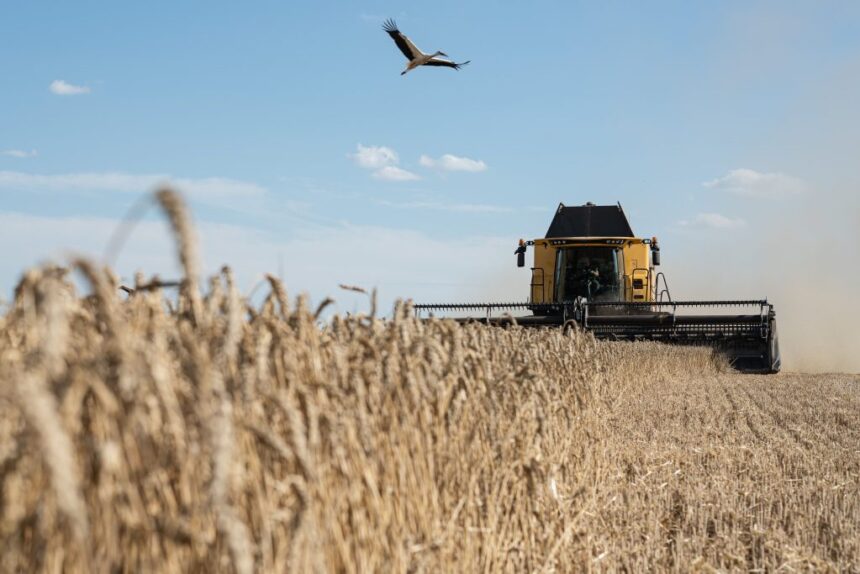
As autumn settles across the Western Cape’s wheat belt, thousands of hectares of farmland should now be coming to life with tractors, seed drills, and planting teams preparing for one of the most important agricultural seasons of the year. Instead, many farmers are finding themselves facing an entirely different battle, not with the weather, but with diesel shortages, rising fuel prices, and mounting production costs that are threatening to shrink South Africa’s wheat crop to its smallest footprint in more than a decade.
South Africa’s agricultural sector is entering one of its most important planting windows under growing economic pressure, as fresh industry data shows that wheat plantings for the 2026 winter season are expected to fall by approximately six percent compared with last year.
According to the latest projections published by News24, farmers are now expected to plant roughly 486,400 hectares of wheat this season, the smallest area recorded since 2015. The warning comes as producers across key grain regions battle soaring diesel costs, tightening fuel supplies, and sharply higher input prices.
For the Western Cape, where a significant portion of South Africa’s commercial wheat production takes place, the timing could hardly be worse.
Regions stretching from the Swartland through the Overberg remain at the heart of the country’s winter grain industry. Every year, these farming communities supply a substantial share of the wheat used in bread, flour, cereals, and food manufacturing across South Africa.
But this year, many producers are entering the season with deep uncertainty.
Fuel is not simply another operating cost in modern agriculture, it is the engine behind almost every stage of production. Diesel powers tractors, combines, irrigation systems, grain transport vehicles, generators, and heavy equipment that keeps farms operating around the clock during planting and harvesting periods.
When diesel prices rise sharply, the effect moves quickly through the entire agricultural value chain.
Industry estimates show that fuel and fertiliser together now account for nearly half of total grain production costs in South Africa. Since the latest Middle East supply disruptions began earlier this year, diesel prices have surged by more than forty percent, while some wholesalers have begun limiting volumes to commercial customers in an effort to protect remaining stocks.
For many farmers, this has created a dangerous operational bottleneck.
Planting windows are narrow. Missing even a few critical weeks can affect crop establishment, rainfall alignment, yields, and ultimately profitability.
Agricultural economists say reduced wheat planting may not immediately create shortages on supermarket shelves, but the downstream effects could become visible later in the year.
Bread, flour, pasta, animal feed, and a wide range of grain-based consumer products may all come under pricing pressure if domestic production weakens while imported grain remains exposed to currency volatility and global freight costs.
The Western Cape’s broader economy may also feel the impact.
From transport operators and grain silos to food processors, exporters, millers, and port logistics companies, a weaker harvest affects far more than farmers alone.
Analysts now warn that the current fuel crisis is no longer just an energy issue.
It is becoming a food security issue, an inflation issue, and increasingly, a national economic issue.
And as the tractors prepare to roll across the Cape’s winter fields, many farmers say this season may depend less on rainfall, and more on whether enough diesel reaches the farm gate in time.
Source: News24 – Helena Wasserman.