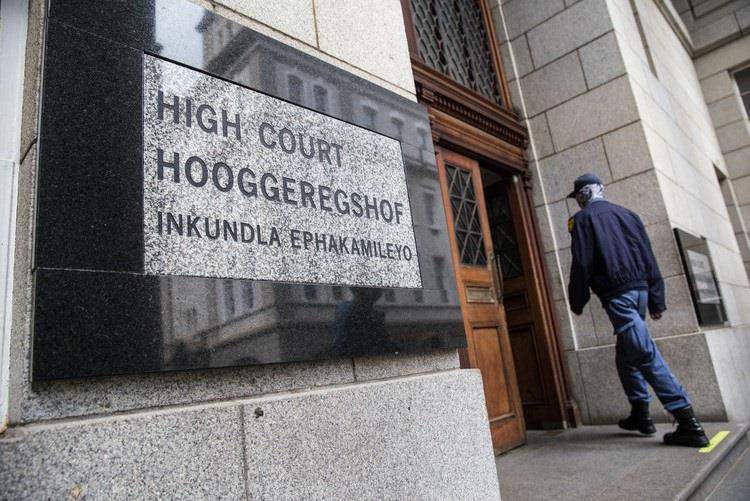
For nearly a year, Cape Town’s controversial fixed municipal tariffs have divided homeowners, businesses, and ratepayer organisations across the metro. Now, in a judgment that could reshape the City’s financial future, the Western Cape High Court has ruled that the charges were unlawful, unconstitutional, and must be scrapped, placing immediate pressure on City Hall to rethink how it funds essential services.
Cape Town’s controversial fixed municipal tariffs for water, sanitation, and city-wide cleaning have been declared unlawful in a landmark judgment by the Western Cape High Court, in a ruling that could significantly alter how South Africa’s second largest metro funds core municipal services while placing immediate political and financial pressure on City Hall.
The judgment, handed down on Thursday by Judge President Nolwazi Mabindla-Boqwana, together with Judges Andre Le Grange and Katharine Savage, found that fixed charges introduced in the City’s 2025/2026 budget were “unlawful and invalid” because they were inconsistent with the Constitution, national legislation, and the City’s own tariff by-law.
At the centre of the legal battle were the South African Property Owners Association and AfriForum, both of whom launched separate applications challenging the City’s decision to introduce fixed charges linked to property value bands rather than actual service consumption.
SAPOA argued that the City had effectively crossed into the territory of property taxation without complying with the constitutional and legislative framework governing municipal rates. AfriForum echoed that position, arguing that ratepayers were being burdened with charges that could not lawfully be classified as either property rates or genuine service tariffs.
A broader collective of Cape Town ratepayer organisations later joined the matter as friends of the court, while the GOOD Party successfully applied to intervene, adding further political scrutiny to a case already attracting widespread public attention.
In its judgment, the court found that while municipalities are empowered to recover costs associated with service delivery, those charges must remain proportionate to usage and aligned with formally adopted tariff policies under the Municipal Systems Act. Judges found Cape Town’s tariff structure failed that test.
The bench further found that the City’s fixed charges appeared aimed not at direct service consumption, but rather at funding broader infrastructure maintenance, capital development, and long-term city-wide operational obligations.
That distinction proved central to the case.
The judges ruled that by using property value bands without applying the recognised “rate in the rand” formula required for municipal property rates, the City had effectively entered the realm of taxation while failing to follow the legal procedures required to impose such charges.
The court ordered that the disputed tariffs be set aside with effect from 30 June 2026.
Cape Town’s attempt to counter the challenge also failed.
In a conditional counter-application, the City argued that if the court found the tariff structure unlawful, sections of the Municipal Systems Act should themselves be declared constitutionally invalid. The full bench rejected that argument, describing several aspects of the application as lacking legal connection to the relief sought by the original applicants.
The City was also ordered to pay legal costs, including costs relating to SAPOA, AfriForum, the GOOD Party, and the Department of Cooperative Governance and Traditional Affairs.
Speaking outside court, City Finance Mayoral Committee Member Siseko Mbandezi said, “As the City of Cape Town, we note the judgment certainly, and we are going to read the judgment and possibly appeal the judgment. Obviously, the impact of it has to be modelled into the budget processes of the city and all other related processes of the city.”
The City had earlier warned through senior counsel that removing the fixed tariffs could create a significant revenue shortfall and make it increasingly difficult to recover infrastructure and service delivery costs through other income streams such as property rates or surcharges.
For homeowners, landlords, sectional title bodies, commercial property owners, and ordinary ratepayers across Cape Town, the judgment could have far-reaching consequences, not only for current municipal billing structures but also for future budgets, infrastructure planning, and public participation processes.
The timing could hardly be more significant, with the ruling landing on the final day for public comment on Cape Town’s latest draft budget, leaving residents, businesses, and investors now waiting to see whether the City will appeal, redesign its tariff model, or return to the drawing board.
Source: Independent Online / GroundUp – Theolin Tembo / Steve Kretzmann.