For years, fast and reliable internet has remained one of South Africa’s most unevenly distributed resources. While urban centres such as Cape Town, Stellenbosch, and Paarl enjoy some of the fastest fibre connections on the continent, thousands of farms, rural schools, coastal communities, and remote businesses continue to operate in digital slow lanes, often dependent on unstable mobile coverage or expensive wireless alternatives. That digital divide may soon face one of its biggest shake-ups yet, as South Africa’s communications regulator moves closer to introducing a new licensing framework that could finally open the country’s satellite internet market to global players such as Starlink.
South Africa’s digital landscape could be on the verge of one of its most significant infrastructure changes in years after the country’s communications regulator confirmed that it is actively developing a new licensing framework for satellite internet operators.
According to recent reporting by MyBroadband, the ICASA has specifically named satellite providers, including SpaceX’s Starlink, as part of a multi-year regulatory process aimed at expanding broadband access across South Africa’s underserved regions.
The move marks a potentially major turning point for connectivity in a country where geography continues to shape digital opportunity.
While South Africa’s major cities have seen rapid fibre expansion over the past decade, connectivity in rural and remote areas remains inconsistent. Across farming districts, conservation zones, mountain communities, and smaller settlements, many residents still depend on slower mobile networks, expensive microwave links, or unreliable wireless services.
The Western Cape is no exception.
Outside metropolitan Cape Town, areas stretching through the Cederberg, the Karoo, the Overberg, and parts of the West Coast still face connectivity challenges that directly affect agriculture, education, tourism, and small business growth.
Satellite internet could change that.
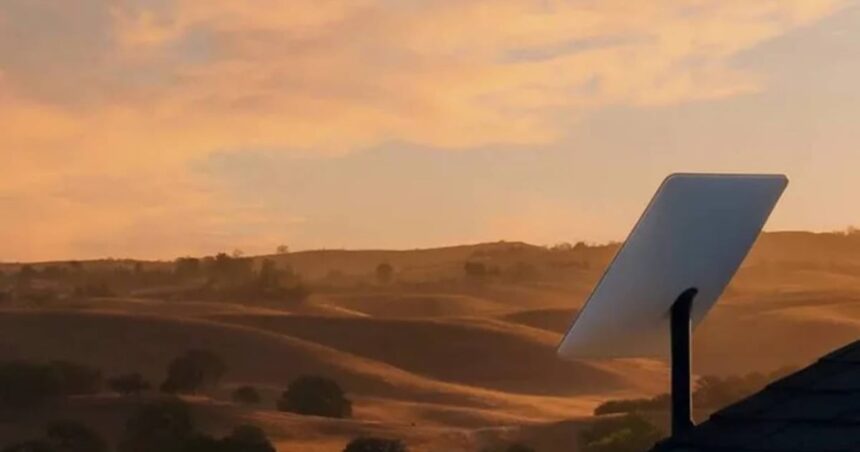
Unlike traditional fibre networks, which require costly trenching, poles, permits, and extensive physical infrastructure, low-earth orbit satellite systems can deliver high-speed internet almost anywhere with a clear view of the sky.
That has made Starlink one of the most closely watched technology companies in South Africa.
Although the service remains officially unlicensed in the country, many South Africans in remote areas have already found unofficial ways to access the platform through roaming products registered in neighbouring countries.
Now, ICASA says it wants to create what it describes as a “transparent, efficient, and sustainable regulatory environment” that encourages investment while helping close South Africa’s widening digital divide. The regulator says public hearings and final legal vetting are expected before the framework reaches final approval later in the financial year.
The economic implications could be significant.
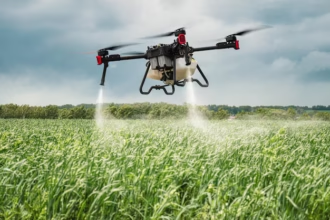
For farmers, satellite internet could enable real-time crop monitoring, remote equipment diagnostics, weather forecasting, livestock tracking, and digital trading platforms.
For schools, particularly in underserved communities, high-speed satellite connectivity could unlock online learning, digital classrooms, and access to global educational resources.
Tourism operators, game reserves, emergency services, and marine businesses operating beyond major fibre corridors could also benefit.
But the road to approval remains politically sensitive.
Starlink’s entry into South Africa has become closely tied to ongoing debates around licensing rules, foreign investment, and transformation policies, including the use of equity equivalent investment programmes instead of direct ownership structures.
For now, no operator has been formally approved.
But for thousands of South Africans still waiting for reliable broadband, the latest regulatory movement suggests that the country’s next internet revolution may arrive not through cables under the ground, but from satellites above it.
Source: MyBroadband – Luis Monzon.