For years, South Africa’s energy debate has largely focused on blackouts, ageing infrastructure, and the economic cost of unreliable electricity. But quietly, and increasingly away from the headlines dominated by load shedding, another energy story has been unfolding in Cape Town. Across industrial parks, commercial rooftops, logistics hubs, data centres, and engineering campuses, the Western Cape is rapidly building what many industry experts now believe could become one of the country’s most advanced clean energy ecosystems, driven not by government alone, but by private capital, engineering innovation, and a growing demand for energy independence.
Cape Town’s renewable energy technology sector is entering what analysts are calling a defining growth phase, with fresh investment flowing into battery storage systems, solar engineering, smart grid management, and energy optimisation technologies across the Western Cape.
Recent industry updates published by Engineering News and ITWeb show that private sector investment in energy technology continues to accelerate, particularly in regions where businesses are actively seeking greater energy security and reduced reliance on the national grid.
Cape Town has emerged as one of the strongest beneficiaries of that shift.
Faced with years of electricity uncertainty, rising utility costs, and operational disruptions linked to power instability, businesses across the metro have increasingly turned to solar generation, battery storage, intelligent energy management, and microgrid systems to secure long-term operational resilience.
What began as emergency backup planning has now evolved into a full-scale technology transformation.
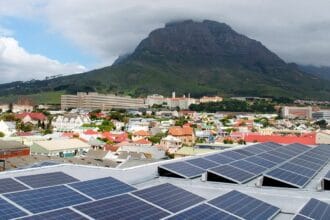
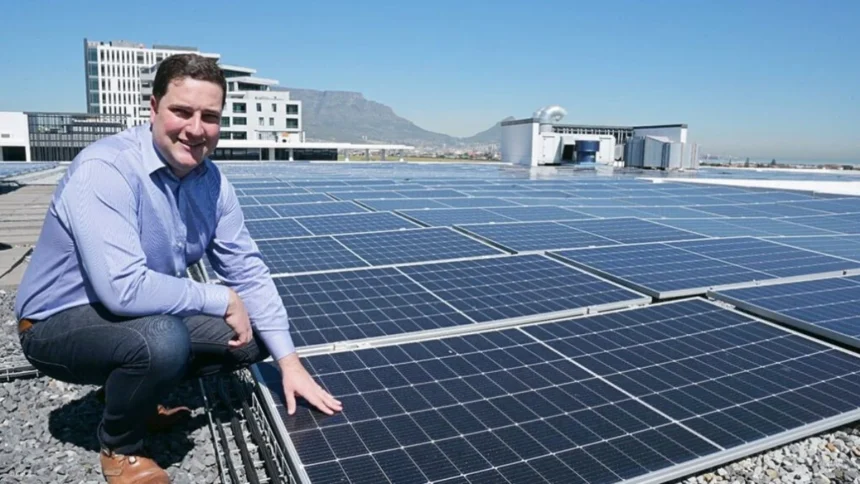
From warehouses in Montague Gardens and manufacturing facilities in Epping to office parks in Century City and logistics centres near the airport, energy engineers are seeing growing demand for integrated systems that combine rooftop solar, lithium battery storage, digital monitoring platforms, and predictive analytics.
These systems do far more than simply keep the lights on.
Smart energy platforms now allow businesses to monitor consumption in real time, automatically switch between grid, solar, and battery power, identify energy waste, and forecast usage patterns based on operational demand.
Technology firms operating in the Western Cape say this shift is creating entirely new commercial opportunities.
Software developers are building energy analytics platforms. Engineering firms are expanding specialist installation teams. Battery importers are increasing warehousing capacity. Electrical contractors are retraining staff in advanced storage technologies.
The result is a clean energy ecosystem that is generating employment far beyond the traditional electricity sector.
Industry analysts say one of the biggest growth areas is battery storage.
As solar panel prices continue to fall globally, storage technology has become the next major investment frontier, allowing businesses to store excess energy during daylight hours and deploy it strategically during peak demand or grid interruptions.
This is particularly valuable in sectors such as food processing, cold storage, healthcare, manufacturing, and digital infrastructure, where uninterrupted power is essential.
Cape Town’s growing technology sector is also adding momentum.
Data centres, software companies, fintech operations, and digital service providers all depend on stable electricity, making energy resilience an increasingly important part of investment decisions.
The Western Cape Government has repeatedly positioned clean energy and infrastructure innovation as key pillars of long-term economic growth, and private investors appear to be responding.
Economists say the province’s ability to combine engineering talent, capital investment, strong municipal planning, and a growing technology workforce could position Cape Town as South Africa’s most advanced clean energy innovation hub over the next decade.
For a city once defined largely by tourism, real estate, and agriculture, the next major export may not come from vineyards, ports, or mountain trails.
It may come from the technologies now quietly powering its future.
Source: Engineering News, ITWeb, Western Cape energy investment reports.