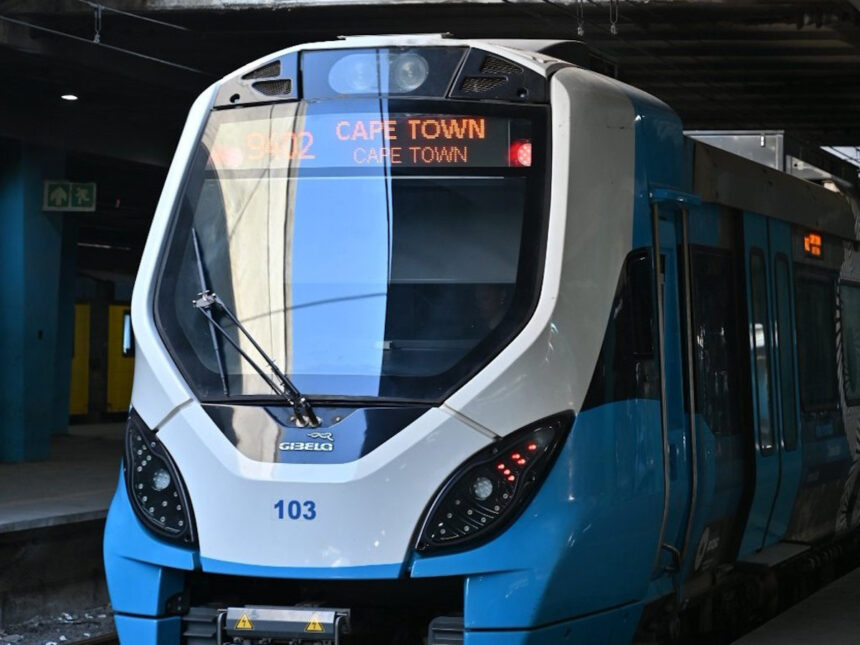
Cape Town’s long-standing ambition to take control of its commuter rail system has moved a step closer to reality, following the release of a sweeping R1.9-trillion national rail master plan aimed at rebuilding South Africa’s struggling rail network.
The draft National Rail Master Plan, released by Transport Minister Barbara Creecy, sets out a 25-year strategy to reposition rail as a central component of the country’s economic and social infrastructure. The plan covers freight, long-distance passenger services, and urban commuter rail, with a strong emphasis on restoring functionality and expanding access.
One of the most significant elements for Cape Town is the proposed devolution of urban passenger rail services to metropolitan municipalities. This would allow cities to take greater control of local rail operations, a move that has been actively pursued by the City of Cape Town in recent years.
Cape Town Mayor Geordin Hill-Lewis welcomed the development, describing it as a major step forward. “We welcome government’s renewed commitment to rail devolution in this National Masterplan,” he said, while also calling for urgency in implementing the changes. “The City will be calling for clear and urgent deadlines, as we are ready to be the first municipality to run its local trains.”
The plan proposes a significant reconfiguration of the existing Metrorail network, including the development of new lines and the establishment of key interchange hubs in areas such as Nyanga, Heathfield, Maitland and Kentemade. These hubs are intended to improve connectivity between high-demand and lower-demand routes, allowing for more efficient movement across the metro.
Under the proposed model, rail lines would operate independently rather than sharing infrastructure, enabling more frequent services. In theory, trains could run every three minutes on major routes, significantly reducing travel times and easing congestion on Cape Town’s roads.
The City has also indicated that an integrated transport system is a key objective. Hill-Lewis said the long-term vision is for commuters to use a single ticket across different modes of transport. “In time, we want to see Capetonians using just one ticket to hop from trains to MyCiTi buses and other public transport,” he said.
Mayoral Committee Member for Urban Mobility Rob Quintas highlighted the financial and operational requirements needed to make devolution work. “The City also needs to have authority over fare-setting, access to long-term national grant funding, and the ability to generate revenue through partnerships and commercialisation,” he said.
The broader economic case for rail investment is also significant. The master plan estimates that South Africa is losing hundreds of billions of rand annually due to rail inefficiencies, with freight being diverted to road transport at a higher cost to the economy.
While the plan still requires funding commitments and further refinement, it represents one of the most ambitious efforts to transform the country’s rail system in decades.
For Cape Town, the potential to manage its own commuter rail network could mark a major shift in how residents move across the city, with far-reaching implications for mobility, economic access, and urban development.
Source: GroundUp – Steve Kretzmann.