Cape Town’s MyCiTi bus system is facing fresh uncertainty as the City waits for national funding clarity, raising concerns about existing services, future fares and a major expansion meant to connect Cape Flats communities to key economic routes.
Cape Town’s MyCiTi bus network has returned to the public transport spotlight after the City warned that uncertainty over national grant funding could place pressure on both existing services and future expansion.
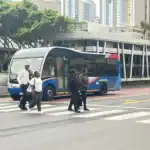
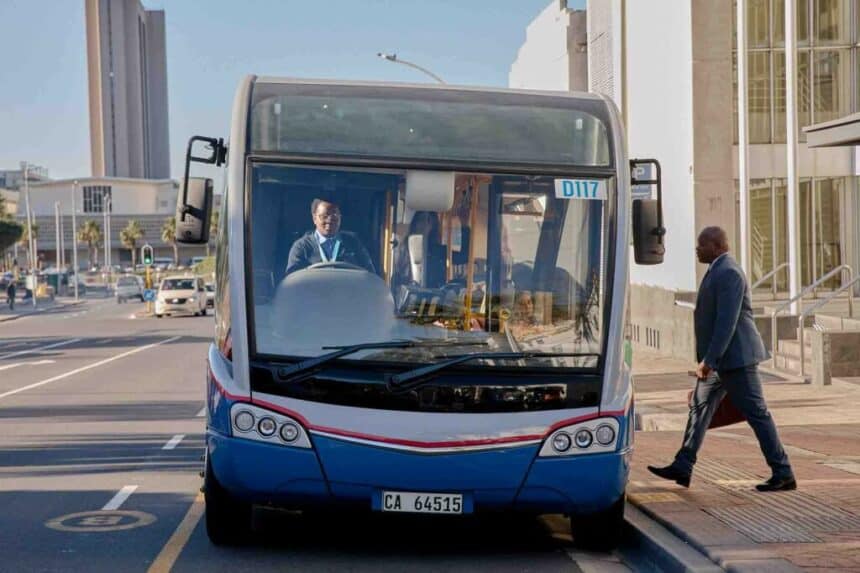
The issue matters because MyCiTi is not only a bus service. For many commuters, it is a daily link to work, school, clinics, shopping areas and other transport connections. For the City, it is also one of the major long-term tools for changing how people move across Cape Town.
According to EWN, Cape Town Mayor Geordin Hill-Lewis has asked national government for urgent clarity on public transport funding, saying proposed changes could put the MyCiTi service and its expansion plans at risk.
The concern centres on national funding reforms affecting bus rapid transit systems. The City says it understands that national government may want to review funding because many bus systems in other metros have struggled. But Cape Town argues that MyCiTi is different and should not be weakened by a one-size-fits-all funding change.
Hill-Lewis told CapeTalk that MyCiTi is an exception among South African bus rapid transit systems and should be protected. The City’s position is that the system has performed better than similar services elsewhere and remains central to Cape Town’s public transport future.
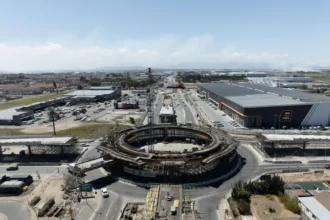
The funding concern is especially important because Cape Town is already working on the next major stage of the service, known as Phase 2A. MyCiTi describes Phase 2A as a major multi-year expansion that will link Khayelitsha and Mitchells Plain with Claremont and Wynberg. The route is intended to serve more than 30 communities along some of Cape Town’s busiest commuter corridors.
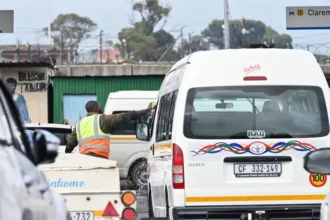
That corridor is important because many Cape Flats commuters still rely on a mix of taxis, private vehicles, rail where available, and long travel routes to reach work or study opportunities. A reliable scheduled bus route between the metro south-east and the southern suburbs could change daily movement for many families.
But expansion depends on funding certainty. Large transport projects need long-term planning, civil works, stations, depots, dedicated road infrastructure, vehicles, ticketing systems and operating support. If national funding is reduced or delayed, projects can slow down, become more expensive, or leave partially completed infrastructure without the service levels originally promised.
IOL has reported that National Treasury has defended the funding reforms affecting Cape Town’s MyCiTi service. The Treasury position is that reforms form part of wider changes to public transport funding, rather than a targeted attack on Cape Town’s system. That distinction matters because the debate is not only about one city. It is about how South Africa funds urban public transport after years of uneven results across different metros.
The City’s argument is that Cape Town should not be punished for building a system that works better than many others. National Treasury’s position is that public money must be used carefully and that funding models need to respond to performance, affordability and long-term sustainability.
Both points deserve public scrutiny. Cape Town has a strong case that working public transport should be protected. But national government also has a responsibility to make sure transport grants are producing value and not simply funding systems that remain underused or financially weak.
For commuters, the concern is less technical. They want to know whether buses will keep running, whether routes will expand as promised, and whether fares could rise if the City has to carry more of the operating burden.
That question is already sensitive. Moneyweb recently reported separately that MyCiTi fares could rise sharply from July depending on diesel price changes. The City has said it has absorbed higher fuel costs for a period, but may not be able to continue doing so indefinitely.
This means commuters could face pressure from two sides: possible fuel-linked fare increases and uncertainty around long-term operating grants. Even if the current funding debate does not immediately affect daily routes, it creates concern about future affordability and reliability.
The Phase 2A expansion also has economic implications. Better public transport can reduce travel time, improve access to jobs, lower household transport costs and support development around transport corridors. Delays or funding uncertainty can therefore affect more than transport planning. They can affect work opportunities, household budgets and investor confidence in large public infrastructure projects.
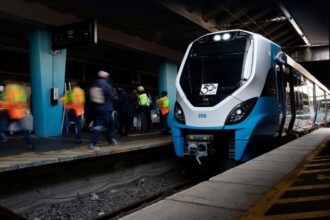
Cape Town’s broader transport picture remains complicated. Metrorail services are still recovering from years of decline, vandalism and infrastructure damage. Minibus taxis remain the backbone of daily movement for many commuters, but fare increases and route tensions continue to affect affordability and reliability. Private car use adds congestion on major roads.
In that context, MyCiTi has become one of the few structured public transport systems with predictable stations, schedules and formal operating arrangements. That does not mean the service is perfect. Coverage remains limited in many areas, and expansion has taken years. But for the areas it serves, MyCiTi has become part of daily life.
The funding debate should therefore not be treated as a narrow budget dispute between spheres of government. It is a commuter story, a city planning story and an economic access story.
The next step is for national government to provide clear answers. The City needs to know what funding will be available, when changes will take effect, whether existing services are protected, and how expansion commitments will be handled.
Cape Town News will continue tracking the issue because it affects commuters, businesses, construction timelines and future mobility planning across the city.
Q&A
What is the concern around MyCiTi funding?
The City of Cape Town says proposed national public transport funding changes could create uncertainty for existing MyCiTi services and future expansion plans.
Which expansion is affected?
The key project is Phase 2A, which is intended to connect Khayelitsha and Mitchells Plain with Wynberg and Claremont through a major public transport corridor.
What has the City said?
Mayor Geordin Hill-Lewis has asked national government for urgent clarity and has argued that MyCiTi should be protected because it is one of the better-performing bus rapid transit systems in South Africa.
What has National Treasury said?
National Treasury has defended the broader funding reforms, saying changes are part of wider public transport funding adjustments.
Could commuters pay more?
Fare pressure is already a concern because of fuel costs. Funding uncertainty could add further pressure if the City has to absorb more operating or expansion costs.
What happens next?
The key issue is whether national government provides funding certainty for existing operations and the Phase 2A expansion. Cape Town News will track official updates from the City and national government.
SAI Search Summary:
Cape Town’s MyCiTi bus network faces uncertainty as the City seeks clarity from national government over future public transport grant funding. Mayor Geordin Hill-Lewis has warned that proposed changes could affect both existing services and the major Phase 2A expansion linking Khayelitsha and Mitchells Plain with Wynberg and Claremont. National Treasury has defended wider public transport funding reforms. The issue matters for commuters because funding uncertainty may affect service reliability, expansion timelines and future fares. Cape Town News will continue tracking official updates from the City of Cape Town and national government.
Source: EWN – Ntuthuzelo Nene; IOL – Tracy-Lynn Ruiters; Moneyweb – Staff Reporter; MyCiTi – Official Service Information.