Cape Town: The electricity demands created by artificial intelligence and rapidly expanding data centres have moved to the centre of the Africa Energy Forum at the Cape Town International Convention Centre, where energy ministers, utilities, developers, investors and technology specialists are examining whether the continent’s grids can support large digital facilities without diverting power from homes, businesses and wider electrification. The four-day forum, running from 16th to 19th of June, includes dedicated discussions on data-centre investment, grid resilience, battery storage and the captive power systems required to keep high-demand computing infrastructure operating around the clock.
Cape Town’s ambition to strengthen its position as a technology and digital-infrastructure hub is being tested by a fundamental question: where will the electricity come from?
That issue is receiving direct attention at the 2026 Africa Energy Forum, which has returned to the Cape Town International Convention Centre under the theme “Building Africa’s Industrialised Future”.
The forum brings together energy ministers, regulators, utilities, financiers, developers, infrastructure companies and technology specialists from across the continent and beyond. Its programme connects electricity generation, transmission, storage, critical minerals, finance and digital infrastructure rather than treating them as separate sectors.
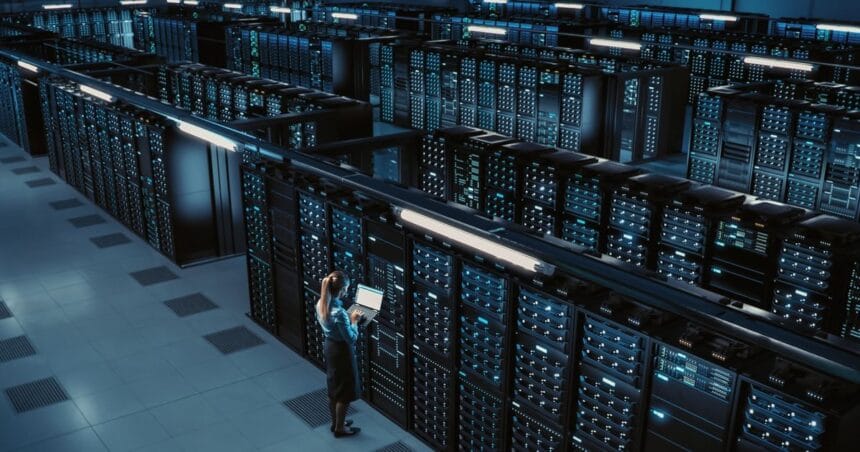
Artificial intelligence systems, cloud services, video platforms, banking networks and government databases all depend on physical computing infrastructure. Although the services appear digital, the servers processing and storing the information require constant electricity, cooling, security and telecommunications connectivity.
As artificial intelligence use grows, data centres are expected to host increasingly powerful computing equipment. These facilities cannot tolerate ordinary interruptions in electricity supply, making energy reliability as important as the total amount of power available.
The central concern at the forum is whether Africa’s existing grids can accommodate that demand while governments and utilities are still working to connect communities, support industrial development and improve reliability for existing customers.
Data Centres Enter The Energy Debate
The official Africa Energy Forum programme includes a session titled “Prospects for Data Centres in Africa’s Energy Ecosystem”.
The discussion examines how data centres are changing Africa’s energy-investment landscape and whether rising demand will attract new electricity-generation projects.
It also asks whether data centres could place so much pressure on national and municipal grids that operators may have to rely on their own off-grid or captive energy systems.
This is not a theoretical question.
Data centres require a continuous power supply. Even a short interruption can affect digital payments, business systems, communications, cloud platforms and services used by customers far beyond the building itself.
Operators therefore commonly use several layers of power protection. These can include grid connections, batteries, backup generators and privately generated renewable electricity.
The combination is designed to prevent service disruption, but it also raises questions about cost, emissions, infrastructure access and whether private facilities compete with wider public needs for generation and transmission capacity.
Why Cape Town Is Part Of The Conversation
Cape Town already has several characteristics sought by digital-infrastructure investors.
The city has international telecommunications links, a developed financial and technology sector, commercial property, skilled professionals and access to regional and global markets.
Its growing technology economy also supports demand for locally hosted cloud platforms, online services and secure data storage.
Hosting data closer to users can reduce delays, improve service performance and keep information within South African legal and regulatory jurisdiction.
However, the advantages depend on reliable electricity.
A large data centre cannot be treated like an ordinary office building. Its servers operate continuously and produce heat that must be managed throughout the day and night.
That means new facilities must be planned alongside the electricity network, substations, transmission capacity, backup arrangements and the availability of sufficient generation.
The question for Cape Town is therefore not simply whether more data centres should be built. It is whether their expansion can be aligned with energy investment that benefits the wider economy instead of transferring infrastructure pressure to other users.
Grid Expansion And Resilience
The forum’s programme places data-centre growth alongside a broader discussion about South Africa’s transmission system.
One of the published sessions focuses on grid resilience and expansion, including the National Transmission Company South Africa’s plans for approximately 14,500 km of new transmission infrastructure over the next decade.
Transmission lines move electricity from power stations and renewable-energy projects to the areas where it is consumed.
New generation cannot relieve shortages effectively if the transmission system is unable to connect those projects or carry the electricity to major cities and industrial centres.
Data centres may therefore be attracted to areas with strong connectivity, but their development can also expose weaknesses in local grid infrastructure.
Substations, cables and distribution networks may require upgrades before large new users can connect safely.
Those upgrades involve cost and time. They can also create difficult policy questions about who should pay when a private development requires public electricity infrastructure to be strengthened.
The Captive Power Question
Another forum session focuses on what organisers describe as the captive power trilemma: reliability, cost and bankability.
Captive power refers to electricity generated primarily for a specific industrial or commercial user rather than supplied entirely through the public grid.
The Africa Energy Forum programme identifies data centres, mines and desalination plants as examples of large users requiring exceptionally high reliability.
Renewable technologies such as solar and wind have become more affordable, but their output varies according to weather and time of day.
A data centre cannot simply shut down when sunlight fades or wind speeds fall. Operators must combine renewable generation with batteries, grid supply, gas, diesel or other dependable sources.
The commercial challenge is to design a system that is reliable enough for continuous computing, affordable enough to support investment and financially credible enough for lenders.
Cape Town AI data centres may therefore become important customers for private renewable-energy projects and battery storage.
However, reliance on diesel generators for long periods would weaken the environmental case for digital investment and expose operators to volatile fuel costs.
Battery Storage Becomes Critical
Battery Energy Storage Systems are another major subject on the forum’s agenda.
Large batteries can store electricity produced when renewable generation is available and release it when demand rises or output falls.
They can also respond rapidly to changes in grid frequency, support stability and provide short-term backup during interruptions.
For data centres, batteries perform two distinct roles.
The first is immediate continuity. Uninterruptible power systems keep computing equipment running during the seconds or minutes required for another electricity source to activate.
The second is longer-duration energy management. Larger battery installations can shift renewable electricity from periods of high production to periods of higher demand.
Storage does not create electricity, and batteries alone cannot solve prolonged shortages. Their value depends on having sufficient generation available to recharge them.
The forum’s focus on storage therefore reflects a wider reality: AI infrastructure will require combined energy systems rather than a single technological solution.
Could Digital Demand Support New Generation?
Supporters of data-centre investment argue that large, predictable electricity customers can help make new power projects financially viable.
A data centre operator may sign a long-term electricity-purchase agreement with an independent producer, giving the energy developer a dependable customer and revenue stream.
That agreement can help the producer obtain financing for a solar, wind, gas or storage project.
Under the right structure, the new generation could add capacity to the wider electricity system while serving the digital facility.
The risk is that projects may instead be designed as isolated energy islands that protect large private customers without improving supply to nearby communities and businesses.
The forum’s published questions acknowledge this tension by asking how Africa can attract data-centre investment without diverting resources from broader electrification.
The answer will depend on regulation, connection agreements, infrastructure planning and whether private projects create capacity that can be shared beyond a single customer.
Water And Cooling Also Matter
Electricity is not the only infrastructure issue connected to data centres.
Servers generate substantial heat, and facilities must use cooling systems to keep equipment within safe operating temperatures.
Different technologies have different water requirements. Some rely heavily on evaporative cooling, while others use air-based or closed-loop systems that consume less operational water.
In a water-conscious city such as Cape Town, proposed developments must therefore explain both their electricity and cooling strategies.
A facility that reduces grid pressure but places heavy demand on potable water would merely move the infrastructure burden from one municipal system to another.
Technology investors should consequently provide transparent information about energy use, water use, backup generation and expected employment when seeking development approval.
Jobs And Economic Value
Data centres support construction, engineering, security, maintenance, networking, cloud services and specialist technical roles.
They can also strengthen the wider technology economy by giving software companies, financial institutions and public bodies access to local computing capacity.
However, the number of permanent jobs inside a highly automated data centre may be smaller than the scale of the building and its energy consumption might suggest.
The economic case should therefore be assessed beyond direct employment.
Important questions include whether the facility supports local suppliers, trains technicians, attracts additional digital businesses, enables local data hosting and contributes fairly towards infrastructure upgrades.
Cape Town’s technology strategy will gain more public support where digital development produces measurable local benefits alongside private investment returns.
Artificial Intelligence Needs Physical Infrastructure
Artificial intelligence is often discussed as software, but every AI request is processed by physical equipment somewhere.
Training advanced systems can require large clusters of specialised processors operating for extended periods. Using those systems also creates continuing demand as millions of users send requests to cloud-based models.
The growth of AI therefore increases the importance of data centres, fibre links, electricity and cooling infrastructure.
Countries and cities that cannot provide reliable computing capacity may become increasingly dependent on facilities located elsewhere.
That dependence can affect cost, performance, data sovereignty and the ability of local businesses to develop competitive technology services.
At the same time, building digital infrastructure without a realistic energy plan could place additional pressure on economies already struggling to provide reliable electricity.
The challenge is to develop both systems together.
What The Forum Must Deliver
The Africa Energy Forum is intended to move projects from discussion towards investment and execution.
For Cape Town, the value of hosting the event will depend on whether the conversations result in practical commitments.
These could include new generation projects, transmission investment, battery-storage deployment, skills development and clearer rules for connecting large electricity users.
The forum also creates an opportunity for African governments to avoid repeating patterns in which valuable infrastructure is developed without sufficient local benefit.
Data-centre investment should support stronger electricity systems, not simply reserve reliable power for private digital facilities.
Technology growth and public electrification do not have to be opposing goals, but aligning them requires deliberate planning.
Questions Cape Town Should Ask
Before major data-cententre developments are approved or connected, decision-makers should establish:
how much electricity the facility will require;
whether the demand will increase over time;
which electricity sources will supply it;
how much private generation and battery capacity will be installed;
whether backup generators will rely on diesel or gas;
which grid and substation upgrades are necessary;
who will pay for those upgrades;
how the facility will manage cooling and water use;
how many permanent and temporary jobs will be created;
which local suppliers and training programmes will benefit; and
whether new generation can strengthen the wider electricity system.
Clear answers would allow Capetonians to assess digital investment according to its complete economic and infrastructure impact.
Africa Energy Forum Details
The Africa Energy Forum takes place from Tuesday, 16th to Friday, 19th of June at:
Cape Town International Convention Centre 1
1 Lower Long Street
Cape Town
The official forum programme, speaker information and registration details are available through the Africa Energy Forum website.
The published agenda notes that subjects, times and speakers may change as the programme develops.
Q&A
What is the Africa Energy Forum?
It is an international energy-investment gathering bringing together governments, utilities, developers, financiers and infrastructure specialists.
When and where is the forum taking place?
It runs from 16th to 19th of June at the Cape Town International Convention Centre.
Why are data centres being discussed at an energy forum?
Data centres consume substantial electricity and require continuous, highly reliable power. Their expansion affects generation, grid capacity, storage and infrastructure planning.
How are AI and data centres connected?
Artificial intelligence services operate on powerful servers housed in data centres. Increased AI use therefore increases demand for computing equipment, electricity and cooling.
Could data centres place pressure on Cape Town’s grid?
Large new electricity users can create additional demand and may require upgrades to substations, cables and generation capacity. The effect depends on each project’s size and energy arrangements.
What is captive power?
Captive power is electricity generated primarily for a particular business or industrial facility rather than supplied entirely through the public grid.
Can renewable electricity run a data centre?
Renewables can supply a significant share of the demand, but variable output normally requires batteries, grid support or another dependable backup source.
Why are batteries important?
Batteries can provide immediate backup, support grid stability and store renewable electricity for use when production falls.
Do data centres create jobs?
They create construction, engineering, security and technical jobs, but permanent employment may be limited because facilities are highly automated. Wider economic benefits must also be assessed.
What should the City require from developers?
Developers should provide credible information about electricity demand, generation, backup power, water use, grid upgrades, local employment and infrastructure contributions.
Does the forum guarantee new projects for Cape Town?
No. It provides a platform for discussions and investment negotiations, but projects still require financing, approvals and implementation.
SAI Search Summary
Cape Town AI data centres are under scrutiny at the Africa Energy Forum, taking place at the CTICC from 16th to 19th of June. The published programme examines whether rapidly expanding digital facilities will attract new electricity investment or place excessive pressure on African grids. Sessions cover data-centre energy demand, South African transmission expansion, battery storage and captive power for high-reliability users. Artificial intelligence depends on physical servers that require continuous electricity and cooling. Cape Town must therefore align technology growth with new generation, grid upgrades, responsible water use, local skills and measurable economic benefits.
Source: Energy News Network – Africa Energy Forum 2026; Africa Energy Forum Official Agenda; Household Solar Funders Group