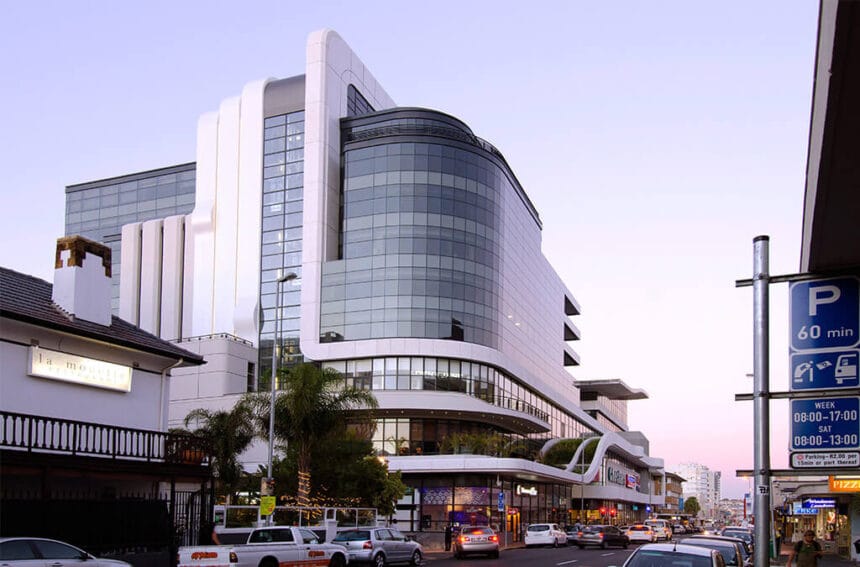
Sea Point: The R943 million sale of The Point Mall has cleared a major regulatory hurdle after the Competition Tribunal unconditionally approved Future Indefinite Investments 180’s acquisition of the prominent Cape Town retail and office property from Permasolve Investments. The transaction transfers control of the mixed-use Sea Point centre, its tenant leases, improvements, fixtures and fittings to a new property investor, while seller Hosken Consolidated Investments plans to use the proceeds primarily to reduce group debt and preference-share funding obligations.
The Competition Tribunal’s approval has moved the R943 million sale of The Point Mall closer to completion, marking one of the most significant recent commercial-property transactions along Cape Town’s Atlantic Seaboard.
The transaction involves Future Indefinite Investments 180 acquiring the rental enterprise operated by Permasolve Investments at The Point Centre in Sea Point. Hosken Consolidated Investments owns 70.59% of Permasolve and announced the disposal agreement in December last year as part of a broader strategy to sell selected real-estate assets.
The Competition Tribunal approved the transaction without conditions, meaning the authority did not impose specific requirements relating to employment, ownership, tenants or market conduct as part of its merger decision.
The approval does not necessarily mean that the property transfer has already been registered. HCI’s sale announcement stated that the transaction would become effective when the property is transferred into the purchaser’s name. Competition approval was one of the conditions that had to be fulfilled before the transaction could proceed.
The sale agreement values the property at R943 million, inclusive of VAT at a zero rate. Future Indefinite Investments 180 is expected to acquire the property, improvements, existing tenant leases, and fixtures and fittings belonging to Permasolve.
Who Is Buying The Point Mall?
Future Indefinite Investments 180 is a property-investment company whose wider interests reportedly include retail property, restaurants, offices, hospitality assets, residential developments and industrial warehouses.
HCI’s formal announcement identifies Steven Gottschalk as the purchaser’s sole beneficial owner.
The Competition Tribunal’s approval means the buyer may take full control of the letting enterprise once the remaining transactional requirements have been completed and the transfer has been registered.
No announcement reviewed by Cape Town News indicates that the purchaser intends to close the centre, remove tenants or fundamentally change its current mixed-use character.
Any future redevelopment, rezoning or substantial alteration would ordinarily require separate planning, building and municipal processes where applicable.
What Exactly Is Being Sold?
The Point is a mixed-use commercial property combining retail stores with A-grade office accommodation in central Sea Point.
The rental enterprise being transferred includes the land and buildings, property improvements, tenant leases, and fixtures and fittings owned by Permasolve.
The centre’s retail tenants include well-known businesses such as Checkers, Clicks, Kauai and Bootlegger, alongside additional shops, restaurants and service providers.
Its combination of daily convenience retail, food outlets, health and personal services, and offices gives the property a customer base extending beyond tourists and occasional shoppers. It serves people living and working throughout Sea Point and surrounding Atlantic Seaboard neighbourhoods.
The property’s location places it within one of Cape Town’s most densely developed and commercially active residential areas, close to Main Road, Regent Road and the Sea Point Promenade.
Why HCI Is Selling
HCI said The Point Mall sale forms part of its previously communicated intention to dispose of selected property assets.
The group believes the transaction will generate a substantial return on its investment and release significant cash flow.
After Permasolve settles its own borrowings and tax obligations, the remaining proceeds are expected to be used primarily to reduce portions of HCI’s group debt and preference-share funding obligations.
This means the transaction is not being presented by HCI as a response to the centre failing commercially. It forms part of a wider capital-management decision by the listed investment group.
As of 30th September last year, the net assets attributed to the rental enterprise were reported at approximately R188.3 million. The property generated about R5.47 million in profit after tax for the six months ending on that date.
Because the disposal was classified as a Category 2 transaction under the relevant JSE requirements, HCI did not need to obtain shareholder approval before proceeding.
What Competition Tribunal Approval Means
Large mergers and acquisitions that meet prescribed thresholds must pass through South Africa’s competition-regulation process.
The authorities assess whether a proposed transaction is likely to substantially prevent or reduce competition. They may also examine public-interest considerations, including employment, the ability of smaller businesses to compete and the effect on historically disadvantaged owners.
The Tribunal can approve a merger without conditions, approve it subject to specified conditions or prohibit it.
In The Point Mall sale, the Tribunal approved the acquisition without conditions. That indicates that it did not identify competition or public-interest concerns requiring a conditional order.
However, competition approval does not guarantee that every commercial and administrative step has been completed. Property registration, financing, tax settlement and other contractual requirements may still need to be finalised.
Will Shoppers Notice Any Immediate Difference?
No immediate changes have been announced to The Point’s stores, office tenants, opening hours, parking arrangements or customer services.
Commercial-property sales commonly transfer existing lease agreements to the new owner. Tenants generally continue trading under their current lease terms unless separate arrangements are later negotiated.
Shoppers should therefore not assume that the change in ownership means tenants will leave or that the centre will close.
The buyer may eventually introduce changes to property management, maintenance, leasing strategy or the tenant mix. Any such decisions would need to be communicated separately by the owner, centre management or affected businesses.
Cape Town News found no official statement confirming a planned redevelopment or major operational change arising directly from the sale.
Why The Sale Matters For Sea Point
The R943 million valuation reflects the commercial importance of well-located mixed-use property along the Atlantic Seaboard.
Sea Point combines a large permanent population with tourism, hospitality, office activity and high pedestrian movement. Its established retail streets and proximity to the promenade make commercial space in the area particularly sought after.
The neighbourhood has also attracted sustained residential development, including the conversion or redevelopment of older properties into apartments and mixed-use buildings.
This growth has supported demand for supermarkets, restaurants, gyms, healthcare services and other convenience retail. It has also increased pressure on parking, roads, public spaces and municipal infrastructure.
The Point’s location allows it to benefit from both neighbourhood spending and visitors to the Atlantic Seaboard.
Time Out previously included Sea Point among its list of the world’s coolest neighbourhoods, highlighting its promenade, shops, restaurants and cosmopolitan character. That recognition contributes to the area’s international profile but is not the basis on which the Competition Tribunal assessed the sale.
HCI’s Wider Property Disposal Strategy
The Point is not the only Western Cape commercial property linked to HCI’s asset-disposal programme.
The group also announced the disposal of its 65% interest in Whale Coast Village Mall in Hermanus for an aggregate R600 million.
That transaction similarly involved the sale of a rental enterprise and was intended to help settle taxes and debt obligations.
Viewed together, the disposals indicate that HCI is reducing its exposure to selected property assets and redirecting capital through debt reduction and other group priorities.
The Point Mall sale is nevertheless distinctive because of the property’s location in one of Cape Town’s most valuable and visible commercial districts.
What Happens Next?
The transfer process must be completed before the purchaser formally takes ownership of the property.
HCI initially expected registration during the second quarter of this year, subject to the fulfilment or waiver of the transaction’s outstanding conditions.
Once transfer has taken place, the purchaser will control the rental enterprise and assume the landlord’s role in relation to the property’s leases.
Tenants and service providers should receive formal communication where the change requires updated payment information, notices or administrative arrangements.
Members of the public should be cautious of fraudulent notices purporting to change banking details or payment instructions. Commercial tenants should independently verify any financial communication with authorised property-management representatives before making payments.
What Tenants Should Know
Existing tenants should review official notices from their landlord or centre management and confirm whether the ownership transfer affects administrative details.
A property sale does not automatically terminate a valid commercial lease. South African property law generally recognises the principle that a purchaser acquires the property subject to existing leases, although the precise position may depend on the lease and circumstances.
Tenants with questions about rental payments, deposits, maintenance requests or lease renewals should contact centre management through established channels rather than relying on informal messages.
No tenant-specific changes arising from the transaction had been publicly announced at the time of publication.
Q&A
How much is The Point Mall being sold for?
The purchase consideration is R943 million, inclusive of VAT at a zero rate.
Who is buying The Point Mall?
Future Indefinite Investments 180 is acquiring the rental enterprise from Permasolve Investments.
Who currently owns the property?
The property is owned through Permasolve Investments, in which Hosken Consolidated Investments holds a 70.59% interest.
Has the sale been approved?
The Competition Tribunal has approved the transaction without conditions. The property transfer must still be completed for ownership formally to change.
What does the transaction include?
It includes the property, its improvements, tenant leases, and fixtures and fittings owned by Permasolve.
Which businesses operate at The Point?
The centre’s tenants include Checkers, Clicks, Kauai, Bootlegger and various other retail, food and service businesses.
Will the mall close?
There has been no announcement that The Point will close. No immediate operational changes have been confirmed.
Will tenants have to leave?
No tenant removals have been announced. Existing commercial leases ordinarily continue after a property changes ownership, subject to their terms and applicable law.
Why is HCI selling the property?
HCI said the sale will produce a substantial return, generate cash and help reduce group debt and preference-share funding obligations.
Why did the Competition Tribunal review the transaction?
The competition authorities assess qualifying mergers to determine whether they may harm competition or raise public-interest concerns.
Has a redevelopment been announced?
No confirmed redevelopment connected to the sale had been publicly announced at the time of publication.
SAI Search Summary
The R943 million Point Mall sale has received unconditional approval from the Competition Tribunal. Future Indefinite Investments 180 will acquire the Sea Point mixed-use retail and office property from Permasolve Investments, which is majority-owned by Hosken Consolidated Investments. The transaction includes the property, improvements, tenant leases, and owned fixtures and fittings. HCI plans to use the proceeds primarily to reduce debt and preference-share funding obligations after settling Permasolve’s borrowings and taxes. No immediate changes to tenants, trading hours or customer services have been announced, and the transaction becomes effective once the property transfer is registered.
Source: BusinessTech – Luke Fraser; Competition Tribunal of South Africa; Hosken Consolidated Investments