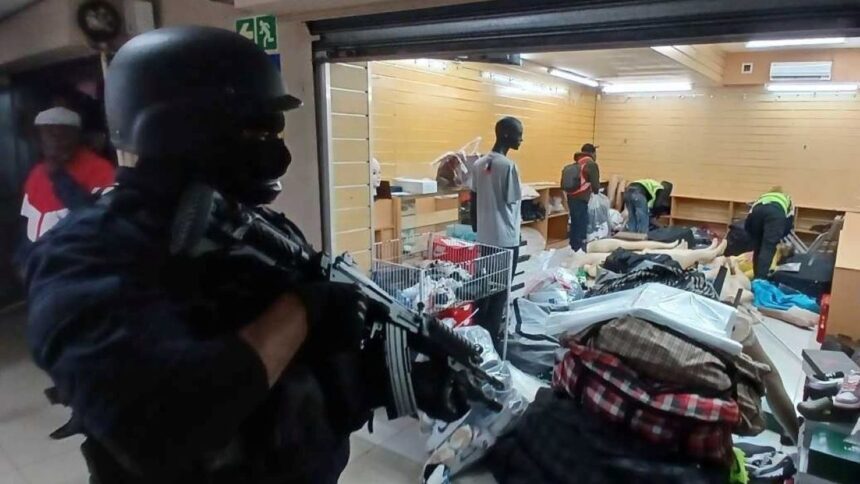
A major police crackdown in Bellville has placed the Western Cape’s counterfeit goods trade back in the spotlight after SAPS and Brand Protectors seized fake merchandise worth an estimated R98 million. The search-and-seizure operation targeted shops in Bellville CBD believed to be selling counterfeit products, including branded clothing, running shoes and sneakers. The size of the seizure makes this one of the strongest local crime stories of the day, with direct public interest for shoppers, legitimate traders, landlords, law enforcement and businesses trying to operate in one of Cape Town’s busiest commercial districts.
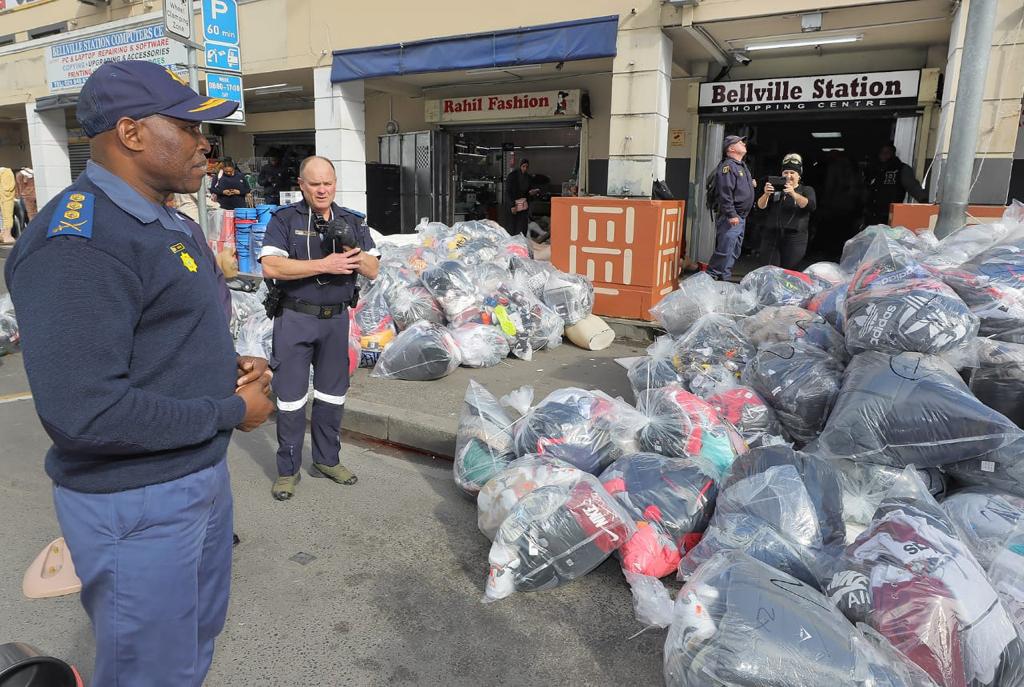
Police in the Western Cape have seized counterfeit goods worth an estimated R98 million during a major operation in Bellville CBD.
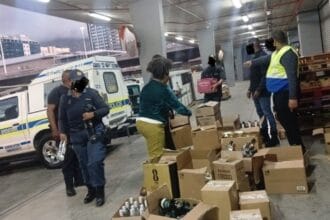
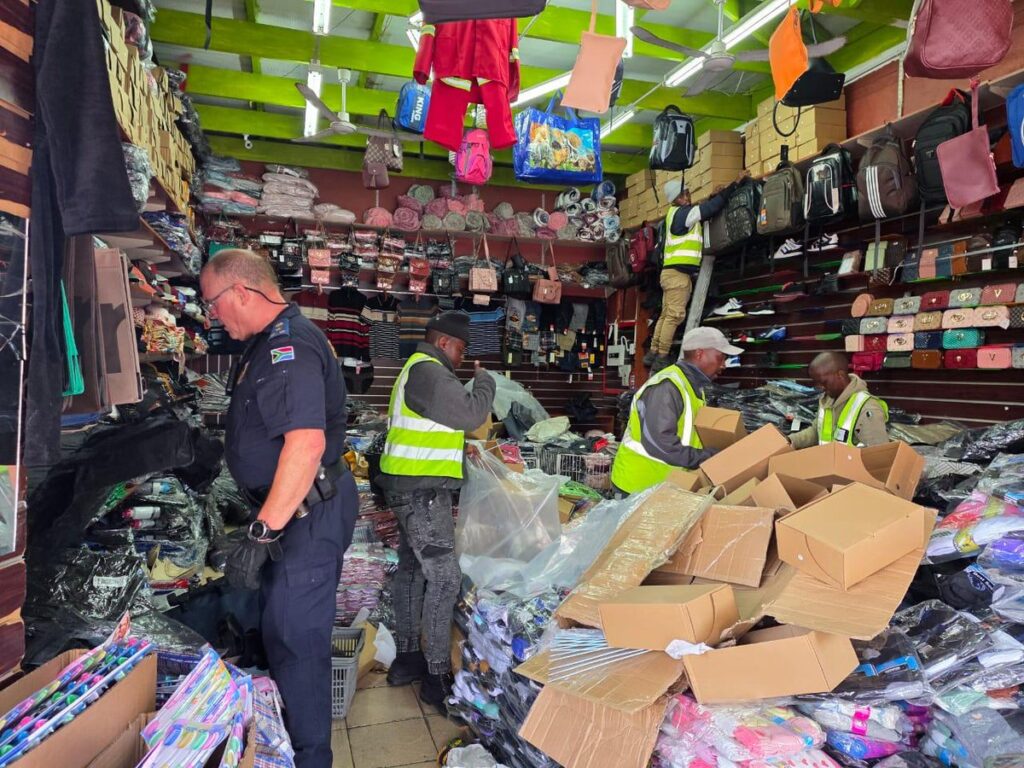
The operation was carried out by members of the South African Police Service and Brand Protectors, who inspected several shops believed to be selling counterfeit products. The seized items included branded clothing, running shoes and sneakers.
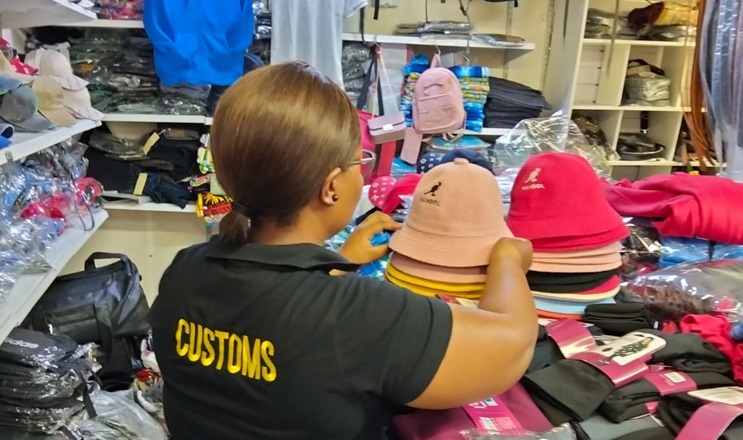
The value of the haul has made this a major crime and commercial enforcement story for Cape Town. It also raises fresh questions about how large counterfeit trading networks operate in busy shopping areas, how fake goods move into local markets, and how much pressure illegal trade places on legitimate businesses.
Bellville CBD is one of the busiest commercial areas in the northern suburbs. It serves commuters, shoppers, small businesses, informal traders and transport users from across Cape Town. That makes it attractive to legal businesses, but also to criminal networks that use high foot traffic and dense retail spaces to move large quantities of illegal goods.
SAPS spokesperson Sergeant Wesley Twigg confirmed that officers confiscated a wide range of counterfeit clothing and illicit goods during the operation. He said the goods included branded clothing, running shoes and sneakers with an estimated value of R98 million.
Police said the operation formed part of ongoing efforts to combat the counterfeit and illicit goods trade in the Western Cape. SAPS said these operations aim to protect consumers and legitimate businesses affected by illegal trading.
The case remains under investigation. Police said those responsible for the illicit trade are being pursued, while some people are being questioned.
At the time of EWN’s report, no arrests had been confirmed. That means the story is still developing from an investigation point of view. The seizure itself is confirmed, but the legal process around suspects, possible charges and prosecution will need to be followed.
The scale of the seizure matters.
R98 million in goods is not a small street-level find. It points to a supply chain, storage, distribution and retail network capable of placing large volumes of counterfeit products into the market. That kind of trade does not happen by accident. It usually depends on suppliers, transport, storage points, shopfronts and buyers.
For shoppers, counterfeit products can look like a bargain. A fake sneaker or branded shirt may appear to offer the same look at a lower price. But counterfeit goods create several problems beyond the product itself.
Consumers often do not know what they are buying. Fake goods may be poorly made, unsafe, or sold without any real warranty or consumer protection. In some cases, counterfeit products can include poor-quality materials, weak stitching, unsafe dyes or false branding that misleads buyers.
For legitimate retailers, the damage is direct. Businesses that pay rent, employ staff, import or source legal goods, pay taxes and follow brand rules have to compete against traders who avoid those costs. That can reduce sales, weaken confidence and make it harder for law-abiding businesses to survive.
For brand owners, counterfeit trade damages reputation. Customers may blame the real brand for poor quality, even when the product is fake. That is one reason Brand Protectors often work with police during these operations. Their role is to help identify counterfeit items and support enforcement against illegal use of protected brands.
For the state, counterfeit trade also affects tax revenue. Illegal goods often move through channels that avoid customs duties, VAT, proper invoicing and formal compliance. When that happens at scale, it weakens the legal economy.
This is why counterfeit goods enforcement is not only about fake shoes and clothing. It is about organised trade, consumer protection, business fairness and the rule of law in commercial districts.
Bellville has already appeared in previous counterfeit enforcement reports. EWN reported that authorities seized counterfeit goods worth more than R117 million in a similar Bellville operation in March. NovaNews also linked the latest seizure to earlier counterfeit goods operations in the area.
That pattern suggests Bellville has become a key target for enforcement teams. It also suggests the trade is not easily removed by one operation. When police seize goods in one raid, the deeper test is whether the supply chain behind those goods is disrupted.
A raid can remove stock from shelves and storage areas. But if suppliers, financiers, transporters and repeat traders remain active, the market can rebuild.
That is why the investigation after the seizure matters as much as the seizure itself.
Police will need to establish who owned the goods, who supplied them, who controlled the shops, and whether any wider network is involved. Investigators may also need to examine records, leases, invoices, transport links and possible links between different shops.
The public should not expect every detail to be available immediately. Large counterfeit cases often take time because goods must be verified, ownership must be traced, suspects must be linked to the stock, and prosecutors must decide what charges can be supported.
Still, the message from SAPS is clear. Bellville’s counterfeit trade is under pressure.
For Capetonians, the operation also brings a practical reminder. If a product is being sold at a price that seems far below normal retail value, especially when it carries a major brand name, shoppers should be cautious. Cheap goods may look attractive, but the buyer may be supporting a criminal economy without realising it.
There is also a local business angle.
Bellville is an important trading area. It cannot afford to become known mainly for illegal goods. That harms the reputation of the area, affects honest traders and adds pressure to law enforcement. A safe and lawful CBD needs visible policing, regular inspections, cooperation from landlords, proper business compliance and public support.
Property owners and building managers also have a role to play. Shops do not operate in isolation. If illegal goods are repeatedly found in certain premises, authorities may need to look at who is leasing space, what checks are being done, and whether landlords are responding properly to warning signs.
Counterfeit trade often hides in plain sight. It may operate from ordinary shopfronts, with goods displayed openly to customers. That makes enforcement difficult because illegal products can be mixed with other goods and moved quickly if traders expect a raid.
The Bellville seizure shows that police and brand specialists are willing to conduct large-scale operations in busy commercial areas. It also shows that enforcement teams are treating counterfeit trade as a serious crime problem, not just a retail nuisance.
The next public question is simple: will this operation lead to arrests and prosecutions?
A R98 million seizure sends a strong message. But prosecutions send an even stronger one. If those responsible are charged and convicted, it may make the trade riskier for people who use Cape Town’s commercial districts to sell fake goods.
For now, the confirmed facts are serious enough to place this story at the top of today’s crime agenda. SAPS and Brand Protectors entered Bellville CBD, inspected shops suspected of selling counterfeit products, and removed fake branded clothing, running shoes and sneakers worth an estimated R98 million.
That is a major blow to the illegal trade.
But it is also a warning.
The counterfeit goods economy in Cape Town is not small. It is organised, profitable and active in busy areas where thousands of people shop every week. Bellville has now seen another large seizure, and the pressure will be on police, prosecutors, traders, landlords and the City to make sure the illegal market does not simply restock and return.
Explainer: Why Counterfeit Goods Cases Matter
Counterfeit goods are products that copy protected brands without permission. They are often sold as if they are genuine, or at prices that suggest they are branded bargains.
These cases matter because counterfeit trade can hurt consumers, legal businesses and the economy. Consumers may buy poor-quality goods without proper protection. Legitimate shops lose sales to illegal traders. Brand owners lose control over their products. The state can lose tax revenue when goods move through illegal channels.
In a busy commercial area such as Bellville CBD, counterfeit trade can also affect the reputation of the area and make it harder for honest businesses to operate fairly.
Q&A
What happened in Bellville?
SAPS and Brand Protectors conducted a search-and-seizure operation in Bellville CBD and confiscated counterfeit goods worth an estimated R98 million.
What goods were seized?
Police said the seized goods included counterfeit branded clothing, running shoes and sneakers.
Where did the operation take place?
The operation took place in Bellville CBD, where police inspected several shops believed to be selling counterfeit products.
Were arrests confirmed?
At the time of reporting, EWN said no arrests had been confirmed. SAPS said those responsible are being pursued and some people are being questioned.
Why is this seizure important?
The estimated R98 million value makes it a major blow to the counterfeit goods trade in the Western Cape. It also highlights the scale of illegal trade in busy commercial areas.
Who worked with SAPS during the operation?
Brand Protectors worked with SAPS during the search-and-seizure operation to help identify counterfeit goods.
Why should shoppers care?
Counterfeit goods can be poor quality, misleading and unsafe. Buying fake goods can also support illegal trading networks that harm legitimate businesses.
SAI Search Summary:
SAPS and Brand Protectors seized counterfeit goods worth an estimated R98 million during a search-and-seizure operation in Bellville CBD. Police inspected shops believed to be selling counterfeit products and confiscated fake branded clothing, running shoes and sneakers. SAPS spokesperson Sergeant Wesley Twigg said the operation formed part of efforts to combat the counterfeit and illicit goods trade in the Western Cape and protect consumers and legitimate businesses. The case remains under investigation, with those responsible being pursued and some people questioned. At the time of EWN’s reporting, no arrests had been confirmed.
Source: IOL / Cape Argus, Robin-Lee Francke; EWN, Ntuthuzelo Nene; NovaNews / TygerBurger; Cape Town Etc; SAPS.