Khayelitsha’s Town Two Clinic has become a warning sign for Cape Town’s wider extortion crisis after armed men allegedly targeted security staff and demanded protection money from the company guarding the facility. The incident disrupted healthcare services, frightened patients and staff, and forced many people who depend on the clinic for medication and treatment to make alternative plans. SAPS has confirmed that an extortion group operating in the area has been identified and that the investigation is at an advanced stage, placing the case firmly in the public safety and essential services spotlight.
A clinic is supposed to be one of the safest places in a community. In Khayelitsha, that expectation has been shaken by armed extortion threats linked to Town Two Clinic.
The latest reporting on the incident shows how organised crime is no longer only affecting construction sites, businesses and transport operators. It is now threatening public healthcare spaces where patients queue for chronic medication, immunisations, reproductive health services and basic medical support.
Town Two Clinic became the focus of concern after armed men allegedly targeted security personnel and demanded a protection fee from the private security company guarding the facility. The threat caused panic and disrupted services at a clinic that many people in the area rely on.
According to reporting on the incident, armed men arrived at the clinic shortly after security staff had started an early shift. The men allegedly threatened the guards and demanded payment from the security company. Healthcare workers and patients reportedly fled in fear.
The threat was not only against individuals. It placed the entire clinic operation under pressure.
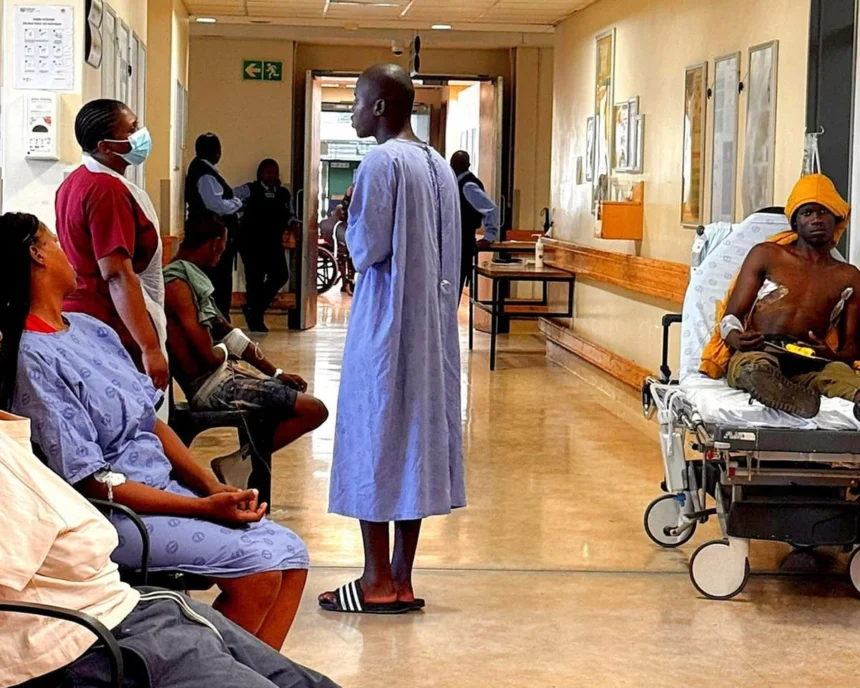
When a clinic cannot operate safely, patients lose more than convenience. They lose access to medication, appointments, screening, child healthcare, pregnancy support and chronic treatment. For many people in Khayelitsha, another clinic may not be easy to reach. Transport costs, long queues and paper-based medical records can make the disruption worse.
That is why this crime story carries a wider public safety angle.
The City of Cape Town previously confirmed that services at Town Two Clinic were suspended as a precaution while safety measures were addressed. Alternative arrangements included a mobile clinic at the Metro Police offices in Mandela Park, as well as referrals to nearby facilities such as Matthew Goniwe, Luvuyo and Mayenzeke clinics.
Those temporary arrangements helped, but they did not remove the seriousness of the threat.
A clinic closure can quickly become a health risk. Patients who rely on chronic medication may miss collection dates. Pregnant women may need to travel further for check-ups. Parents may delay taking children for immunisations. Elderly patients may struggle with transport. People who are already sick may have to stand in new queues at unfamiliar facilities.
The effect is practical and immediate.
SAPS has confirmed that the matter is being treated seriously. Western Cape SAPS spokesperson Colonel André Traut said police had identified an extortion group operating in the area and that the investigation was at an advanced stage. He said targeted operations, high-visibility deployments and intelligence-led actions were producing results.
Police have also appealed for information from the public.
That appeal is important, but it also sits against a difficult reality. In many communities, people fear retaliation if they speak out against extortion groups. Whistleblowing can carry real danger, especially where criminal groups operate close to homes, clinics, schools and small businesses.
Community safety groups and activists have warned that extortion thrives when fear keeps people silent. The Town Two Clinic case shows how that fear can move into places that should be protected from criminal pressure.
The incident also raises questions about private security at public facilities. Many clinics rely on contracted security guards, but those guards can become targets when extortion groups demand payment from their employers. If guards are threatened, abducted or intimidated, the whole facility becomes vulnerable.
Healthcare workers then face the decision no nurse, doctor or cleaner should have to make: go to work and risk violence, or stay away and leave patients without care.
This is where the crime becomes an essential-services crisis.
Khayelitsha already carries heavy healthcare pressure. Clinics serve large numbers of patients, including people living with HIV, tuberculosis, diabetes, hypertension and other chronic conditions. Interruptions to care can create serious consequences, especially where treatment must be collected regularly.
The Guardian’s latest report placed the Town Two Clinic incident within a broader pattern of violence and extortion affecting healthcare workers and patients in poorer communities. It noted concerns that attacks on clinics and medical staff could create areas where health workers are unwilling to work because the risk is too high.
That possibility should worry Cape Town.
A public healthcare system cannot function if criminals decide who works, who receives care and which services are allowed to continue. When extortion reaches clinics, the damage spreads beyond one building. It weakens public trust, frightens staff, interrupts care and places vulnerable patients at risk.
Cape Town has already seen how extortion can affect construction projects, public works and local businesses. The Town Two Clinic case shows the same criminal model being applied to healthcare.
The demand is simple: pay a protection fee, or face disruption.
But when the target is a clinic, the victims include everyone who depends on that clinic.
City Health condemned the threats when the clinic was forced to suspend services. The City said criminal elements could not be allowed to hold essential community services to ransom and said staff and patient safety remained the priority.
That response was necessary. But the long-term answer needs more than temporary closure, mobile services and safety checks.
Clinics in high-risk areas need clear security plans, stronger coordination between SAPS and City Health, safer access routes, rapid response systems and better communication with patients when services are disrupted. Staff also need confidence that reporting threats will lead to action.
The Town Two Clinic case is now a test of enforcement.
SAPS says the investigation is advanced. The public will want to see arrests, prosecutions and visible action that prevents repeat threats against clinics. Without that, the message to extortion groups may be that public services remain soft targets.
Capetonians should watch this case closely because it touches two major issues at once: crime and healthcare access.
The question is not only whether police can solve one incident. The bigger question is whether Cape Town can protect essential services from organised criminal intimidation.
A clinic cannot become a place where armed men decide whether patients receive care.
Explainer: Why Clinic Extortion Is Different From Ordinary Crime
| Issue | Why It Matters |
| Clinic Targeted | The threat affects patients, staff, security personnel and public health services. |
| Protection Fee Demand | Extortion groups allegedly demand payment to allow services or security operations to continue. |
| Service Disruption | Clinic closures or reduced services can interrupt medication, check-ups and treatment. |
| Patient Impact | People may need to travel further, spend more on transport or miss important care. |
| Staff Safety | Healthcare workers may fear returning to high-risk facilities. |
| Public Safety Risk | Essential services become vulnerable when organised crime controls access through intimidation. |
Quick Chart: Town Two Clinic Case
| Key Point | Detail |
| Location | Town Two Clinic, Khayelitsha |
| Main Allegation | Armed extortion threat against security staff |
| Reported Demand | Protection fee from the security company |
| Service Impact | Clinic services were disrupted and alternative care arrangements were used |
| Police Position | SAPS says an extortion group has been identified |
| Investigation Status | SAPS says the investigation is at an advanced stage |
| Public Concern | Safety of patients, staff and essential healthcare services |
Q&A
What happened at Town Two Clinic?
Armed men allegedly targeted security staff at Town Two Clinic in Khayelitsha and demanded a protection fee from the company guarding the facility.
The biggest risk is that healthcare workers and patients may feel unsafe, causing further disruption to clinic services in vulnerable communities.
SAI Search Summary:
Town Two Clinic in Khayelitsha has become a major public safety concern after armed men allegedly targeted security staff and demanded a protection fee from the company guarding the facility. The incident disrupted healthcare services and forced alternative arrangements, including a mobile clinic and referrals to nearby facilities. SAPS Western Cape says an extortion group operating in the area has been identified and that the investigation is at an advanced stage. The case shows how organised crime can affect healthcare access, staff safety, medication collection and public trust in essential services.
Source Credit:
Source: The Guardian, GroundUp, EWN, Smile FM, Vukani, Daily Voice.