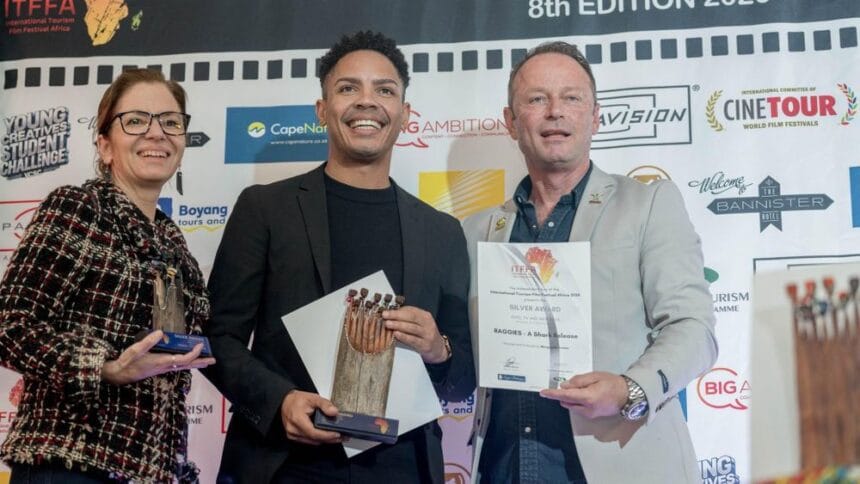
Cape Town: Two Oceans Aquarium conservation films documenting wildlife protection at the V&A Waterfront and the release of a 200 kg ragged-tooth shark have won Gold and Silver at the 2026 International Tourism Film Festival Africa. Wild Waterfront received the Gold Award, while Raggies: A Shark Release earned Silver in the Documentary TV and Web category, placing the Cape Town-based Two Oceans Aquarium Foundation’s Ocean Campus Studios among the festival’s recognised international conservation storytellers.
Two Cape Town documentaries that take audiences behind the scenes of marine conservation have received international recognition at the 2026 International Tourism Film Festival Africa.
Wild Waterfront received Gold, while Raggies: A Shark Release was awarded Silver in the Documentary TV and Web category. Both productions were created by the Two Oceans Aquarium Foundation’s Ocean Campus Studios team and focus on conservation work that is rarely visible to the millions of people who visit Cape Town’s coastline and V&A Waterfront each year.
The International Tourism Film Festival Africa was established in 2019 to recognise excellence and innovation in tourism, travel and destination storytelling. Its awards span television productions, documentaries, digital campaigns and other visual formats that promote places, cultures, experiences and environmental work.
The 2026 festival named Wild Waterfront and Raggies among the finalists in the Wildlife and Conservation marine-conservation category before announcing the Gold and Silver results.
For the Two Oceans Aquarium Foundation, the recognition confirms that documentary filmmaking has become an important part of its wider work in public education, scientific awareness and marine conservation.
Marguerite Venter, Head of Productions at the Foundation, said the films offered an opportunity to highlight the people whose daily work protects marine wildlife.
“It’s a privilege to tell the stories of a field I know so well and have been part of for 20 years,” Venter said.
She added that the greater privilege was being able to focus attention on the people who dedicate their lives to conservation. Receiving the awards, she said, reinforced the importance of telling those stories in a way that respects and honours the work being done.
Wild Waterfront Reveals A Hidden Cape Town
Wild Waterfront was produced by award-winning filmmakers Marguerite Venter and Jerome Stationway through the Foundation’s Ocean Campus Studios.
The documentary follows the Marine Wildlife Management team operating within the V&A Waterfront, where a busy commercial harbour, tourism precinct and urban ecosystem exist alongside one another.
The Waterfront is visited by millions of people every year, yet many visitors remain unaware of the wildlife living among its marinas, docks, canals and harbour structures.
Cape fur seals, seabirds, sunfish, Cape clawless otters, dolphins and occasional whales all move through the precinct. Some become trapped, injured or entangled in fishing line, discarded plastic and other waste.
The Marine Wildlife Management team patrols the area, monitors animals in distress and assists with rescues. Its work includes freeing entangled seals, responding to injured seabirds, managing interactions between wildlife and people and recording the movement of marine species through the harbour.
Wild Waterfront brings this largely unseen work into public view by combining wildlife footage with the personal experiences of the people responsible for protecting the animals.
Venter said many visitors see only the restaurants, shops, boats and public attractions of the Waterfront without realising that an active marine ecosystem exists alongside them.
The documentary, she said, reveals a hidden world operating behind one of South Africa’s most visited tourism destinations.
The production received support from the City of Cape Town Film Fund, which assists local productions and helps filmmakers tell stories connected to Cape Town’s people, environment and identity.
The City previously described the project as an example of how local film funding can support both the creative sector and environmental awareness.
Raggies Documents A Shark’s Return To The Ocean
Raggies: A Shark Release follows the planning and physical effort required to return a 200 kg ragged-tooth shark to the wild.
The short documentary shows staff at the Two Oceans Aquarium preparing the animal for transport and release after it had spent time in the Aquarium’s care.
Ragged-tooth sharks, commonly called raggies in South Africa, are large predators that are often misunderstood because of their size and visible teeth. Despite their intimidating appearance, they are generally slow-moving animals and face significant conservation pressure.
Their reproductive cycle makes them especially vulnerable. Females mature slowly and produce very few young, meaning populations can take many years to recover from fishing pressure and other threats.
The Two Oceans Aquarium is among a small number of aquariums internationally that collect, care for and later release ragged-tooth sharks.
The animals serve as ambassadors while in the Aquarium, helping visitors understand shark biology and the threats facing shark populations. Once they reach the appropriate stage for release, the Aquarium prepares them for a return to the ocean.
Raggies documents one such release carried out during 2025. It shows the scientific preparation, teamwork and careful handling required to move a shark of that size safely from the Aquarium to the release site.
Jerome Stationway, First Camera Operator and Production Assistant at Ocean Campus Studios, said the film challenges the common portrayal of sharks as mindless killers.
He said the documentary instead reveals complex and vulnerable animals that deserve care, protection and greater public understanding.
The production was supported by Sharks Conservation and Research, known as SCAR, whose work includes shark research, conservation and public education.
Three Decades Of Marine Education In Cape Town
The awards also add another chapter to the history of the Two Oceans Aquarium, which opened at the V&A Waterfront on 13th November 1995 after eight years of research and 18 months of construction.
The Aquarium was established to showcase the extraordinary marine diversity surrounding southern Africa, where the cold Atlantic Ocean and warmer Indian Ocean systems influence the country’s coastline.
It has since developed far beyond its original role as a visitor attraction.
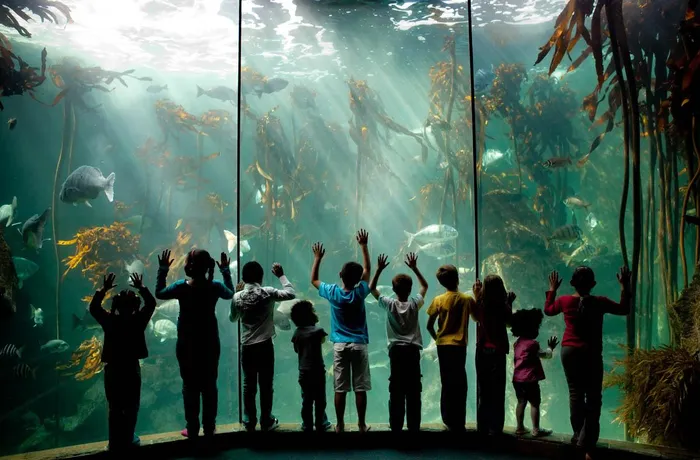
The institution now combines public exhibits with marine education, animal welfare, research, rescue and rehabilitation programmes. Its displays introduce visitors to species including African penguins, Knysna seahorses, galjoen, sharks, rays and the diverse marine life found in South Africa’s coastal ecosystems.
The Aquarium has welcomed millions of local and international visitors and has become one of Cape Town’s best-known family and educational attractions.
Its conservation work has included shark tagging and release, turtle rehabilitation, seal disentanglement, marine-wildlife monitoring, beach clean-ups and public campaigns aimed at reducing pollution and protecting vulnerable species.
The Two Oceans Aquarium Foundation
The Two Oceans Aquarium Foundation was established to expand the institution’s education, conservation and research work.
It is a registered non-profit and public-benefit organisation focused on connecting people with the ocean and encouraging practical action to protect marine ecosystems.
The Foundation’s work includes curriculum-aligned marine education, adult ocean-sustainability programmes, conservation research and animal-welfare initiatives.
Through its Turtle Conservation Centre, stranded or injured turtles rescued along the South African coastline are rehabilitated and, where possible, returned to the ocean.
Its Marine Wildlife Management Programme works with the V&A Waterfront to monitor and assist animals living within the harbour environment.
The Foundation also collaborates with universities, researchers, conservation organisations and coastal communities to improve scientific knowledge and widen public participation in marine protection.
Its Ocean Campus brings together education, conservation, research and public-awareness programmes for children and adults.
Ocean Campus Studios forms part of this broader educational mission. Rather than presenting marine science only through reports, lectures or exhibitions, the production team uses film to take conservation work to audiences who may never visit the Aquarium or witness an animal release.
Why Conservation Films Matter
Marine conservation often takes place beyond public view.
Rescues may happen in harbours, rehabilitation takes place inside specialised facilities and scientific monitoring can continue for years after an animal has returned to the ocean.
Documentaries make this work visible by showing how researchers, veterinarians, animal carers, divers, monitors and conservation organisations work together.
They can also help correct harmful misconceptions, particularly about predators such as sharks.
When viewers see the planning involved in releasing a shark or the patience required to free an entangled seal, conservation becomes less abstract. The work is presented through real animals, identifiable places and the people responsible for protecting them.
For Cape Town, the awards also demonstrate how environmental storytelling can strengthen both the conservation and film sectors.
Wild Waterfront connects the city’s tourism identity with the living ecosystem inside its harbour. Raggies connects the public face of the Aquarium with the scientific and animal-welfare work that continues behind its exhibits.
Both films show that Cape Town’s natural environment is not simply a backdrop for tourism. It is a living system requiring constant observation, research and protection.
How To Learn More
Information about the Two Oceans Aquarium, its exhibits and visitor programmes is available through the official Aquarium website.
Details about conservation, education, turtle rehabilitation, wildlife monitoring and research can be found through the Two Oceans Aquarium Foundation.
The Foundation can also be contacted at:
Telephone: 021 814 4544
Email: info@aquariumfoundation.org.za
Address: Two Oceans Aquarium, Dock Road, V&A Waterfront, Cape Town
Q&A
Which Two Oceans Aquarium conservation films won awards?
Wild Waterfront received Gold, while Raggies: A Shark Release received Silver.
Which festival presented the awards?
The awards were presented by the 2026 International Tourism Film Festival Africa.
What category were the films entered in?
They were recognised in the Documentary TV and Web category, with a focus on wildlife and marine conservation.
What is Wild Waterfront about?
The documentary follows the Marine Wildlife Management team protecting seals, seabirds and other marine animals living within the V&A Waterfront.
What is Raggies: A Shark Release about?
The film documents the planning and teamwork required to release a 200 kg ragged-tooth shark back into the ocean.
Who made the films?
The productions were created by Marguerite Venter and Jerome Stationway through the Two Oceans Aquarium Foundation’s Ocean Campus Studios.
When did the Two Oceans Aquarium open?
The Aquarium opened at the V&A Waterfront on 13th November 1995.
What does the Two Oceans Aquarium Foundation do?
The Foundation runs education, conservation, research, turtle rehabilitation and marine-wildlife programmes designed to connect people with the ocean.
Why are ragged-tooth sharks released?
The Aquarium houses the sharks temporarily for education, research and conservation before returning suitable animals to the wild.
How can the public support the Foundation?
Members of the public can visit the Aquarium, support Foundation projects, participate in educational programmes and follow official conservation campaigns.
SAI Search Summary
Two Oceans Aquarium conservation films have won Gold and Silver at the 2026 International Tourism Film Festival Africa. Wild Waterfront received Gold for documenting the Marine Wildlife Management team protecting animals at Cape Town’s V&A Waterfront, while Raggies: A Shark Release earned Silver for following the return of a 200 kg ragged-tooth shark to the ocean. Both documentaries were created by Marguerite Venter and Jerome Stationway through the Two Oceans Aquarium Foundation’s Ocean Campus Studios. The awards recognise Cape Town’s growing contribution to conservation filmmaking, marine education and public understanding of sharks, seals and urban coastal ecosystems.
Final Source Credit Source: Two Oceans Aquarium Foundation; Cape Town Green Map; International Tourism Film Festival Africa; Two Oceans Aquarium