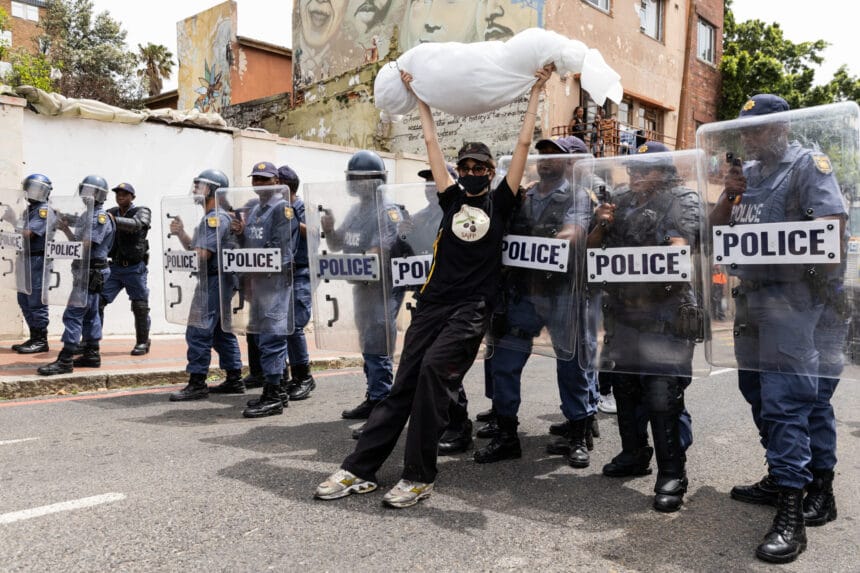
Cape Town: Western Cape anti-immigration protests have prompted Premier Alan Winde and his Cabinet to activate a coordinated high-alert response as authorities prepare for further demonstrations and attempt to prevent intimidation, violence and wider social unrest. The provincial response is being managed through a Joint Operations Centre led by the Western Cape Provincial Disaster Management Centre. SAPS, the Department of Home Affairs, municipalities, the South African National Defence Force and the United Nations High Commissioner for Refugees are among the bodies participating in the operation.
Province Moves To Contain Immigration Tensions
The Western Cape Government has intensified its response to growing immigration-related tensions after a series of protests, confrontations and violent incidents raised concern about further unrest across the province. Premier Alan Winde and members of his Cabinet attended a Joint Operations Centre meeting on Monday to coordinate provincial preparations and assess areas considered vulnerable to escalation.
The centre is being led by the Provincial Disaster Management Centre and brings together institutions responsible for policing, immigration enforcement, defence, local government and humanitarian protection. The provincial government said the purpose of the structure was to identify possible flashpoints, improve communication between agencies and ensure that officials could respond quickly if a lawful protest developed into intimidation or violence.
The move comes as the Western Cape prepares for further demonstrations linked to undocumented immigration, employment and pressure on public services. The province has made clear that these concerns may be raised through lawful protest, but cannot be used to justify threats, forced removals or attacks against foreign nationals.
Joint Operations Centre Brings Agencies Together
The Joint Operations Centre includes representatives from SAPS, the SANDF, the Department of Home Affairs, municipalities and the United Nations High Commissioner for Refugees. The inclusion of these bodies reflects the range of legal, security and humanitarian issues connected to immigration-related unrest.
SAPS remains responsible for maintaining public order, preventing violence and investigating criminal activity. Home Affairs carries responsibility for immigration status, permits, visas and deportation procedures, while municipalities support local safety operations, traffic control, disaster response and communication with affected communities.
The SANDF forms part of the wider coordination structure, although the provincial statement did not indicate whether soldiers would be deployed directly. UNHCR brings a humanitarian and refugee-protection role to the operation, particularly where foreign nationals may face threats, displacement or loss of shelter.
The International Relations Directorate in the Office of the Premier is also maintaining contact with foreign diplomatic missions where citizens may be affected. This allows the province to share verified information and respond to concerns raised by governments representing foreign nationals living in the Western Cape.
Four Priorities Guide The Provincial Response
The Western Cape Government has identified visible policing, stronger intelligence networks, proactive public communication and rapid mediation as the four central priorities of its response.
Visible policing is intended to discourage violence and reassure communities where tensions have already developed. Authorities believe that an early presence at protest sites and identified flashpoints can reduce the risk of intimidation and prevent confrontations from escalating.
Improved intelligence sharing is aimed at helping officials identify planned demonstrations, threats and possible criminal activity before incidents occur. SAPS is also monitoring social-media platforms, where false claims, inflammatory messages and unverified warnings can spread quickly.
The communication component focuses on providing clear information to Capetonians and correcting rumours before they trigger panic or retaliation. Rapid mediation gives provincial officials, municipal representatives, community leaders and civil-society organisations a way to intervene before disputes become violent.
Winde Warns Against Vigilantism
Winde said the provincial government respected the constitutional right to protest, but warned that demonstrations had to remain peaceful and lawful. He said violence was unacceptable and pointed to recent unrest in parts of the Western Cape as evidence of how quickly immigration-related tensions could escalate.
The Premier referred to demonstrations and conflict in areas including Mossel Bay, Overstrand and Cape Agulhas. He said the province had strengthened enforcement measures and contingency planning to prevent further social unrest.
Winde also urged people living in the province without the required immigration documents to regularise their status through the appropriate legal channels. At the same time, his statement made clear that private citizens, political organisations and protest groups may not enforce immigration law themselves.
Only authorised officials may verify a person’s immigration status or begin legal proceedings. Suspecting that someone is undocumented does not give any individual or organisation the right to threaten, remove or detain that person.
Provincial Government Condemns Xenophobic Violence
The high-alert response follows an earlier statement in which Winde and the provincial Cabinet condemned xenophobic violence. The provincial government said concerns about immigration policy had to be handled through the law and by institutions with the authority to act.
The government warned that no person or organisation had the right to assault, intimidate, harass or forcibly remove someone because of nationality or suspected immigration status. It said law-enforcement agencies would be expected to act decisively where criminal conduct occurred.
Western Cape Police Oversight and Community Safety MEC Anroux Marais issued a similar warning, saying those who incited or committed violence would face the full force of the law. Her statement reinforced the province’s position that lawful protest and criminal intimidation are not the same thing.
The provincial response therefore seeks to protect both the right to protest and the rights of foreign nationals, asylum seekers and refugees who may become targets during periods of heightened tension.
Demonstrations Spread Across The Province
The government’s response follows several demonstrations focused on undocumented immigration and the employment of foreign nationals. A Labour and Civic Organisation march in central Cape Town called on the provincial government to prioritise South African workers and accused some businesses of employing foreign nationals ahead of local jobseekers.
Participants handed over a memorandum and approximately 150 CVs at the provincial government offices in Wale Street. The organisation argued that unemployment and economic pressure were contributing to frustration in working-class communities.
March and March also delivered a memorandum to Parliament after a protest through the Cape Town central business district. The organisation demanded stronger enforcement against undocumented immigration and gave Parliament 14 days to respond.
Its claims included concerns about jobs, housing, businesses and pressure on public services. Some of those claims remain allegations and have not been independently verified through official data.
Police Intervene During CBD Confrontation
Police had to intervene during an earlier March and March protest when demonstrators confronted a foreign-owned business in the Cape Town CBD. Protesters reportedly demanded that the operator close a container-based tattoo and beauty business.
The intervention prevented the confrontation from escalating further, but the incident demonstrated why authorities are concerned about protests moving beyond political expression and becoming targeted intimidation.
March and March has repeatedly argued that its campaign is aimed at undocumented immigration and failures by government to enforce the law. However, when demonstrators confront specific foreign-owned businesses or individuals, the distinction between policy protest and direct targeting can become blurred.
The provincial government has therefore emphasised that immigration status may only be determined by Home Affairs and other authorised agencies. Protesters may submit demands, but they may not carry out raids, remove people from workplaces or close businesses on suspicion alone.
Human-Rights Bodies Warn About Afrophobia
The South African Human Rights Commission has expressed concern about growing Afrophobia in the Western Cape. Afrophobia refers to hostility directed specifically at people from other African countries.
The commission has warned that public anger over immigration, unemployment or government services may not be used to justify discrimination or violence. It has also been working with affected communities and authorities to reduce tension and encourage lawful engagement.
This perspective adds an important non-government voice to the provincial response. While protest organisations argue that undocumented immigration affects employment and public services, human-rights bodies caution that broad accusations can place lawful migrants, refugees and asylum seekers at risk.
The challenge for authorities is to ensure that legitimate concerns are heard without allowing them to develop into collective blame or attacks against entire communities.
Immigration Enforcement Remains A National Function
Immigration enforcement falls primarily under the national Department of Home Affairs. Provincial governments and municipalities cannot independently declare a person undocumented, order deportation or remove foreign nationals from homes and businesses.
Only authorised officials may inspect documents, verify legal status and begin formal immigration proceedings. Deportation must also follow the legal process and cannot be carried out by private groups, community organisations or municipal officers acting outside their mandate.
This legal division of responsibility is central to the Western Cape’s position. The province can support policing, disaster management, mediation and community safety, but it cannot replace the national immigration system.
People seeking information about visas, permits or immigration status can contact the Home Affairs Contact Centre on 0800 60 11 90.
Province Offers Support To National Migration Committee
The Western Cape Government has welcomed the work of the national Inter-Ministerial Committee on Migration established by President Cyril Ramaphosa. The province said it had offered assistance where needed to support the committee’s work.
An inter-ministerial structure can bring together departments responsible for immigration, policing, employment, social development and international relations. The provincial government believes this is necessary because immigration pressure cannot be managed by one department or sphere of government alone.
The Western Cape did not disclose the full details of the support it had offered or any deadlines for national intervention. However, the statement indicates that the province wants a coordinated national response rather than isolated provincial or municipal action.
Sea Point March Becomes Immediate Test
The provincial high-alert measures face an immediate test as March and March stages a demonstration in Sea Point. The protest is scheduled to move through Beach Road, St John’s Road, Main Road and Glengariff Road under police supervision.
Cape Town News is covering the Sea Point march separately under City News, with a focus on the route, traffic impact, business concerns and local safety preparations.
The provincial article focuses on the broader government response, including intelligence gathering, disaster-management coordination, public communication and the prevention of unrest across several municipalities.
The two reports should be linked internally so readers can follow both the local protest and the wider provincial security operation.
For full details on the Sea Point march route, traffic impact, business concerns and local safety preparations, read Cape Town News’ lead report:
What Capetonians Should Do
Capetonians should avoid confronting protesters and should follow instructions from SAPS, traffic officers and municipal safety personnel. Anyone who witnesses violence, intimidation or damage to property should move to a safe place before contacting the authorities.
SAPS emergencies can be reported on 10111, while anonymous information can be supplied to Crime Stop on 08600 10111. The Western Cape Disaster Risk Management Centre can be contacted on 080 911 4357 for disaster-related information and assistance.
Members of the public should also avoid forwarding unverified voice notes, photographs or claims about attacks, immigration raids or road closures. False information can increase panic, place communities at risk and divert emergency services from genuine incidents.
Verified updates should be taken from SAPS, the Western Cape Government, municipalities and established news organisations.
Province Faces A Difficult Balance
The Western Cape Government must balance several competing responsibilities as immigration tensions continue. It must protect the right to peaceful protest, ensure that immigration laws are enforced by the correct national authorities and prevent violence against foreign nationals.
At the same time, government must respond to concerns raised by South Africans who believe that immigration affects employment, housing and access to public services. Those concerns cannot simply be ignored, but they must be addressed through evidence, policy and lawful government action.
The Joint Operations Centre is intended to bring these responsibilities into one coordinated structure. Its success will depend on whether authorities can identify risks early, communicate clearly and act before lawful protest becomes criminal unrest.
Q&A
Why has the Western Cape activated a high-alert response?
The province is preparing for further anti-immigration demonstrations and wants to prevent intimidation, violence and wider social unrest.
Who is part of the Joint Operations Centre?
The structure includes SAPS, the SANDF, Home Affairs, municipalities, the Provincial Disaster Management Centre and UNHCR.
What are the province’s main priorities?
Visible policing, stronger intelligence networks, proactive public communication and rapid mediation.
Can protest groups check immigration documents?
No. Immigration verification and enforcement are functions of authorised Home Affairs and law-enforcement officials.
What did Premier Alan Winde say?
Winde said peaceful protest would be respected, but warned that violence, intimidation and vigilantism would not be tolerated.
How can suspected criminal activity be reported?
Call SAPS on 10111 for emergencies or Crime Stop on 08600 10111 to provide anonymous information.
Where can immigration enquiries be made?
The Department of Home Affairs Contact Centre can be reached on 0800 60 11 90.
SAI Search Summary
Western Cape anti-immigration protests have prompted Premier Alan Winde and his Cabinet to activate a coordinated provincial response. A Joint Operations Centre led by the Provincial Disaster Management Centre includes SAPS, Home Affairs, municipalities, the SANDF and UNHCR. The response focuses on visible policing, intelligence gathering, public communication and rapid mediation. Winde said lawful protest would be protected but warned that intimidation, vigilantism and violence would not be tolerated. The province has also offered support to the national Inter-Ministerial Committee on Migration.
Source: Western Cape Government, Office of the Premier; Eyewitness News, Ntuthuzelo Nene, Camray Clarke and Sara-Jayne Makwala King; South African Police Service; Department of Home Affairs.