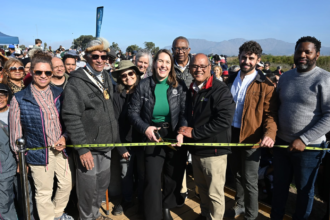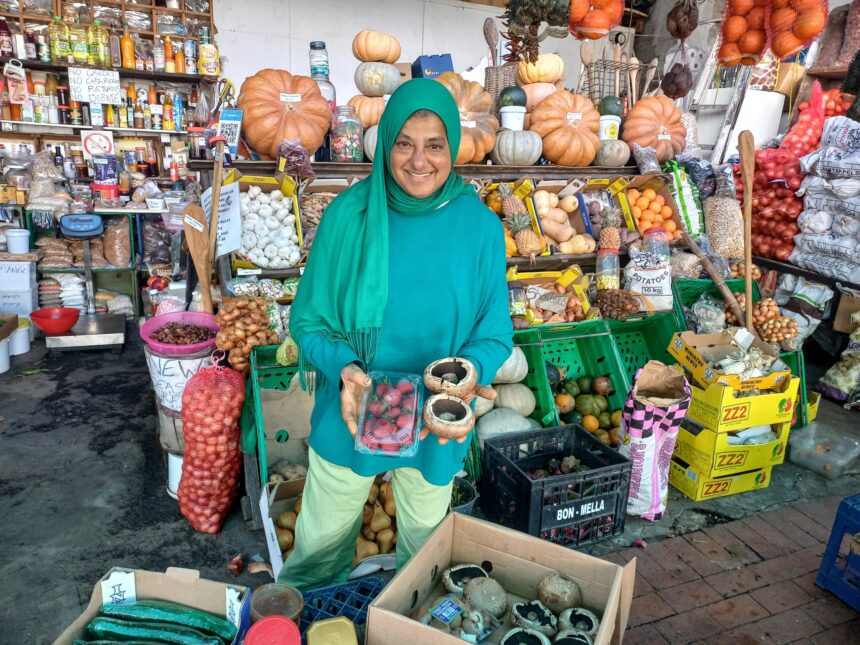
A monthly Cape Town market that connects small farmers and fishers from across the Western Cape with customers in Mowbray could lose its home after the City confirmed that it is considering selling the property through a competitive auction.
A Market’s Future Hangs In The Balance
The future of the Mowbray Market has been thrown into doubt after the City of Cape Town confirmed that it is considering auctioning the municipal property where the market operates.
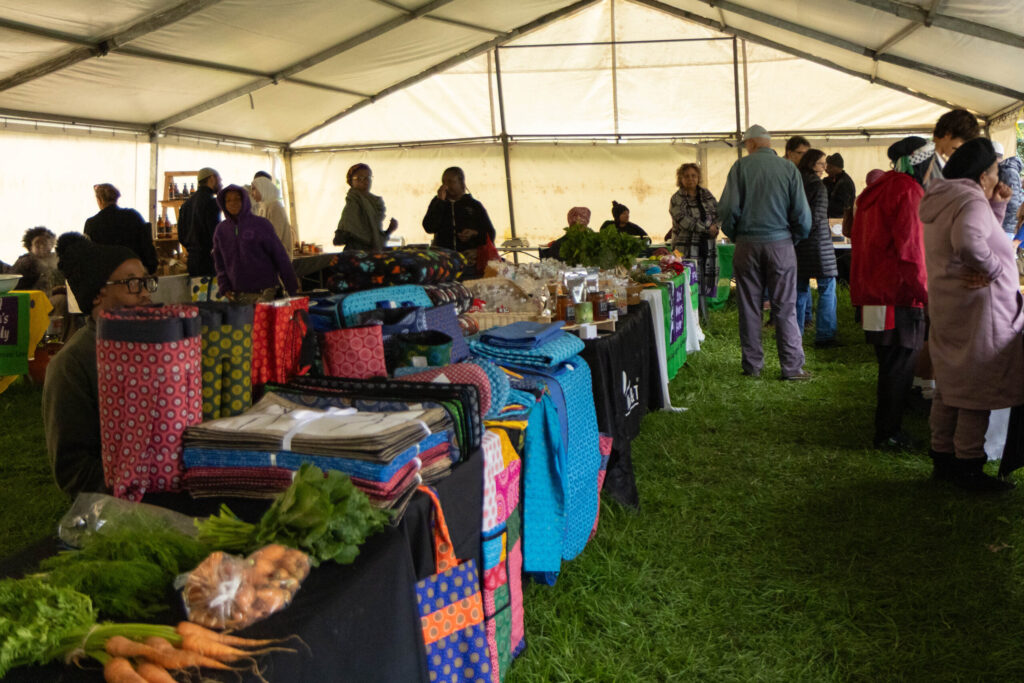
The market has been held on the first Saturday of every month for the past four years on a field opposite Gordon’s Gym, near the Liesbeek River.
The site belongs to the City and has been leased by Gordon’s Gym. However, that lease has expired, placing the gym, the market and other users of the property in an uncertain position.
The market is not a large commercial shopping centre or formal retail development. It is a small but important trading space where farmers, fishers and independent producers can sell directly to customers.
Vendors bring organic vegetables, plants, honey, fynbos, fresh fish, homemade food, soaps and other locally produced goods to Mowbray.
Many travel from rural towns, including Genadendal, Suurbraak, Calitzdorp and Ashton, while others come from communities across Cape Town.
For some traders, the market provides their main or only source of income.
Vendors Do Not Pay Trading Fees
One of the reasons the Mowbray Market is so important to small traders is that vendors do not pay stall fees.
Transport is also provided for some of the rural farmers and producers who would otherwise struggle to bring their goods into Cape Town.
The market is hosted by the Trust for Community Outreach and Education, the Rural Women’s Assembly, the Inyanda National Land Rights Movement and the Mawubuye Land Rights Forum.
These organisations use the market to promote smallholder farmers, rural producers and independent traders who often struggle to gain access to larger formal retail markets.
The arrangement allows producers to sell directly to customers without losing part of their earnings to high venue costs or other commercial charges.
Elsie Sauls, a small farmer and seed saver from Zolani in Ashton, told GroundUp that the market was a major source of support for her and her community.
She warned that traders did not know what would happen to them if the market disappeared.
The concern is not only about losing one Saturday trading opportunity. For vendors with few alternative markets, the loss of the site could remove a direct route to customers and cut off an important part of their income.

Market Wanted To Expand Its Operations
The Trust for Community Outreach and Education approached the City during 2025 about the possibility of leasing the property.
The organisation wanted to develop the market beyond its current monthly format.
Its proposal included bringing in more traders from partner organisations, moving towards a weekly market and using the interior of Gordon’s Gym during winter.
This would have offered traders some protection from rain, wind and other harsh weather conditions.
A permanent arrangement could also have reduced the repeated cost of hiring a temporary marquee and transporting vendors and equipment each month.
Robbie Andrews of the Trust for Community Outreach and Education said the organisation was spending significant amounts on temporary facilities and rural transport.
He said permanent structures and additional storage space would make the market easier and less expensive to operate.
Correspondence from 2025 reportedly shows that City officials initially considered a plan to combine proposals from the market, Gordon’s Gym and a nearby bicycle shop.
That raised hopes that the different users could share the site under a consolidated arrangement.
After several months of discussions, however, City officials rejected all of the proposals.
City Says It Could Not Favour One Proposal
City spokesperson Luthando Tyhalibongo said the municipality was unable to provide a reasonable and fair motivation for preferring any single proposal.
According to the City, accepting or combining proposals without an open process could have compromised municipal governance and transparency requirements.
Tyhalibongo said the property has split zoning, which affects what may be built and what land-use approvals would be required.
Part of the site is zoned for transport purposes, meaning permanent structures cannot be built on those sections.
The property is also located within a 100-year floodplain, creating further limits on future development.
Tyhalibongo said these restrictions complicated the proposals submitted by the current users.
He said the City could not fairly justify prioritising or combining the proposals without potentially compromising transparency and governance principles.
The municipality is therefore considering offering the property through a competitive auction process.
An auction would allow interested parties to bid openly for the site rather than allowing the City to select one of the existing proposals.
However, traders and tenants fear that an open auction may favour buyers with more financial resources and place the market’s social value behind the site’s commercial value.
Gordon’s Gym Challenges The Process
Gordon’s Gym has occupied the municipal property for 26 years.
Gym owner Gabor Kovacs said the City had recommended a new ten-year lease during 2024 and that the gym had accepted those terms.
He said the later decision to move towards an auction had left the gym in what he described as legal limbo.
Kovacs called for an urgent meeting with the City and wants the proposed auction paused.
He argued that an open auction would fail to take account of the rights of long-standing tenants and the value of infrastructure already established on the property.
According to Kovacs, uncertainty around the site has also delayed private funding secured for upgrades to the gym.
He said he supported sharing the lease with the Trust for Community Outreach and Education and the market.
That position suggests the existing users believe the property could continue serving more than one purpose without removing the gym or the monthly traders.
Whether the City will reconsider the matter or proceed with the auction has not yet been confirmed.
Traders Have Built A Loyal Customer Base
Several traders say the Mowbray Market has become closely connected to the surrounding community.
Mariam Edwards has sold Cape Malay foods, including koesisters, samoosas and rotis, at the market for three years.
She said it is the only market where she trades because it is affordable and does not charge vendors.
Edwards said customers return every month and that the market supports people whose livelihoods depend on their sales.
She described the market as her only income.
The site is also convenient for customers because it is near a main road, taxi routes and Mowbray train station.
This public transport access helps people reach the market without depending on private cars.
It also makes the site accessible to traders and customers from outside the immediate suburb.
Keshia Leonard, who represents a small-scale fishing cooperative from Buffeljagsbaai, sells fresh fish caught by cooperative members.
She said the Mowbray community supported the traders and recommended the market to relatives and friends.
These relationships have developed over several years and could be difficult to recreate if the market were moved to another area.
Small Farmers Struggle To Reach Formal Markets
The Mowbray Market exists partly because small producers often struggle to access mainstream retail opportunities.
Large food retailers generally work with established supply chains, high-volume producers and formal distribution systems.
Smallholder farmers may not produce enough stock to meet those requirements. They may also lack transport, packaging facilities, refrigeration and the financial resources needed to enter major retail markets.
A direct market gives them a place to sell smaller quantities at prices they control.
It also allows customers to meet the people who grow, catch or make the products.
The market can therefore support income, local food networks and greater public awareness of small-scale farming and fishing.
The Trust for Community Outreach and Education has previously warned that black farmers and women farmers have limited space in a food system dominated by large commercial businesses.
The possible loss of the Mowbray site raises a wider question about how municipal property decisions account for these smaller economic and community activities.
City Must Balance Governance And Social Value
The City has a duty to manage public property transparently and in line with municipal rules.
It must avoid favouring one private party without a fair process, particularly where several groups want access to the same property.
At the same time, the Mowbray site already supports a functioning community market, an established gym and other local activity.
The dispute therefore involves more than a simple choice between renewing a lease and selling unused land.
The property’s zoning, flood risk, existing tenants and social use all form part of the decision.
The City has not said that the market itself is being closed directly. The immediate concern is that the sale of the land could leave the market without permission to continue operating there.
A successful bidder may choose to retain the market, but there is currently no guarantee that this would happen.
The traders are therefore asking what protection, relocation support or alternative trading space would be available should the property change hands.
What Happens Next?
The City is still considering an auction, and no final sale outcome has been announced.
Before any transfer takes place, the municipality would need to follow the required property disposal and competitive bidding procedures.
The existing tenants and market organisations are continuing to seek engagement with City officials.
For the market traders, time is important.
They need certainty before investing in infrastructure, expanding the market or arranging future trading dates.
The organisations behind the market also need to know whether they can continue spending money on transport, temporary marquees and other operating costs at a site they may eventually have to leave.
Until the City makes a final decision, the Mowbray Market remains open but uncertain.
Explainer: Why The Property Is Complicated
The Lease Has Expired
Gordon’s Gym has leased the City-owned property for many years, but the lease is no longer current.
Several Groups Submitted Proposals
The market, the gym and a nearby bicycle business had different proposals for using the property.
The Land Has Split Zoning
Different parts of the property have different development rights, requiring formal land-use approvals.
Part Of The Site Is Reserved For Transport
Permanent structures cannot be built on sections zoned for transport purposes.
The Site Is In A Floodplain
Its location near the Liesbeek River places development limits on the property.
The City Is Considering An Auction
The municipality says a competitive process may be the fairest way to decide the property’s future.
Q&As
Where Is The Mowbray Market?
The market operates on a field opposite Gordon’s Gym near the Liesbeek River in Mowbray, Cape Town.
When Does The Market Operate?
It has operated on the first Saturday of every month for the past four years.
Why Is The City Considering Selling The Property?
The City says it could not fairly favour or combine the different proposals submitted for the site. It is considering a competitive auction to protect transparency and good-governance principles.
What Do Vendors Sell?
Products include fresh vegetables, fish, plants, honey, fynbos, homemade food, soaps and other locally produced goods.
Do Vendors Pay To Trade?
No. Vendors do not pay trading fees, and transport is provided for some rural producers.
Has The Market Already Closed?
No. The market’s future is uncertain, but the available report does not state that it has already closed.
Could The Market Continue After The Auction?
That would depend on the successful buyer and any conditions attached to the sale. There is currently no guarantee that the market would remain on the property.
SAI Search Summary
The City of Cape Town is considering auctioning the municipal property used by the Mowbray Market after the existing lease expired and several proposals for the site were rejected. The monthly market supports small farmers, fishers and food producers from Cape Town and rural Western Cape towns. Vendors pay no trading fees, and some receive transport to Cape Town. The City says split zoning, transport restrictions, floodplain limits and governance requirements made it difficult to favour one proposal. Traders fear that losing the affordable site could threaten their livelihoods and established customer relationships.
Source: GroundUp – Liezl Human.