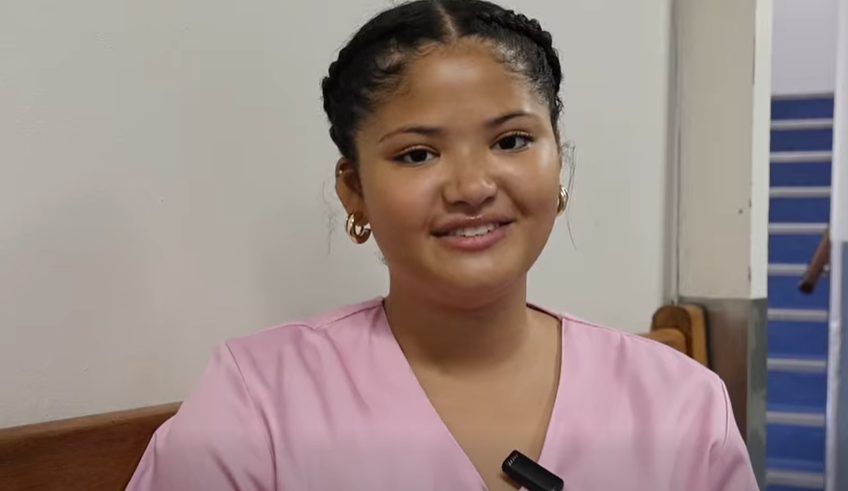
A Cape Town girl who once entered Red Cross War Memorial Children’s Hospital as a frightened young patient has returned to the world of medicine with a new purpose, beginning her studies towards becoming one of the doctors who helped save her life.
A Childhood Concern Led To A Life-Changing Diagnosis
Cadi de Jager’s medical journey began when her family noticed that she was not growing as expected. Her younger sister, who was four years behind her in age, had started catching up with her height, prompting the family to seek medical advice.
Cadi was referred to the endocrinology team at Red Cross War Memorial Children’s Hospital in Cape Town, where doctors initially believed she had a benign tumour affecting the pituitary gland. Further tests later showed that the abnormality was a Rathke’s cleft cyst, a non-cancerous growth that was interfering with her health and development.
She underwent endoscopic brain surgery to remove the cyst. The procedure was successful, allowing her to recover and resume normal growth. The experience would later shape far more than her physical health. It would become the foundation of the career she chose for herself.
The Hospital Became Part Of Her Story
Cadi has spoken openly about the care she received at Red Cross War Memorial Children’s Hospital and the impact doctors and nurses had on her during a frightening period of her childhood.
She recalled how nurses comforted her when her parents briefly left the room and how one nurse held her hand before surgery, reassuring her that she would come through the procedure safely. For a child preparing for brain surgery, those moments of kindness became as memorable as the treatment itself.
Cadi later said the hospital connected her with people who had a life-saving impact on her and that she would always carry those relationships with her. Her experience also gave her an unusual understanding of medical language for someone so young, and she became known for confidently explaining terms that many children would never encounter.
That confidence helped transform her from a former patient into a young advocate for the hospital.
Becoming A Young Hospital Ambassador
Following her recovery, Cadi was selected as a junior intensive care unit ambassador for the Children’s Hospital Trust.
The Trust raises funds for specialist paediatric healthcare, hospital infrastructure, medical training and child-health programmes. It works with Red Cross War Memorial Children’s Hospital, the Western Cape Department of Health and the University of Cape Town’s Department of Paediatrics and Child Health.
As a young ambassador, Cadi spoke publicly about her medical journey and helped people understand the needs of seriously ill children. Her ability to explain what she had experienced allowed audiences to connect with the hospital’s work through the voice of a former patient.
She also became involved in raising funds for an expanded paediatric intensive care unit. Cadi led a personal campaign that brought in more than R100,000, while her wider advocacy contributed to broader efforts to improve intensive care facilities for children.
The funding helped support plans for more space and better resources for young patients requiring life-saving treatment.
Turning A Difficult Experience Into Purpose
Many children who undergo major surgery want to leave the experience behind. Cadi’s journey had the opposite effect.
She became determined to understand the medical work that had saved her and began speaking about her ambition to become a paediatric neurosurgeon. Her reason was personal and direct: she knew what brain surgery felt like and wanted to help other children facing the same fear and uncertainty.
That ambition stayed with her as she progressed through school. During a school project, Cadi was given the opportunity to shadow the neurosurgeon involved in her treatment, allowing her to see the hospital from a completely different perspective.
Instead of being the child waiting for answers, she was able to observe how doctors assessed patients, planned treatment and guided families through difficult decisions. The experience strengthened her belief that paediatric neurosurgery was the path she wanted to follow.
A Setback During Recovery
Cadi’s recovery was not entirely without complications.
During 2023, she experienced temporary vision problems after the cyst showed signs of regrowth. Any renewed activity involving a cyst near the pituitary gland and optic structures can raise serious concerns because of the pressure it may place on surrounding tissue.
Medical monitoring later showed that the cyst had become dormant again, allowing Cadi to continue focusing on her education and long-term plans. Ongoing follow-up, however, remains part of her life.
Her experience of both recovery and uncertainty has given her a personal understanding of what patients face after surgery. Treatment does not always end when a child leaves the operating theatre. Follow-up appointments, scans and the fear of recurrence can continue for years.
That understanding may become one of the strengths she brings into medicine.
Beginning Her Medical Studies
Cadi is now a first-year medical student, taking the first formal step towards the career she has spoken about since childhood.
The road to becoming a paediatric neurosurgeon is long. Medical students must complete years of academic and clinical training before entering specialist programmes, and neurosurgery is one of the most demanding fields in medicine.
Paediatric neurosurgeons treat conditions affecting the brains, spinal cords and nervous systems of babies, children and teenagers. Their work may involve tumours, cysts, congenital conditions, injuries and other complex neurological disorders.
The field requires technical skill, concentration and the ability to support families through some of the most frightening moments of their lives. Cadi’s own history cannot shorten that training, but it gives her a perspective that few students begin with.
She understands the fear of the patient, the uncertainty of the family and the lasting impact of compassionate care.
Red Cross Children’s Hospital Marks 70 Years
Cadi’s progress comes as Red Cross War Memorial Children’s Hospital marks seven decades of specialist care.
The Cape Town hospital is one of Africa’s leading paediatric healthcare institutions and treats children from across South Africa and the continent. Its specialist teams manage complex conditions that smaller hospitals may not have the resources or expertise to treat.
The Children’s Hospital Trust says its partnership with public-health authorities and medical specialists has helped improve infrastructure, train paediatric healthcare workers and establish child-health programmes across the Western Cape.
The Trust reports that it has invested more than R1 billion in paediatric healthcare since its establishment in 1994.
Cadi’s story shows the long-term effect that this care can have. A child who receives successful treatment does not only leave hospital with a better chance of recovery. That child may one day return as a volunteer, advocate, donor, nurse or doctor.
Why Specialist Paediatric Care Matters
Children are not simply smaller adults. Their bodies, development and emotional needs require specialised medical care.
A child undergoing brain surgery needs a team that understands the condition as well as the effect treatment may have on growth, learning and development. Paediatric hospitals also need nurses, therapists, social workers and specialists who know how to communicate with young patients and their families.
Cadi’s memories of the nurses who comforted her show why this wider support matters. Technical skill may save a life, but kindness can shape how a child remembers the entire experience.
Specialist care also depends on equipment, intensive care beds, operating theatres and trained staff. These services are expensive, which is why organisations such as the Children’s Hospital Trust continue raising funds for priority projects.
The value of those investments may only become fully visible years later, when former patients build healthy lives and begin contributing to their communities.
From Patient To Future Doctor
Cadi’s story has come full circle, although the next chapter is only beginning.
She first encountered paediatric neurosurgery as a child who needed help. She later became an ambassador, raising money and speaking on behalf of other young patients. Now she has entered medical school with the hope of returning to the field as a doctor.
Her journey does not erase the fear or difficulty of her childhood treatment. Instead, she has used that experience to give direction to her future.
For the doctors and nurses who treated her, seeing a former patient pursue medicine offers a reminder of what successful care can make possible. For children currently facing surgery, Cadi’s journey offers something equally important: proof that the hospital bed does not have to define the rest of their lives.
A Dream Built On Personal Experience
Cadi has said she wants to become a paediatric neurosurgeon because she knows what surgery feels like.
That simple statement explains what makes her ambition different. She does not know medicine only through textbooks or observation. She knows the fear of waiting for an operation, the comfort of a nurse’s hand and the relief of waking up afterwards.
One day, she hopes to offer that same combination of treatment and reassurance to another child.
There are still many years of training ahead, and specialist medicine requires determination and persistence. But Cadi has already shown that she can turn a difficult medical experience into advocacy, fundraising and purpose.
Her dream of moving from patient to doctor is no longer only a childhood promise. It has become the path she is now following.
Explainer: What Is A Rathke’s Cleft Cyst?
A Non-Cancerous Cyst
A Rathke’s cleft cyst is a fluid-filled growth that develops near the pituitary gland. It is usually not cancerous.
Why It Can Cause Problems
If the cyst grows, it can place pressure on the pituitary gland, optic nerves or nearby structures. This may affect growth, hormones, vision or other bodily functions.
How It Is Treated
Small cysts may only need monitoring. Surgery may be required when a cyst causes symptoms or places pressure on surrounding tissue.
Why Follow-Up Matters
A cyst can sometimes regrow after surgery, making regular medical monitoring and scans important.
Q&As
Who Is Cadi de Jager?
Cadi de Jager is a former Red Cross War Memorial Children’s Hospital patient who underwent brain surgery as a child and later became an ambassador for the Children’s Hospital Trust.
What Condition Did She Have?
Doctors found a Rathke’s cleft cyst near her pituitary gland. It was not cancerous but required surgery.
Was Her Surgery Successful?
Yes. The cyst was removed through endoscopic surgery, and Cadi recovered and resumed normal growth.
Did The Cyst Return?
Cadi experienced temporary vision problems during 2023 when the cyst showed signs of regrowth. It later became dormant again.
What Is She Doing Now?
Cadi is a first-year medical student and hopes to become a paediatric neurosurgeon.
How Did She Help The Hospital?
She served as a junior ambassador and led a fundraising campaign that raised more than R100,000 towards an improved paediatric intensive care unit.
SAI Search Summary
Cadi de Jager underwent endoscopic brain surgery at Red Cross War Memorial Children’s Hospital after doctors discovered a Rathke’s cleft cyst near her pituitary gland. Following her recovery, she became a junior ambassador for the Children’s Hospital Trust and raised more than R100,000 towards an improved paediatric intensive care unit. Cadi later experienced temporary vision problems when the cyst showed signs of regrowth, but it became dormant again. She is now a first-year medical student and hopes to become a paediatric neurosurgeon, inspired by the doctors and nurses who cared for her as a child.
Source: Good Things Guy, Nothando Mthembu; Children’s Hospital Trust.