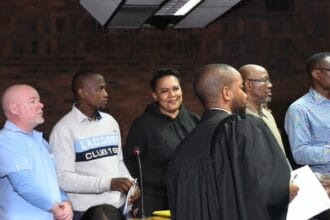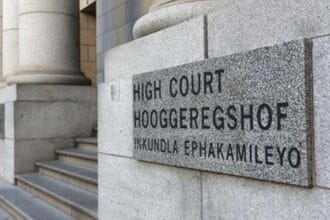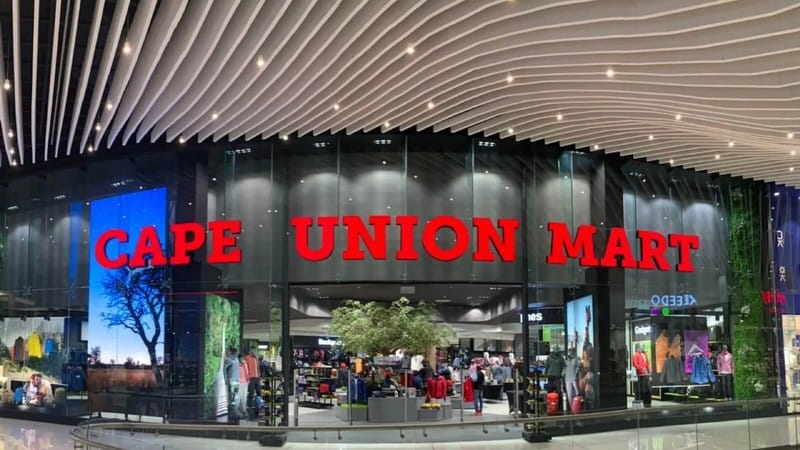
Cape Town: The Cape Union Mart interdict case has opened before a full bench of the Western Cape High Court, where the national retailer and executive chairperson Philip Krawitz are seeking final legal restrictions against the Palestine Solidarity Campaign and several activists following more than two years of pro-Palestinian boycott demonstrations outside stores. The five-day hearing places allegations of intimidation, obstruction and reputational harm against constitutional arguments concerning lawful protest, consumer boycotts, political expression and the wearing of face coverings during demonstrations.
The Western Cape High Court has begun hearing a closely watched application that could influence how South African courts balance the rights of private businesses against constitutionally protected protest and political expression.
Cape Union Mart and its executive chairperson, Philip Krawitz, are seeking a final interdict against the Palestine Solidarity Campaign and several activists following sustained boycott action and demonstrations outside stores belonging to the retail group.
The Cape Union Mart interdict case is scheduled to be heard from Monday, 15th to Friday, 19th of June before a full bench of the High Court. The court must consider whether the conduct complained of crossed the boundary separating lawful criticism and peaceful protest from intimidation, obstruction, harassment or unlawful reputational harm.
Pro-Palestinian activists have demonstrated outside Cape Union Mart stores since November 2023. The campaign has called on consumers to boycott the retailer because of alleged connections between the company’s leadership and organisations supporting Israel.
Those allegations remain disputed. Cape Union Mart rejects claims that the company funds the Israeli military or is complicit in violence against Palestinians.
The retailer argues that the campaign has extended beyond legitimate political criticism. It alleges that protesters have interfered with access to stores, intimidated customers, harassed employees and made damaging statements about the company and Krawitz.
The Palestine Solidarity Campaign disputes allegations that its members prevented customers from entering stores or engaged in intimidation. It maintains that the demonstrations form part of a lawful international boycott, divestment and sanctions movement supporting Palestinian rights.
The court has not yet made final findings on the competing versions. The hearing gives all parties an opportunity to present evidence and legal argument before the full bench determines whether a permanent interdict should be granted and, if so, how broadly it should be framed.
What Cape Union Mart Is Asking The Court To Restrict
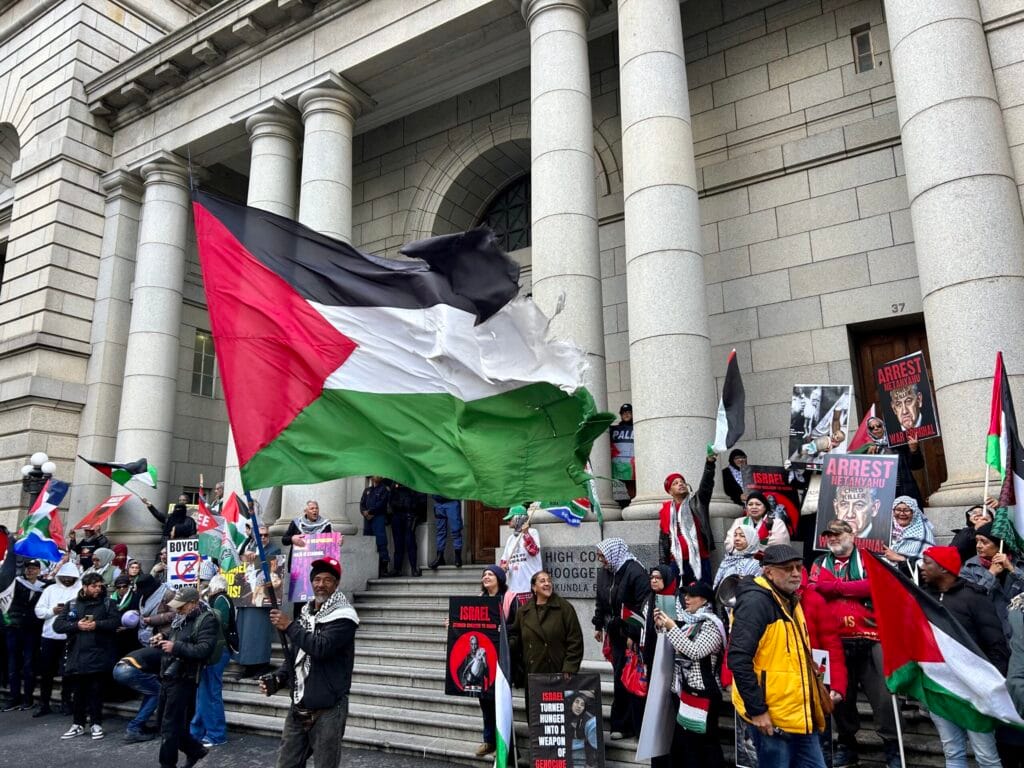
The retailer’s application is not limited to physical conduct outside stores. It also concerns statements made during demonstrations and through boycott campaigning.
Cape Union Mart wants the court to restrain conduct it considers defamatory, threatening or disruptive. This includes allegations that the business or its leadership funds genocide, supports the killing of children or is directly complicit in Israeli military action.
The application also raises questions about protesters wearing face coverings and about conduct near entrances to stores.
A court granting an interdict must describe prohibited behaviour clearly enough for the affected parties to understand what they may and may not do. A restriction that is too vague or broad could interfere with lawful conduct, while an order framed too narrowly may fail to protect a party from the harm established before the court.
The judges must therefore distinguish between a consumer’s right to call for a boycott, a protester’s right to express a political opinion and conduct that may unlawfully interfere with employees, customers or business operations.
The Respondents’ Position
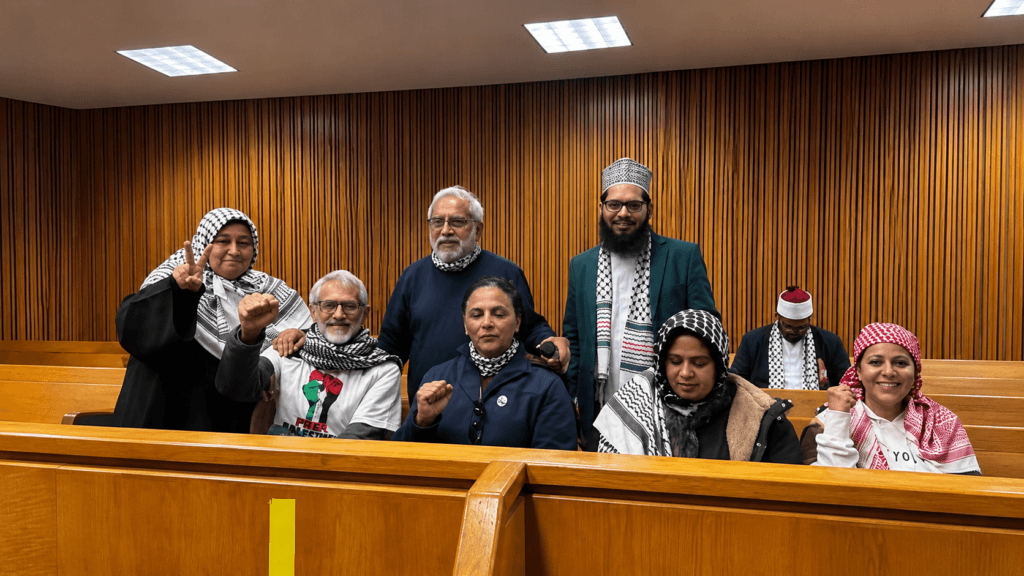
The Palestine Solidarity Campaign argues that the application threatens constitutionally protected political expression.
Its supporters maintain that boycott calls are a recognised form of peaceful political participation. They argue that people are entitled to criticise companies, encourage consumers not to purchase particular products and demonstrate in public spaces, provided the activity remains lawful.
The respondents also dispute the retailer’s characterisation of certain slogans and allegations. Their legal position is expected to emphasise the context in which political statements are made, including the continuing humanitarian crisis and military conflict in Gaza.
The court will have to decide whether the disputed statements amount to protected political speech, unlawful hate speech, defamation or another form of legally actionable expression.
That assessment is unlikely to depend only on individual words. Courts may consider the full context, the speaker’s intention, the audience, the meaning reasonably understood by listeners and the effect of the expression.
Human-Rights Centre Joins As Friend Of The Court
The Centre for Applied Legal Studies has applied to participate as an amicus curiae, or friend of the court.
CALS is a human-rights organisation based at the University of the Witwatersrand School of Law. An amicus does not become one of the principal parties but assists the court by presenting legal arguments or expertise that may not otherwise be fully addressed.
The organisation says it wants to help the judges examine two central questions arising from the Cape Union Mart interdict case.
The first concerns the distinction between constitutionally protected political speech and hate speech. The second concerns whether a court should prohibit protesters from covering their faces.
CALS argues that political slogans used in solidarity campaigns must be examined in their political and historical context rather than automatically treated as attacks on a religious or ethnic identity.
The organisation also says face coverings have played a role in protest movements, including where demonstrators fear surveillance, retaliation or victimisation. It argues that a blanket restriction could also affect people wearing religious coverings.
Cape Union Mart’s concerns, by contrast, include the difficulty of identifying individuals accused of unlawful conduct when their faces are concealed.
The court must consider whether restrictions on face coverings are necessary and proportionate, or whether existing law already provides sufficient remedies against intimidation and criminal conduct.
Earlier Interim Proceedings
The present hearing follows earlier proceedings in August last year, when Cape Union Mart sought interim protection while the main dispute remained unresolved.
The parties reached a settlement that was made an order of court. That temporary arrangement did not determine all the substantive questions now before the full bench.
The final hearing is therefore not simply a repetition of the earlier application. It allows the judges to examine the evidence, constitutional rights and proposed restrictions more fully before deciding whether a permanent order is justified.
A final interdict generally requires an applicant to establish a clear legal right, an injury that has occurred or is reasonably feared, and the absence of another satisfactory remedy.
Where an interdict restricts expression or protest, the court must also consider the Constitution and the importance of limiting fundamental rights only where the restriction is lawful, reasonable and justifiable.
The Rights Involved
Several constitutional protections are engaged by the dispute.
Section 16 of the Constitution protects freedom of expression, including the freedom to receive and impart information or ideas. However, that protection does not extend to every form of expression and does not remove possible civil liability for defamatory statements.
Section 17 protects the right to assemble, demonstrate, picket and present petitions peacefully and unarmed.
These rights do not authorise violence, threats, damage to property or the physical obstruction of people entering lawful businesses. Protesters remain subject to generally applicable criminal, municipal and civil laws.
At the same time, a company does not have an automatic right to prevent peaceful criticism because a campaign damages its reputation or encourages consumers to spend their money elsewhere. Boycotts can be lawful forms of political and consumer expression.
The central question is therefore not whether protest rights or business rights exist. Both do. The court must determine how they apply to the facts and whether the order sought would protect against unlawful conduct without preventing legitimate dissent.
What A Final Interdict Could Mean
A final interdict would impose legally enforceable restrictions on the people and organisations named in the order.
Anyone who knowingly disobeys such an order could face contempt-of-court proceedings. Depending on the circumstances, contempt can lead to fines, suspended penalties or imprisonment.
The wording of the order will consequently matter greatly.
A narrowly framed order could prohibit clearly defined conduct such as blocking store entrances, threatening workers or physically intimidating customers while preserving peaceful picketing and boycott calls.
A broader order affecting slogans, masks, protest numbers or locations could have consequences beyond this particular dispute. Other companies, campaign groups and courts may look to the judgment when future protests target private businesses.
Should the application be dismissed, the judgment may similarly provide guidance on when companies have failed to prove that protest activity justifies court-imposed restrictions.
The case may therefore become an important reference point for unions, civil-society movements, retailers and activists operating across South Africa.
What The Court Is Not Deciding
The Western Cape High Court is not being asked to decide the entire political or historical dispute involving Israel and Palestine.
It is also not deciding whether every person should support or oppose the boycott campaign.
The court’s task is narrower. It must evaluate the evidence concerning these parties, the statements and conduct challenged by Cape Union Mart, and the legality of the final interdict being requested.
A judgment supporting one party on a particular legal issue would not necessarily amount to judicial endorsement of every political position advanced by that party.
This distinction is important because court proceedings involving emotionally charged international conflicts can easily be misrepresented through social-media headlines or selectively edited video clips.
Why The Case Matters To Capetonians
The protests have largely taken place outside stores in Cape Town, placing local customers, retail workers, shopping centres and police at the centre of the dispute.
For businesses, the judgment may clarify what evidence is required to obtain protection against sustained protest activity.
For activists, it may define how far a court may go when restricting boycott messages, protest clothing, slogans or demonstrations near commercial premises.
For ordinary Capetonians, the case concerns the ability to enter businesses safely while others exercise their right to express opposition outside.
The eventual judgment could provide clearer rules for managing those competing interests without allowing peaceful protest to become intimidation or allowing commercial inconvenience to become a reason for silencing dissent.
How To Follow The Case Responsibly
Members of the public should distinguish between allegations contained in court papers, arguments made by lawyers and findings ultimately made by the judges.
A claim repeated during a hearing does not become a proven fact merely because it was stated in court.
The final judgment and court order will be the most reliable record of what the bench decided. Until then, reporting should identify which party made each allegation and avoid presenting disputed claims as established facts.
Updates about the human-rights arguments are available through the Centre for Applied Legal Studies, while formal judgments are generally published through recognised Southern African legal databases after delivery.
Cape Town News will update this report when the court hands down judgment or issues a final order.
Q&A
What is the Cape Union Mart interdict case about?
Cape Union Mart and Philip Krawitz are asking the Western Cape High Court to impose final restrictions on the Palestine Solidarity Campaign and several activists following boycott demonstrations outside stores.
When is the case being heard?
The hearing is scheduled from Monday, 15th to Friday, 19th of June.
Has the court already ruled against the protesters?
No final judgment has been delivered. Earlier interim proceedings resulted in a settlement order, but the substantive application for a final interdict is now being argued.
What does Cape Union Mart allege?
The retailer alleges that protesters intimidated customers, affected employees, interfered with store access and made defamatory statements damaging the company and its leadership.
What does the Palestine Solidarity Campaign say?
The campaign disputes allegations of intimidation and argues that peaceful demonstrations, political criticism and consumer boycott calls are constitutionally protected.
Is the court deciding whether the boycott is politically correct?
No. The court must decide whether the specific conduct and statements challenged in the application justify a final legal interdict.
What is an interdict?
An interdict is a court order requiring a person to stop, avoid or sometimes perform specified conduct. Disobeying it may result in contempt proceedings.
What is an amicus curiae?
An amicus curiae, or friend of the court, is an organisation or person allowed to assist the judges with legal arguments or expertise without becoming one of the main parties.
Why is CALS involved?
The Centre for Applied Legal Studies wants to assist the court on the distinction between political speech and hate speech, as well as the legality of restricting face coverings during protests.
Can protesters lawfully call for a boycott?
Peaceful boycott campaigning can be protected political and consumer expression. It does not, however, authorise intimidation, violence, obstruction or other unlawful conduct.
When will judgment be delivered?
The court may reserve judgment after hearing argument. No confirmed delivery date had been announced at the time of publication.
SAI Search Summary
The Cape Union Mart interdict case is being heard by a full bench of the Western Cape High Court from 15th to 19th of June. Cape Union Mart and executive chairperson Philip Krawitz seek restrictions against the Palestine Solidarity Campaign and several activists following sustained boycott protests outside stores. The retailer alleges intimidation, obstruction and defamatory statements, while respondents argue that peaceful demonstrations, political criticism and boycott calls are constitutionally protected. The Centre for Applied Legal Studies is assisting the court on freedom of expression, hate speech and face coverings. No final findings have yet been made.
Source: Voice of the Cape; eNCA; Centre for Applied Legal Studies, University of the Witwatersrand