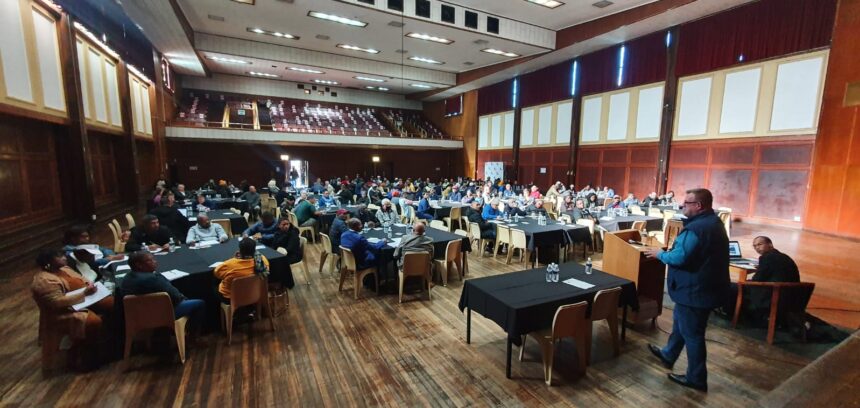
For most Capetonians, ward committees operate quietly in the background of local government, discussing everything from service delivery and community safety to housing, development, and neighbourhood disputes. But a growing campaign now says the very people these committees are meant to represent have been locked out of the democratic process altogether.
A growing civic movement is putting fresh pressure on the City of Cape Town to overhaul how ward committees are elected, arguing that the current system excludes ordinary residents from one of the most important grassroots structures in municipal governance.
The campaign, led by Movement for CARE and supported by the People’s Legal Centre, comes just months before South Africa heads toward another round of local government elections later this year, elections that will shape not only political control of municipalities, but also the community structures that operate closest to residents.
Ward committees were created under Section Seventy-Three of South Africa’s Municipal Structures Act, with a clear objective: to strengthen communication between residents and municipal leadership, while promoting what the legislation describes as participatory democracy in local government.
In theory, ward committees should serve as a direct bridge between communities and the City, allowing residents to raise concerns around service delivery failures, infrastructure maintenance, housing pressures, transport challenges, crime prevention, environmental management, and broader neighbourhood development.
But campaigners say Cape Town’s current ward committee model does not function as a true democratic structure.
Under the existing rules, each ward councillor automatically becomes chairperson of their local ward committee and is given significant influence over which community sectors will be represented.
These sectors typically include categories such as health, sport, safety, youth development, and community services. Once sectors are selected, only registered organisations that fall within those categories may nominate candidates.
Ordinary residents, registered voters, and independent community voices are excluded from the process entirely.
They cannot nominate candidates, stand for election, or cast a vote.
Movement for CARE argues that this system effectively allows ward councillors to shape the composition of committees long before any nomination process even begins, creating what campaigners describe as a system vulnerable to political influence and selective representation.
Legal advocates supporting the campaign believe the process may conflict with constitutional principles of public participation, although the issue has never been formally tested in South Africa’s highest courts.
Cape Town first adopted its current ward committee rules in two thousand and eleven, before re-adopting them in two thousand and sixteen, and again in two thousand and twenty-two.
Campaign organisers argue that each of those policy cycles happened with little meaningful public participation.
The City of Cape Town has since acknowledged that revised ward committee rules will need to be drafted ahead of the next local government cycle.
However, activists say the City’s early consultation plans still appear to prioritise registered organisations over individual residents.
Movement for CARE now plans to submit formal demands, petitions, and possible legal representations aimed at securing a fully public, transparent, and democratic ward committee election process.
With local elections fast approaching, what was once considered an administrative municipal process may soon become a much larger political debate about who truly gets a voice in Cape Town’s future.
Source: GroundUp – Nick Fabré – Movement for CARE and People’s Legal Centre campaign statements.