A growing battle over land use in Cape Town’s inner city is exposing deeper tensions around housing, history and economic survival, as Harrington Square becomes a test case for how the city balances urgent social needs with commercial realities.
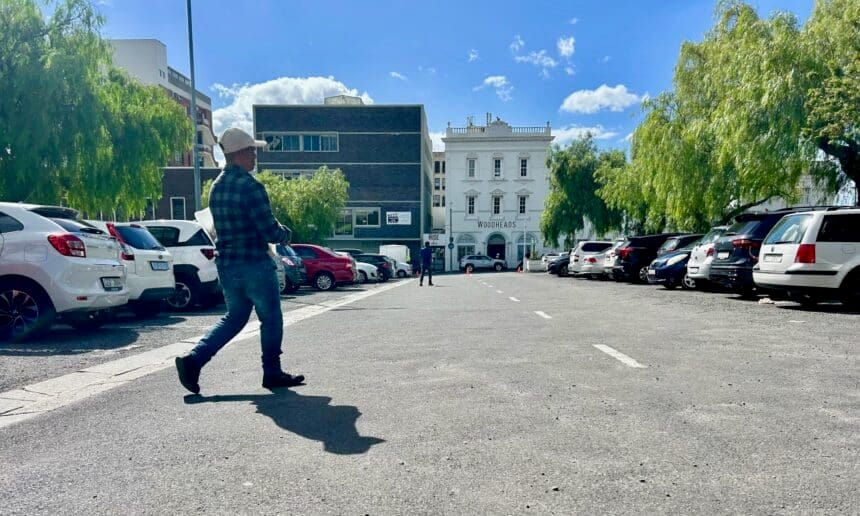
Harrington Square, a parking area located on the edge of District Six, has become the centre of a heated public debate following the City of Cape Town’s proposal to transform the site into a multi-functional civic space.
The City has framed the plan as part of a broader effort to revitalise underutilised urban land, with a focus on improving accessibility, safety and connectivity between surrounding neighbourhoods. However, the proposal has also opened up a far more complex question, who should benefit most from scarce land in the city centre.
Deputy Mayor and Mayoral Committee Member for Spatial Planning and Environment, Eddie Andrews, said the site represents an opportunity to reshape the urban landscape.
“We want to reimagine these assets and see how they can be used to uplift the area, lead urban regeneration, and strengthen the connections between the surrounding neighbourhoods,” he said.
But housing activists argue that the City is missing a critical opportunity to address one of Cape Town’s most pressing challenges, the lack of affordable housing in well-located areas.
Advocacy group Ndifuna Ukwazi has repeatedly called for centrally located land to be prioritised for housing, pointing to a backlog of around four hundred thousand people on the city’s housing waiting list.
Activist Buhle Booi said the current use of land reflects deeper inequalities in the city’s spatial planning.
“It can’t be that cars would have a roof over their heads and people are living outside in the streets,” Booi said, highlighting the contrast between infrastructure for vehicles and the ongoing housing crisis.
The debate is further shaped by the historical context of District Six, where families were forcibly removed during apartheid and are still waiting for restitution.
Residents who attended the public meeting said any redevelopment must take this legacy into account, with calls for returning families to be prioritised in future housing plans.
At the same time, business owners operating in the area have raised concerns about the potential loss of parking, warning that it could disrupt customer access and reduce foot traffic.
For many, the issue is not simply about convenience, but about economic survival in a competitive inner-city environment.
They argue that removing parking without viable alternatives could have unintended consequences for local businesses already under pressure.
The City has acknowledged these competing concerns and maintains that the process is still in its early stages, with public input forming a key part of the decision-making process.
A workshop is scheduled for early May, with further details expected to be released in June, as officials work towards a final plan.
As Cape Town continues to grapple with the realities of rapid urbanisation, housing demand and economic pressures, the outcome of the Harrington Square debate may set a precedent for how the city uses its most valuable land in the years ahead.
Source: Cape {town} Etc – GroundUp – Matthew Hirsch.