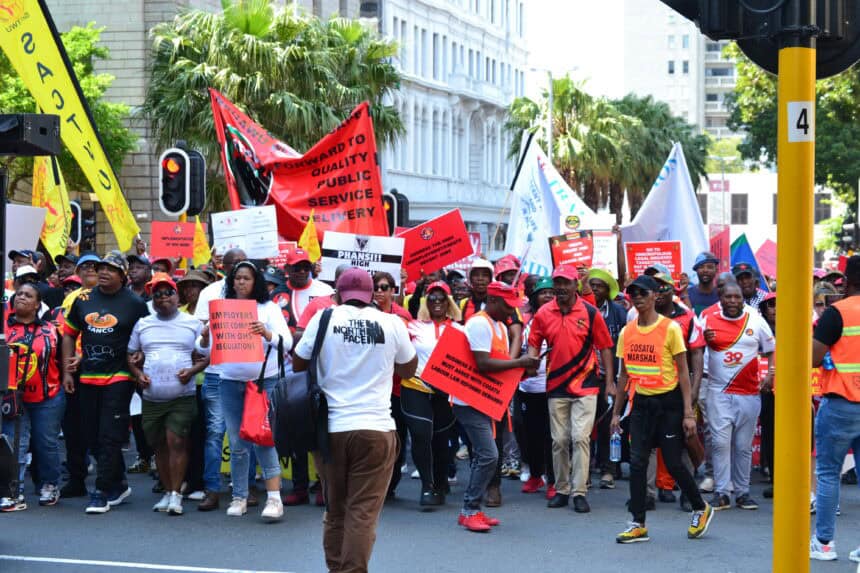
Hundreds of community health workers took to the streets of Cape Town this week, demanding permanent employment and improved working conditions, as frustration grows over years of contract work without basic benefits.
The protest, led by the National Union of Public Service and Allied Workers, saw workers march to the provincial legislature where a memorandum outlining their demands was formally handed over to government representatives.
At the heart of the protest is a long-standing grievance among community health workers, many of whom are employed through non-governmental organisations on short-term contracts, rather than being integrated into the public health system.
Union representatives argue that this arrangement leaves workers without access to essential benefits such as medical aid, pension contributions, and long-term job security, despite performing critical frontline roles in communities across the city.
“Our community health workers continue to be exploited and underpaid,” said a union representative, adding that many have spent years, in some cases decades, in the same roles without being absorbed into permanent positions.
Workers on the ground describe the situation as increasingly unsustainable, particularly given the risks associated with their work. Many operate in high-risk areas, providing care to vulnerable patients while lacking the support structures typically afforded to formal employees.
Some health workers also highlighted the personal sacrifices required to carry out their duties. Reports indicate that workers often use their own limited income to assist patients, including providing food, electricity, and basic care items when needed.
Health advocacy groups supporting the protest say integrating community health workers into the formal system could have a direct impact on service delivery. Research has shown that permanently employed workers are generally more motivated and able to provide consistent care, particularly in under-resourced communities.
A representative from the provincial government accepted the memorandum during the march, with officials expected to review the demands as pressure builds for a more equitable and sustainable approach to community-based healthcare.
The protest underscores broader challenges within the health system, where the reliance on contract-based labour continues to raise questions about fairness, sustainability, and the long-term effectiveness of service delivery.
As discussions move forward, the outcome of these demands could have significant implications not only for the workers involved, but also for the communities that rely on their services.
GroundUp – Vincent Lali