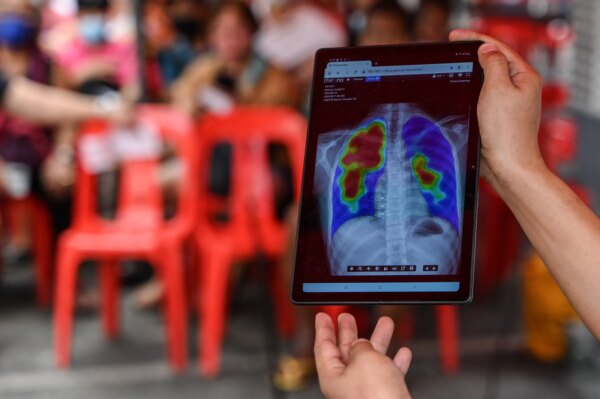
In a city already known for producing world-class surgeons, groundbreaking medical research, and a growing technology ecosystem, one Cape Town start-up is now attempting something that could change healthcare far beyond South Africa’s borders, teaching artificial intelligence to listen for one of Africa’s deadliest diseases before doctors ever order a laboratory test.
Cape Town’s growing health technology sector is attracting fresh attention after a local start-up unveiled artificial intelligence tools designed to identify early signs of tuberculosis through something as simple, and as powerful, as sound.
The company, based in the Western Cape’s expanding innovation ecosystem, is developing software capable of analysing cough patterns, voice recordings, breathing irregularities, and acoustic signatures that may indicate the presence of tuberculosis, one of the world’s deadliest infectious diseases.
While the technology remains in its development and validation phase, early industry interest suggests the platform could become a major breakthrough in regions where access to laboratory diagnostics, imaging equipment, or specialist respiratory care remains limited.
Tuberculosis continues to present one of South Africa’s most persistent public health challenges. According to global health data, the country remains among the nations with the highest TB burden, placing enormous pressure on clinics, hospitals, laboratories, and community health workers.
That reality is precisely what has driven investment into new diagnostic technologies.
Company executives say the goal is not to replace doctors or laboratory testing, but to provide frontline healthcare workers with faster, more accessible screening tools that can identify high-risk patients earlier and prioritise further clinical assessment.
By using machine learning models trained on thousands of audio samples, the platform aims to recognise subtle patterns that may not be immediately obvious to the human ear, potentially reducing delays between symptom presentation and formal diagnosis.
Healthcare investors are paying close attention.
Digital health has become one of the fastest-growing sectors within Africa’s technology ecosystem, particularly in markets where population growth, urban migration, and public health demand continue to outpace traditional healthcare infrastructure.
Industry analysts say solutions that combine artificial intelligence with real-world public health applications could become one of the continent’s strongest innovation sectors over the next decade.
For Cape Town, the project adds yet another layer to the city’s growing reputation as a centre not only for fintech, logistics, and software development, but increasingly for commercially scalable healthcare innovation.
If the technology proves successful at scale, what begins with a cough recorded on a mobile device in a local clinic could one day help save lives across an entire continent.
Source: TechCentral – Staff Reporter.