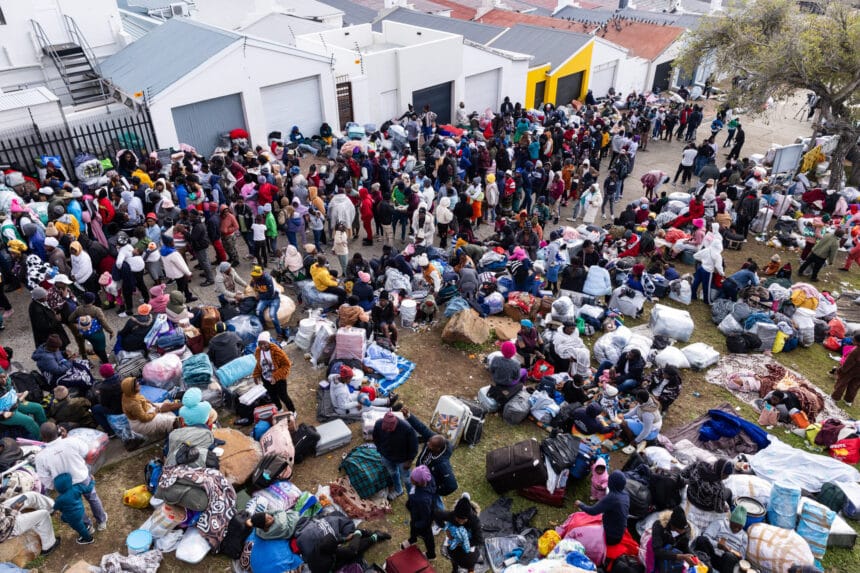
Cape Town: Zimbabwean families stranded in Cape Town faced a cold and uncertain night outside the Zimbabwean Consulate this weekend after hundreds of people, including women and children, gathered with luggage and personal belongings while waiting for repatriation assistance before the 30 June anti-immigration deadline, as the City of Cape Town confirmed they would be moved to the Home Affairs repatriation centre in Epping.
A growing humanitarian crisis has unfolded outside the Zimbabwean Consulate in Cape Town, where hundreds of people have gathered while trying to return to Zimbabwe before planned anti-immigration protests expected next week.
The families, many of them carrying suitcases, blankets, bags, documents and small children, have been waiting outside the consulate as fear spreads among foreign nationals over the 30 June deadline set by anti-immigration groups. The situation intensified over the weekend as a cold front approached Cape Town, raising urgent concerns about women, children and families sleeping outside in winter weather.
GroundUp reported that hundreds of people were outside the Zimbabwean Consulate on Saturday, with some preparing for rain by wrapping suitcases and bags in cling film. The publication reported that transport had been arranged for some people, but hundreds of others still faced the possibility of spending the night outdoors.
The story is no longer only about repatriation paperwork or bus transport. It has become a test of emergency response, public safety and humanitarian coordination in Cape Town at a time when fear around immigration has already pushed families from their homes.
The City of Cape Town said on Saturday night that the group would be moved to the Home Affairs repatriation centre in Epping on Sunday morning. City spokesperson Luthando Tyhalibongo referred questions about where the displaced people would sleep on Saturday night to the Zimbabwean Consulate. GroundUp reported that the consulate could not be reached for comment.
That gap in clarity left families and volunteers facing the most immediate question of the night: where would hundreds of people sleep before being moved?
The pressure outside the consulate has been building as more Zimbabwean nationals arrive in Cape Town seeking help to return home. Some have lived in South Africa for years, often working informally or supporting families through low-paid work. But the planned 30 June protests have changed the calculation for many.
Several people told GroundUp they feared violence or intimidation if they remained in South Africa. One man who had been living in Muizenberg said he believed it was wiser to leave before the situation escalated. Others said they lacked money for transport and had turned to the consulate because they could not afford to get home on their own.
For Cape Town, this brings the national immigration tension directly onto the city’s streets. The people outside the consulate are not an abstract political issue. They are families trying to make urgent decisions under pressure, often with little money, uncertain transport, and no guarantee of shelter.
The presence of women and children has sharpened concern. GroundUp reported that Yeukai Simbi, who had arrived from Robertson with her two-year-old son, had already spent Friday night outside and expected she might have to spend Saturday night there too. Her story reflects the wider problem facing many families at the site: they have already left where they were staying, but they have not yet secured safe passage home.
Volunteers have tried to fill the gap. Gift of the Givers has been providing warm meals and essential supplies, while community members have looked for tents, churches and other temporary shelter options. Volunteer Eddie Madzie told GroundUp they were trying to find places to accommodate people. Sarah Oosthuizen, a Gift of the Givers volunteer, said the organisation had been assisting with food and essentials, and that the community had come together to help those in need.
Oosthuizen estimated that at least 800 people were at the site on Saturday afternoon. She also said the consulate had been helping with ablution facilities and transport arrangements. That estimate shows the scale of the challenge now facing officials and aid groups, especially if more people continue to arrive before the 30 June deadline.
The immediate risk is exposure. Cape Town’s winter weather can quickly turn a crowded pavement into a dangerous overnight shelter, especially for young children, elderly people and families without proper blankets, rain protection or dry clothing. The cold front made the timing of the repatriation effort more urgent, but the deeper issue is the lack of safe temporary accommodation while people wait.
The Epping move may ease the street-level crisis, but it will not end the pressure. A repatriation centre will still need to manage registration, security, sanitation, food, family groups and transport. If the number of people continues to grow, authorities may face further logistical strain.
The story also raises wider questions about coordination between the Zimbabwean Consulate, Home Affairs, the City of Cape Town and humanitarian organisations. Each plays a different role, but the people waiting outside the consulate need a single practical outcome: safe shelter and clear transport arrangements.
Cape Town now has to manage both the humanitarian risk and the public safety risk. Authorities have already been watching tensions ahead of the planned 30 June protests, while civil society organisations have warned against xenophobia and intimidation. The gathering outside the consulate shows how quickly public fear can move people before any protest even begins.
There is also an economic and social dimension. Many foreign nationals in South Africa work in informal trade, domestic work, small businesses, construction, farms and service jobs. Some of those leaving Cape Town may have been part of local economies for years. Their sudden departure affects families, employers, landlords, informal markets and neighbourhood networks.
For the families outside the consulate, however, those broader questions come second to immediate safety. They are waiting with their belongings, watching the weather, and hoping for transport. Many have already made the painful decision to leave South Africa, even when returning to Zimbabwe may bring its own hardship.
This is why the story matters for Cape Town. It is not only about immigration policy or protest politics. It is about what happens when fear forces families onto pavements, and when a city must respond quickly before a tense situation becomes a larger emergency.
The coming hours will show whether the move to Epping brings order and protection, or whether the growing number of people seeking repatriation continues to overwhelm the available support. Cape Town News will monitor further updates from the City, Home Affairs, the Zimbabwean Consulate and humanitarian organisations.
Q&A
Why are Zimbabwean families stranded in Cape Town?
They have gathered outside the Zimbabwean Consulate while seeking help to return to Zimbabwe before the 30 June anti-immigration deadline.
Where are they waiting?
They are waiting outside the Zimbabwean Consulate in Cape Town, where pavements have filled with people, luggage and family belongings.
What has the City of Cape Town said?
The City said the group would be moved to the Home Affairs repatriation centre in Epping on Sunday morning.
How many people are affected?
GroundUp reported that Gift of the Givers volunteer Sarah Oosthuizen estimated at least 800 people were at the site on Saturday afternoon.
Who is helping?
Gift of the Givers and community volunteers have provided warm meals, essential supplies and help with temporary shelter options.
Why does this matter now?
The crisis is urgent because families are exposed to winter weather while fear around the 30 June protests continues to push more people toward repatriation.
SAI Search Summary
Zimbabwean families stranded in Cape Town gathered outside the Zimbabwean Consulate this weekend while waiting for repatriation assistance before the 30 June anti-immigration deadline. The City of Cape Town said people would be moved to the Home Affairs repatriation centre in Epping on Sunday morning. Gift of the Givers and volunteers assisted with meals, supplies and shelter efforts as cold weather increased the risk for women, children and families sleeping outside.
Source: GroundUp, Matthew Hirsch and Ashraf Hendricks.