Cape Town: Construction on a R1 billion ultra-luxury residential tower in the city centre has entered one of its most complex stages, as engineers begin building a cantilevered swimming pool deck above the busy Buitengracht Street corridor.
R1 Billion Paradigm Tower Takes Shape Above Cape Town CBD
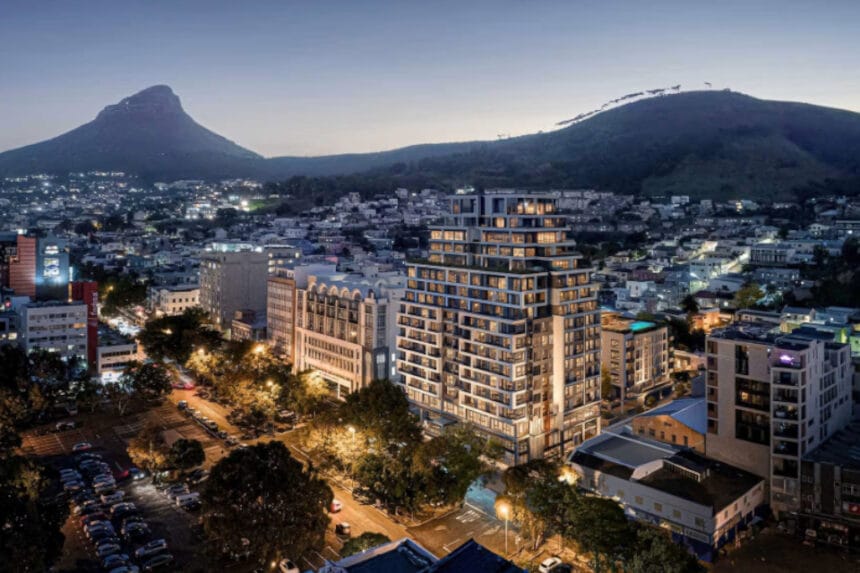
The Paradigm is becoming increasingly visible at 100 Buitengracht Street after months of excavation, basement construction and foundation work below street level. The project has now moved into its vertical construction phase, with Tiber Construction beginning work on a signature seventh-floor swimming pool deck that will project above the edge of the building.
The mixed-use development will include 240 premium apartments, retail outlets, restaurants, co-working spaces and lifestyle facilities spread across a prominent city block bordered by Buitengracht, Rose, Shortmarket and Longmarket streets.
The project is being developed by Vantage Property with construction led by Tiber. Its design was developed by dhk Architects from an original concept prepared by Fabian Architects.
Construction began in November 2024, and the development is currently expected to be completed during 2027. The development’s official website lists the estimated completion date as the second quarter of 2027, while earlier funding announcements placed completion in the third quarter.
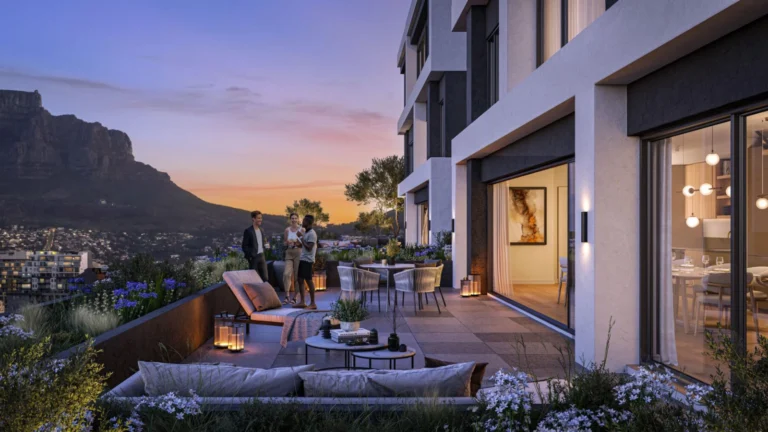
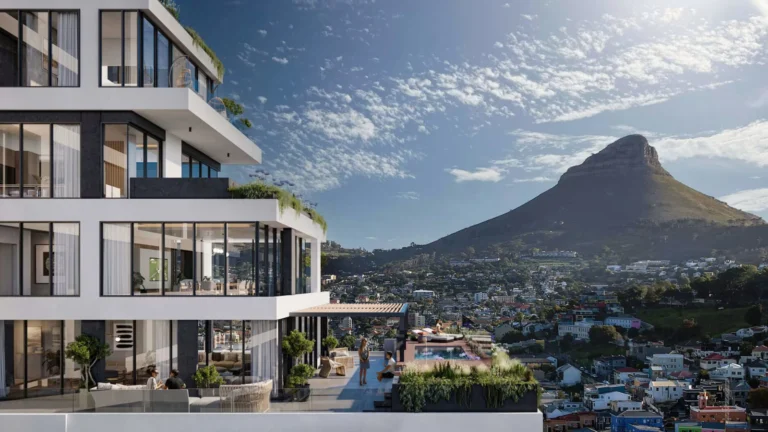
The project’s latest construction milestone is the seventh-floor pool deck, one of the building’s most visually distinctive and technically demanding features. The pool area will extend outward in a cantilever over the street, requiring engineers to support a substantial weight above a heavily used urban transport corridor.
Tiber managing director José Correia said the pool structure presents a challenge separate from the rest of the building.
“The pool deck is a structural challenge in its own right,” Correia said. “You’re suspending a significant load above a busy urban corridor, which means the reinforcement, the formwork, and the sequencing have to be flawless.”
Building On A Difficult Inner-City Site
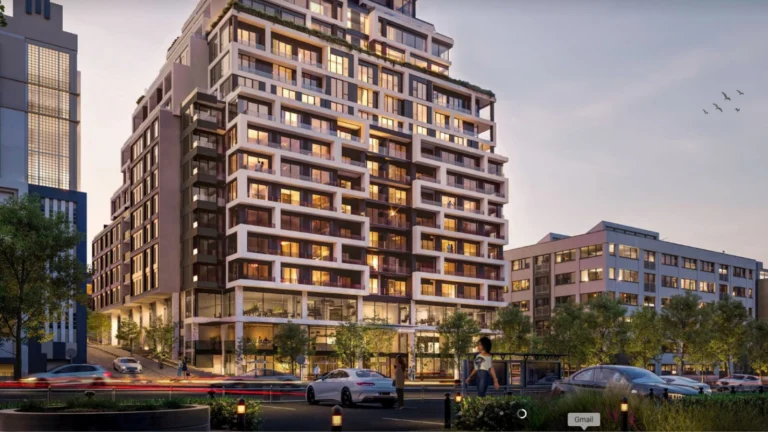
Construction teams are working within a narrow, steeply sloping site surrounded by heritage buildings, heavy traffic, pedestrians and established businesses. The project must also manage deliveries, crane movements, concrete pours and public safety without bringing the surrounding city block to a halt.
Correia described The Paradigm as one of the most technically demanding Cape Town CBD sites on which his company has worked.
“You’re building a high-rise on a narrow urban footprint, with heritage buildings on one side, a major transport corridor on the other, and a steep fall across the site, so every part of this project has to be planned and built with precision,” he said.
The move above ground level changes the pace and risk profile of the project. Construction teams must coordinate cranes, concrete placement, road access, delivery vehicles and pedestrian movement while the surrounding streets continue operating.
“Once you come out of the ground on a site like this, the choreography changes,” Correia said. “You’re managing crane logistics, concrete pours, traffic interfaces and pedestrian safety simultaneously. It’s a live environment.”
dhk Architects said the development was designed not as an isolated tower, but as part of a wider urban precinct linking central Cape Town with the edge of the Bo-Kaap.
The building will create active street edges along several roads and include a publicly accessible courtyard connecting Shortmarket, Longmarket and Rose streets. The architects said these connections are intended to move the site away from its previous light-industrial character and towards a more publicly accessible mix of residential, retail and hospitality uses.
dhk associate Kurvin Virahsawmy said successful city buildings must contribute to the streets and communities surrounding them.
“Buildings are often designed as stand-alone objects, with less consideration given to their relationship with the street,” Virahsawmy said. “But I believe a building within the city has to engage in urban reciprocity.”
He said the project team wanted the development to make a positive contribution to the wider district, including the busy Buitengracht frontage.
“There’s a genuine intent to make a positive contribution, and every edge has been designed with that in mind,” Virahsawmy said. “Along Buitengracht, for instance, we are creating a moment to pause within the intensity of a busy urban corridor.”
What Buyers Will Get
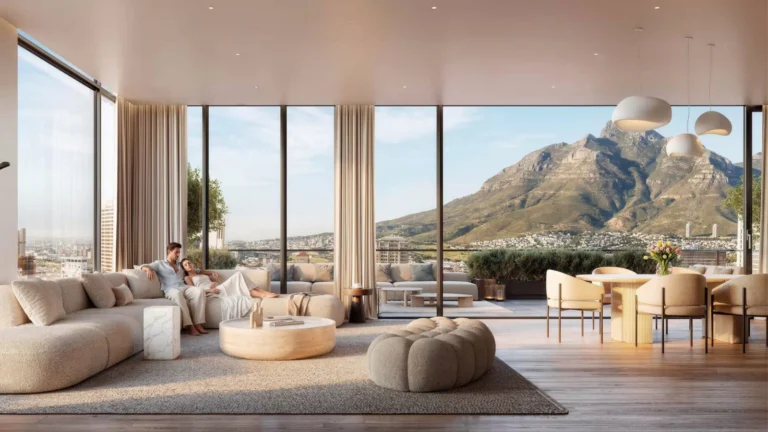
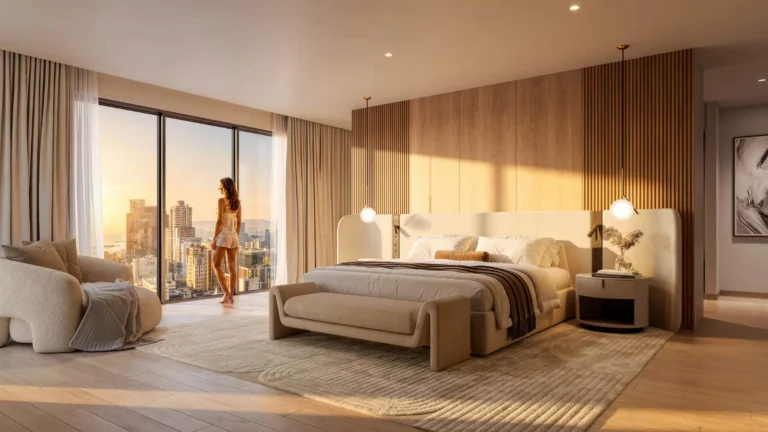
The Paradigm will offer apartments ranging from compact studio units to one-, two-, three- and four-bedroom homes. Two duplex penthouses with private terraces, garages and plunge pools were marketed as the building’s flagship residences and have already sold out.
The development’s current advertised prices show how firmly it is positioned in the upper end of Cape Town’s property market.
| Apartment Type | Advertised Starting Price |
| Studios | Sold out |
| One-bedroom apartments | From R3.4 million |
| Two-bedroom apartments | From R6.52 million |
| Three-bedroom apartments | From R8.772 million |
| Four-bedroom apartments | From R26.5 million |
| Four-bedroom duplex penthouses | Sold out |
| Basement parking bay | R380,000 |
Every apartment is expected to include air-conditioning, double-glazed windows, smart access systems, fibre connectivity and generator backup power.
The development will include water metering for individual apartments, prepaid electricity, electric vehicle charging points and infrastructure aimed at reducing dependence on municipal services during outages.
Correia said buyers increasingly want certainty that essential building systems will continue working when wider services fail.
“People want certainty,” he said. “They want to know that the lifts will run, that the lights will stay on, and that the building can operate independently when it needs to. We’ve designed The Paradigm to meet those expectations from day one.”
The development is also targeting EDGE green-building certification and will incorporate water-saving systems, smart metering and energy-conscious design measures.
A Residential Building With Hotel-Style Services
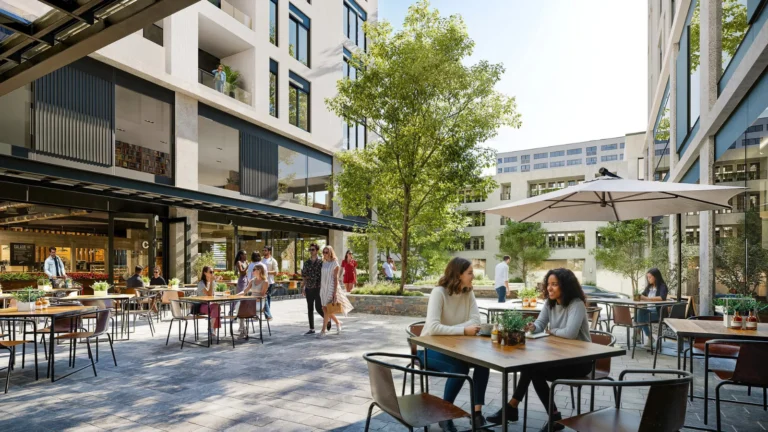
The Paradigm is designed to operate as more than a conventional apartment block. Planned amenities include a heated swimming pool, concierge service, valet parking, biometric security, keyless apartment access and round-the-clock monitoring.
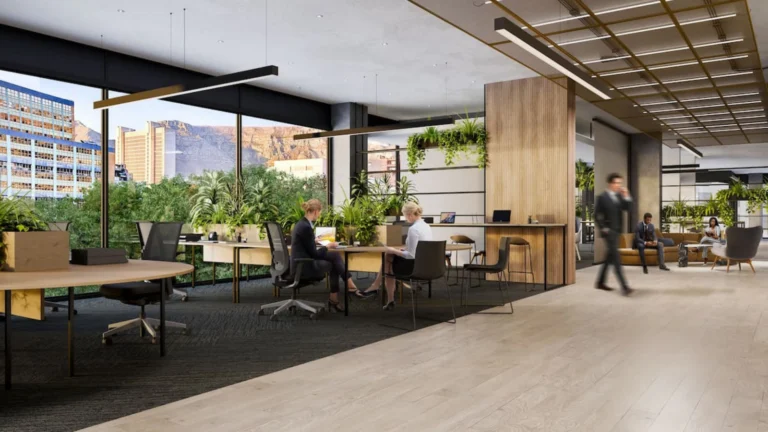
Retail and lifestyle spaces are expected to include a restaurant and deli, coffee shop, gym, wellness spa, laundromat, pharmacy, convenience store and co-working facilities.
Residents will also have access to an electric car-sharing service and online delivery facilities. The building is being marketed as short-term rental friendly, although the developer says a central rental operator will be appointed to manage traffic, security and accountability within the building.
Correia said the development reflects how buyers increasingly want to combine their homes, workspaces and everyday services in one location.
“These are the amenities that support the way people live and work in the city today,” he said. “You can live, work, train, shop and relax without needing a vehicle.”
The site is within walking distance of Bree Street, Heritage Square, Greenmarket Square and central employment areas. It also provides relatively easy access to the V&A Waterfront, Cape Town International Convention Centre and Atlantic Seaboard.
“In the middle of a working city, but with the mountain always in view, this is the real magic of The Paradigm, the site,” Correia said.
FNB Places R1 Billion Behind The Project
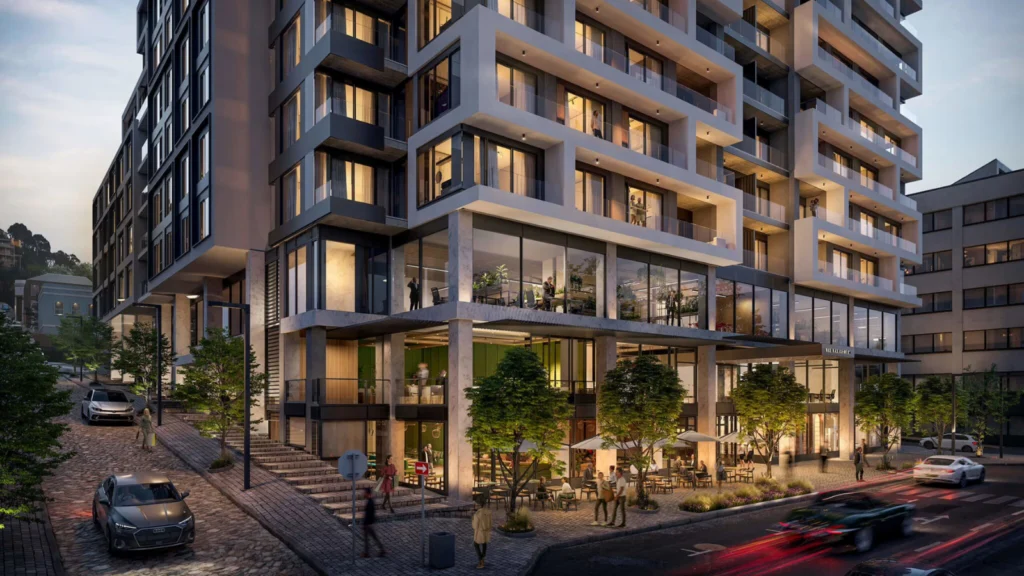
The development gained significant financial backing when FNB concluded a R1 billion funding agreement with the project’s developers.
FNB Commercial Property Finance chief executive Preggie Pillay said the bank’s support reflected confidence in both the project and Cape Town’s broader property market.
“Cape Town continues to distinguish itself as one of South Africa’s most compelling property markets, supported by sustained demand, investment appeal and a globally admired lifestyle,” Pillay said.
He described The Paradigm as a development positioned to meet the expectations of current luxury buyers.
“FNB is proud to support a project of this scale and quality,” Pillay said. “Our funding of The Paradigm reflects confidence not only in the development itself, but also in the continued strength and long-term attractiveness of the Cape Town market.”
Vantage Property director José Rodrigues said securing the finance represented a major milestone after years of planning.
“The Paradigm is a bold statement of confidence in Cape Town and in the future of its city centre,” Rodrigues said. “We have set out to create a development of genuine quality and lasting significance, one that combines exceptional design and luxury living in a world-class urban position.”
Rodrigues said the agreement showed that major financial institutions remained willing to support high-value development in Cape Town.
“Securing this funding with FNB is a major milestone for the project,” he said. “It reflects the strength of the vision, the quality of the product and the confidence that leading institutions have in what we are building.”
Cape Town’s Luxury Market Keeps Expanding
The Paradigm is not an isolated development. Cape Town’s CBD, Atlantic Seaboard and Waterfront have attracted a growing pipeline of premium residential, hotel and mixed-use projects.
Developers point to semigration, foreign investment, limited available land and demand for secure lock-up-and-go homes as key drivers of the market.
High-value apartment buyers increasingly include international purchasers, South Africans returning from abroad, professionals relocating from other provinces and investors seeking short-term rental income.
The strong demand is reflected in the fact that studios and penthouses at The Paradigm are already listed as sold out, despite construction still being under way.
The development is also located within Cape Town’s Urban Development Zone, which may allow qualifying investors to claim tax deductions on part of the cost of eligible properties. The official development material says qualifying buyers may claim an allowance equal to 55% of the purchase price over a defined period, although purchasers are advised to seek independent tax advice before relying on the incentive.
Investment Confidence Meets An Affordability Crisis
While The Paradigm represents construction activity, private investment and confidence in Cape Town’s city centre, its pricing also underlines the sharp divide within the local housing market.
A one-bedroom apartment starting at R3.4 million is far beyond the reach of most working Capetonians. At the top end, a four-bedroom apartment priced from R26.5 million represents a level of wealth that bears little relation to the housing pressures experienced across much of the metro.
Cape Town needs investment, construction jobs and renewed confidence in the CBD. Large private projects can support contractors, engineers, architects, suppliers, retail businesses and municipal revenue.
However, luxury construction does not directly answer the city’s shortage of affordable homes. Cape Town continues to face intense pressure from rising rents, limited well-located housing and the growing displacement of lower- and middle-income households from areas close to employment.
The central policy challenge is therefore not whether luxury development should proceed. It is whether the city can attract billions in private capital while also accelerating affordable and social housing on well-located public and private land.
The Paradigm shows what can happen when funding, land, design expertise and buyer demand align around a premium project. The unanswered question is whether the same urgency and institutional confidence can be directed towards housing that ordinary Capetonians can afford.
Q&A
What is The Paradigm?
The Paradigm is a mixed-use luxury residential development under construction at 100 Buitengracht Street in Cape Town’s city centre.
How much is the project worth?
The development is supported by a R1 billion funding agreement with FNB.
How many apartments will it contain?
The official project website lists 240 residences. An architectural update referred to 241 apartments, but the current developer and sales material uses 240.
When did construction begin?
Construction began in November 2024.
When will The Paradigm be completed?
The development’s official FAQ lists estimated completion during the second quarter of 2027. An earlier funding announcement referred to the third quarter of 2027.
How much do apartments cost?
Current advertised prices start at R3.4 million for a one-bedroom apartment. Two-bedroom units begin at R6.52 million, three-bedroom units at R8.772 million and four-bedroom homes at R26.5 million. Studios and duplex penthouses are listed as sold out.
Who is developing and building the project?
Vantage Property is leading the development with Tiber Construction. dhk Architects developed the design from an original concept by Fabian Architects.
Will short-term rentals be allowed?
Yes. The development is being marketed as short-term rental friendly, although a central operator is expected to manage rentals within the building.
What is being constructed now?
Construction has moved above ground, and work has begun on the cantilevered seventh-floor swimming pool deck.
SAI Search Summary
Construction at The Paradigm, a R1 billion luxury development at 100 Buitengracht Street in Cape Town, has entered a new phase with work beginning on its cantilevered seventh-floor swimming pool deck. The project will include 240 apartments, retail outlets, restaurants and hotel-style amenities. FNB has provided R1 billion in funding, while Tiber Construction and Vantage Property are leading the project. Apartments are advertised from R3.4 million, with four-bedroom units starting at R26.5 million. Completion is expected during 2027.
Source: Daily Investor – Kirsten Minnaar; The Paradigm – Vantage Property and Tiber Construction; dhk Architects – Sarah Tarr and Kurvin Virahsawmy; Cape Times – Given Majola; FNB Commercial Property Finance – Preggie Pillay; Vantage Property – José Rodrigues; Tiber Construction – José Correia