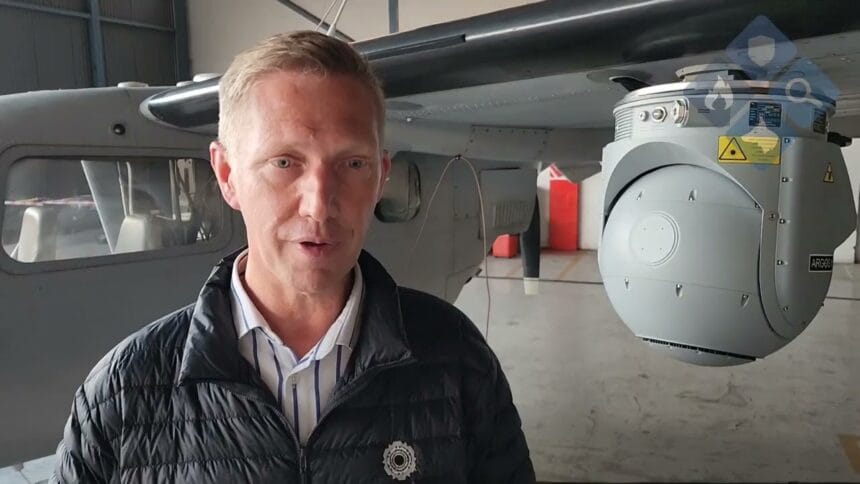
Cape Town: The City of Cape Town has defended the structure and cancellation of its Eye in the Sky aerial-surveillance contract after an exclusive Cape Argus investigation raised questions about transparency, expenditure, performance and the limited public disclosure surrounding the project’s collapse.
This article is an update to Cape Town News’s 17th June lead report, “Cape Town’s R125.9m ‘Eye in the Sky’ Contract Exposed After Community Questions”.
Cape Town News’s earlier report covered and expanded on an exclusive Cape Argus investigation by journalist Genevieve Serra, which revealed that the City’s heavily promoted aerial-surveillance contract had been cancelled in August 2025 after the service provider’s joint venture failed.
The original reporting followed questions from members of the greater Table View community who wanted to know why the surveillance aircraft did not appear to be available during a period marked by violent assaults, robberies and murders in Table View, Parklands and surrounding neighbourhoods. Those questions led to the disclosure that the agreement had already ended several months earlier.
Cape Town News subsequently examined the broader accountability issues surrounding the cancellation, including the contract’s reported maximum value of approximately R125.9 million, the absence of a prominent public announcement, the lack of a detailed performance report and uncertainty over what aerial-surveillance capability remained after the agreement ended.
The City has now responded publicly to the allegations and criticism contained in the original reporting.
City Says Project Was Not JP Smith’s Personal Initiative
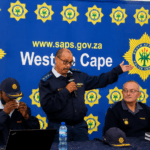
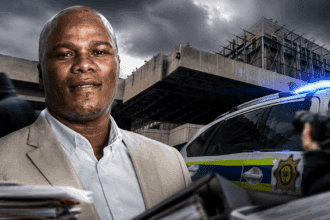
In a letter published by the Cape Argus, Mayoral Committee Member for Safety and Security JP Smith rejected the characterisation of Eye in the Sky as his personal project. He said the initiative belonged to the City’s Safety and Security Directorate and formed part of a broader programme of technology-based crime-fighting measures.
The distinction matters because the original Cape Argus headline referred directly to Smith’s project. The City’s position is that the surveillance programme was an institutional undertaking approved and managed through the directorate, rather than an initiative belonging to one political office-bearer.
Smith also confirmed the main contractual facts previously reported. The procurement attracted only one bidder, and that bidder operated through a joint venture between two companies. When the joint venture failed, the service provider could no longer meet the contractual conditions under which the agreement had been awarded, and the contract was terminated in August 2025.
The City has maintained that the failure related to the bidder’s contractual position and not to aviation compliance or the operational safety of the aircraft.
City Rejects Suggestion Of Financial Loss
The most significant part of the City’s response concerns the financial effect of the cancellation. Smith said the administration had identified risks associated with introducing the surveillance technology in an urban environment and had structured the agreement to reduce the City’s financial exposure.
He stated that the cancellation caused no financial impact to the municipality. According to Smith, the real loss was the operational benefit the technology was expected to deliver by supporting enforcement teams, monitoring crime and extending the City’s surveillance capability across a wide geographical area.
This response must be read carefully alongside the previously reported R125.9 million figure. That amount represents the recorded maximum value associated with the contract and does not automatically mean that the full amount was paid, spent or lost when the agreement ended.
Cape Town News’s earlier report made that distinction and called for a detailed reconciliation showing the original allocation, actual payments, savings, transferred funds, retained amounts and the value of services delivered before the cancellation. The City’s statement that there was no financial impact addresses the consequence of terminating the agreement, but it does not yet provide the complete financial record requested by watchdogs and community activists.
Original Investigation Raised Wider Questions
The Cape Argus investigation extended beyond the immediate contractual reason for termination. It reported that the project had been launched with considerable publicity as a major crime-fighting tool capable of tracking suspects, monitoring shootings, supporting anti-poaching operations and assisting emergency teams.
The contract was awarded in December 2023 after attracting only one bidder, while the City promoted the aircraft as part of a broader R610 million investment in public-safety technology. The aircraft was presented as capable of remaining airborne for extended periods, covering a large area and supporting ground teams with high-definition and infrared surveillance.
The cancellation did not receive the same level of public communication. According to the original reporting, no prominent announcement appears to have been issued when the contract ended in August 2025, leaving Capetonians without a clear public account of the cancellation, expenditure incurred, operational results achieved or replacement arrangements.
It was this contrast between the project’s high-profile launch and its low-profile cancellation that prompted much of the criticism and led to calls for greater disclosure.
Stop CoCT Calls For Supporting Figures
Stop CoCT founder Sandra Dickson said the City’s response confirmed that the agreement had ended in August 2025, while the public had not been clearly informed at the time. She said the issue was not whether surveillance technology should play a role in crime prevention, but whether the City had been sufficiently transparent about the failure of a major public-safety contract.
Dickson called on the municipality to disclose what due diligence had been conducted, what amount had been budgeted, what had been paid, what services had been delivered and why the cancellation was not openly communicated when it occurred. She also said the City should release the figures supporting its statement that there had been no financial impact.
Her criticism separates two connected but different questions. The first is whether the City suffered a financial loss because of the cancellation, which the municipality says it did not. The second is whether the City has provided a sufficiently complete public record of the contract’s performance, expenditure and termination. That question remains disputed.
City Says Technology Remains Central To Safety Strategy
Smith said the Eye in the Sky initiative had been difficult to sustain with the City as the only user. He said National Treasury had asked the municipality to explore joint procurement involving other public agencies, including the South African Police Service and South African National Parks.
A shared arrangement could distribute the cost and allow the technology to support a wider range of operations across different government bodies. Smith said the intelligence, surveillance and reconnaissance project was currently on the backburner, but emphasised that the City continued to invest in other technology-driven safety measures.
These systems include CCTV cameras, drones, body-worn cameras, dashboard cameras and automated number-plate recognition. Smith also referred to the Law Enforcement Advancement Plan and the deployment of 700 additional Metro Police officers during 2025.
He stressed that SAPS remains the primary government agency responsible for crime prevention, while the City’s enforcement services operate in support of national policing. Smith argued that the broader failures of South Africa’s criminal-justice system should not be attributed to one municipal technology contract.
What The City’s Response Clarifies
The City’s response confirms several important facts. Eye in the Sky was a Safety and Security Directorate initiative, the contract attracted only one bidder, that bidder depended on a joint venture, and the agreement ended when the joint venture failed and the service provider could no longer meet its contractual obligations.
The City also says the agreement had been structured to avoid financial exposure and that the cancellation caused no financial impact. At the same time, it acknowledges that the expected operational benefits were lost and that the original fixed-wing surveillance initiative is no longer active.
These clarifications add important context to the original reporting, particularly by distinguishing the maximum value of the contract from the financial effect of its cancellation.
What Still Requires Disclosure
The response does not yet provide a complete public breakdown of the project. Capetonians still do not have a consolidated account showing how many flights took place, how many hours were flown, how much was paid, what measurable results were achieved, what savings were realised and how the remaining budget was allocated.
The original Cape Argus report stated that savings were being redirected to address pressures within the Safety and Security Directorate, including fuel-price increases, while part of the budget was being retained for renewed procurement.
A detailed financial and operational reconciliation would allow the public to distinguish clearly between approved contract value, actual expenditure, savings and the financial effect of the cancellation. It would also allow the City to demonstrate how its contractual safeguards worked when the agreement failed.
A Necessary Response To Public Scrutiny
The City was entitled to respond to the allegations and criticism raised in the Cape Argus investigation. Its explanation adds necessary context by disputing suggestions of financial loss and clarifying that the project was an institutional undertaking rather than the personal initiative of one office-bearer.
The response does not, however, remove the need for complete disclosure. The original reporting raised legitimate public-interest questions about how the contract was awarded, what it delivered, why it ended, what Capetonians were told and what happened to the associated budget.
Those questions can only be fully settled through the publication of clear financial and operational records. Cape Town News will continue to treat the City’s defence, the Cape Argus investigation and the concerns raised by watchdogs as separate but connected parts of the same public-accountability story.
Q&A
What is this article updating?
It updates Cape Town News’s 17th June “Eye In The Sky Exposed” report, which covered and expanded on an exclusive Cape Argus investigation into the cancellation of the aerial-surveillance contract.
Did the City respond directly to Cape Town News?
No. The City’s response, published as a letter by JP Smith, addressed the allegations and criticism raised in the Cape Argus reporting generally.
Why was the contract cancelled?
The City says the sole bidder’s joint venture failed, leaving the service provider unable to comply with the contract.
When was the agreement terminated?
The contract was terminated in August 2025.
Did the City lose R125.9 million?
The City says the cancellation caused no financial impact. The approximately R125.9 million figure refers to the reported maximum contract value and is not a confirmed financial loss.
Why are critics still asking questions?
Critics want the City to disclose actual payments, operational results, savings, redirected funds and the reasons the cancellation was not prominently announced.
Is Eye in the Sky still operating?
JP Smith said the intelligence, surveillance and reconnaissance initiative is currently on the backburner.
What surveillance technology is the City still using?
The City says it continues using CCTV, drones, body-worn cameras, dashboard cameras and automated number-plate recognition.
SAI Search Summary
The City of Cape Town has defended the cancellation of its Eye in the Sky aerial-surveillance contract after allegations and transparency questions were raised in an exclusive Cape Argus investigation covered by Cape Town News on 17th June. JP Smith says the contract ended in August 2025 after the sole bidder’s joint venture failed and that the agreement caused no financial impact because it was structured to limit risk. Stop CoCT founder Sandra Dickson says the City must still publish the supporting financial figures, performance records and reasons the cancellation was not clearly announced.
Source: Cape Argus – Genevieve Serra, “EXCLUSIVE: JP Smith’s ‘Eye in the Sky’ grounded over non-compliance”; Cape Argus – Alderman JP Smith, Mayoral Committee Member for Safety and Security, “City of Cape Town defends Eye in the Sky project cancellation”; Stop CoCT – Sandra Dickson; Cape Town News – Staff Reporter, “Cape Town’s R125.9m ‘Eye in the Sky’ Contract Exposed After Community Questions”.