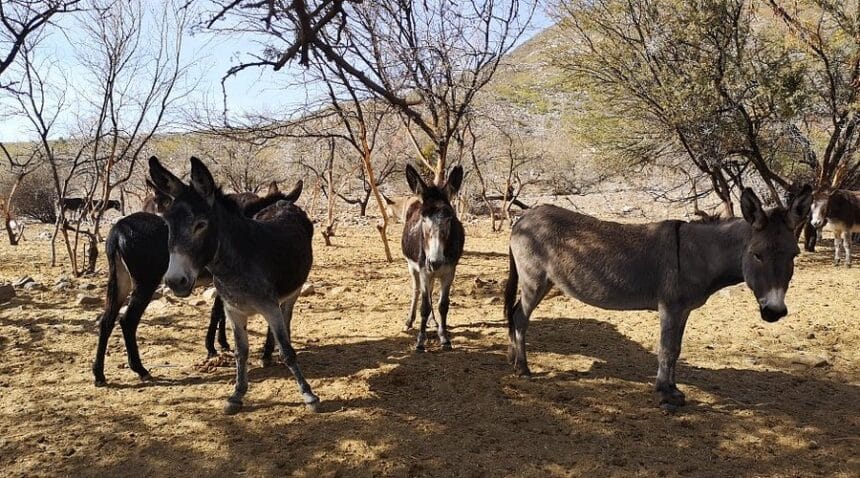
De Rust: The Karoo Donkey Sanctuary has issued an urgent public funding appeal, warning that the financial resources supporting its investigations, government submissions and campaign against South Africa’s commercial donkey-skin trade are running dangerously low.
The appeal marks a new phase in a campaign previously reported by Cape Town News in its 4th May video bulletin, when the Western Cape sanctuary called for urgent national action against the commercial slaughter of donkeys for their skins and body parts.
That earlier report examined warnings from the sanctuary that South Africa risked remaining one of Africa’s open supply routes for the international skin market while other countries moved towards stronger restrictions. It also highlighted concerns that donkeys belonging to vulnerable rural communities were being stolen, transported over long distances or slaughtered in conditions that animal-welfare organisations described as deeply cruel.
The Karoo Donkey Sanctuary now says the cost of sustaining that campaign, while continuing to rescue and care for animals, is placing severe pressure on its limited finances. Founder and chief executive Jonno Sherwin said every investigation, government submission, stakeholder meeting and journey undertaken in support of the campaign had been funded from the organisation’s own resources.
“Our bank account is running dry, and we urgently need public support to continue this work,” Sherwin said.
Advocacy Expands Beyond Sanctuary Gates
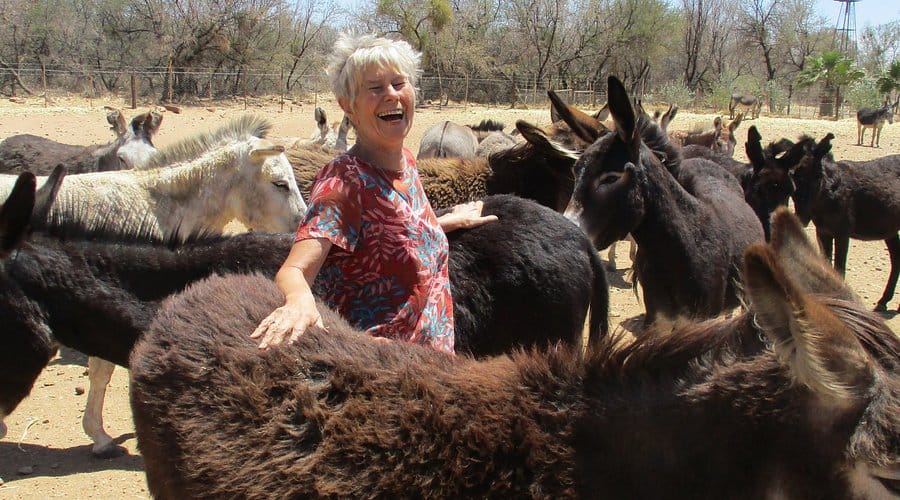
Animal rescue, rehabilitation and lifelong care remain at the centre of the organisation’s work, but the sanctuary says the continued demand for donkey skins has forced it to devote increasing time and resources to national and international advocacy.
Its work now includes documenting welfare conditions, examining transport and slaughter practices, communicating with government departments, participating in stakeholder discussions and raising public awareness about the effect of the trade on animal welfare and rural livelihoods.
The sanctuary says these activities are essential because the consequences of the skin trade extend beyond the animals entering slaughter facilities. In many rural areas, donkeys provide transport, carry water and goods, assist with agricultural work and support households that cannot afford motorised alternatives.
When donkeys are stolen, illegally slaughtered or removed from communities faster than they can reproduce, the resulting loss can deepen existing poverty and increase the daily workload carried by families.
“This is no longer simply an animal welfare issue,” Sherwin said. “It is a conservation issue. It is a rural livelihoods issue. It is an ethical issue.”
South Africa Urged To Follow African Union Position
The sanctuary has urged South Africa to align its policy with the 15-year moratorium on the commercial donkey-skin trade adopted by the African Union in 2024.
The continental decision was intended to give donkey populations time to recover from the rapid decline associated with the international demand for hides. Donkeys reproduce slowly, normally producing one foal after a long gestation period, making populations particularly vulnerable when slaughter rates rise sharply.
Implementation of the African Union position still depends on national governments adopting and enforcing suitable domestic measures. The Karoo Donkey Sanctuary maintains that South Africa has not implemented the moratorium and instead continues using what has been described as a controlled-export model.
Under that model, the legal trade reportedly permits the export of up to 10,500 donkey hides each year. That figure represents the stated annual export ceiling and should not be interpreted as independent confirmation that exactly 10,500 animals are slaughtered every year.
Animal-welfare organisations argue that a legal market may also create opportunities for stolen animals and illegally sourced skins to enter the supply chain. The sanctuary says this risk is especially serious where enforcement, animal identification and traceability are weak.
Sanctuary Says Government Has Not Answered Substantively
Sherwin said the sanctuary had submitted several formal communications to the Minister of Agriculture and the Department of Agriculture, setting out its welfare concerns and requesting intervention.
According to the organisation, those submissions addressed the condition of animals in holding pens and slaughter facilities, the decline in donkey numbers, the effect on rural communities and the relationship between legal trade and illegal slaughter.
The sanctuary says it has not received a substantive government response to the issues raised. Cape Town News has not independently examined the complete correspondence or confirmed the department’s response history, and the claim is therefore attributed to the organisation.
“Despite repeated appeals to government, we have received no substantive response,” Sherwin said. “Every day that passes without intervention places more animals at risk.”
The sanctuary’s appeal places renewed pressure on the national government to clarify its position, explain how the controlled-export system is monitored and respond to claims that current protections are insufficient.
Investigations Raise Welfare Concerns
The organisation says its investigations have identified serious welfare concerns at licensed donkey-slaughter facilities and holding pens.
Sherwin said evidence gathered by the sanctuary included pregnant mares, lactating mothers and young foals being held in pre-slaughter environments. The organisation has also reported incidents of severe abuse and cruelty, as well as social-media content appearing to celebrate donkey slaughter.
These allegations require investigation and enforcement by the relevant animal-health, veterinary, welfare and law-enforcement authorities. The presence of an animal at a licensed facility does not in itself prove a legal violation, but conditions involving mistreatment, unsuitable transport or unlawful slaughter may fall under existing animal-protection and meat-safety legislation.
The sanctuary argues that broader laws are not enough to address the specific risks created by the donkey-skin market. It wants stronger legal protection focused directly on the commercial slaughter and export trade.
Donkey Numbers Under Growing Pressure
The Karoo Donkey Sanctuary says South Africa’s donkey population has declined significantly as international demand for hides has increased.
The skins are primarily sought for the production of ejiao, a gelatin made from donkey hides and used in some forms of traditional Chinese medicine and consumer products. The international growth of that market has placed pressure on donkey populations in several African countries.
Because donkeys reproduce far more slowly than animals typically raised for high-volume meat production, the sanctuary says a sustained commercial slaughter system is difficult to reconcile with population recovery.
The consequences may be most severe in communities where donkeys remain economically valuable but are poorly protected from theft. Removing working animals can deprive households of transport and agricultural support while forcing families to replace work previously performed by the animals.
The sanctuary therefore describes the issue as a combination of animal welfare, conservation, rural development and ethical trade rather than a narrow dispute about export regulation.
Appeal Will Fund Care And Public Advocacy
The organisation is now asking animal lovers, businesses, conservationists and concerned members of the public to help finance both its sanctuary operations and its national advocacy work.
It says contributions will support the feeding, veterinary treatment, rescue and lifelong protection of donkeys already in its care. Funds will also assist investigations into welfare, transport and slaughter practices, engagement with government and policymakers, educational campaigns and collaboration aimed at securing stronger legal protection.
“Together, we have already achieved remarkable progress,” Sherwin said. “With public support, we can help ensure that future generations inherit a South Africa where donkeys are protected, respected and valued, not slaughtered for their skins.”
The sanctuary has asked supporters to use its official communication and donation channels. Information about the organisation and its work is available through the Karoo Donkey Sanctuary website, its official social-media pages or by emailing jonno@karoodonkey.org.
Readers should verify banking or payment information directly through the sanctuary’s official channels before transferring money, particularly where fundraising information is redistributed through social media or messaging services.
Africa’s First GFAS-Verified Equine Sanctuary
The Karoo Donkey Sanctuary describes itself as Africa’s largest donkey sanctuary and the continent’s only equine sanctuary recognised by the Global Federation of Animal Sanctuaries.
The organisation received GFAS verification in 2023 after an assessment of its animal-care practices, governance and operational standards. Its sanctuary work includes rescuing abused, neglected and abandoned animals and providing long-term care where rehabilitation and safe rehoming are not possible.
The funding warning demonstrates the financial tension confronting many welfare organisations. Direct care requires food, veterinary treatment, staff, land and infrastructure, while advocacy demands travel, documentation, legal engagement and sustained communication with decision-makers.
When the same organisation is expected to perform both functions, limited donations must cover the immediate needs of animals already in care while also supporting attempts to prevent future cruelty.
Campaign Returns To A Critical Point
Cape Town News’s 4th May report warned that the donkey-skin trade could continue placing vulnerable animals and rural livelihoods at risk unless South Africa adopted stronger national protections.
The sanctuary’s latest appeal does not announce a change in government policy. Instead, it warns that the organisation campaigning for that change may struggle to maintain its work without immediate financial assistance.
Its position remains that South Africa should move away from controlled exports and align with the African Union moratorium. The government has not publicly adopted that position, and any change would require formal decisions covering agriculture, animal health, slaughter regulation, trade and enforcement.
Until then, the debate is likely to remain centred on whether the existing system can protect donkeys and rural communities, whether legal exports encourage an illegal parallel trade and whether government oversight is sufficiently transparent.
For the sanctuary, the immediate question is more practical. It must continue feeding and treating animals in its care while funding investigations and advocacy that extend far beyond its gates. Sherwin says public support will determine how effectively that work can continue.
Q&A
What is this article updating?
It follows Cape Town News’s 4th May video report on the Karoo Donkey Sanctuary’s campaign for national action against South Africa’s donkey-skin trade.
Why is the sanctuary asking for money?
The organisation says its own limited funds are covering animal care, investigations, government submissions, travel, public education and advocacy work.
What does the sanctuary want the government to do?
It wants South Africa to align with the African Union’s 15-year moratorium on the commercial slaughter of donkeys for their skins and body parts.
Has South Africa banned the donkey-skin trade?
No. The country reportedly continues operating under a controlled-export model.
Does South Africa slaughter exactly 10,500 donkeys every year?
The figure refers to the reported annual legal export ceiling for donkey hides. It is not independent confirmation of the exact number slaughtered in a particular year.
Has the government responded to the sanctuary?
The sanctuary says it has submitted several communications but has received no substantive response. Cape Town News has not independently verified the complete correspondence record.
What will donations support?
Funds will assist donkey rescue, feeding, veterinary care, investigations, government engagement, education and efforts to secure stronger legal protection.
How can readers support the sanctuary safely?
Readers can visit the official Karoo Donkey Sanctuary website, use its verified social-media pages or contact jonno@karoodonkey.org. Payment details should be confirmed through an official channel before money is transferred.
What is GFAS verification?
The Global Federation of Animal Sanctuaries assesses sanctuaries against animal-care, governance, safety and ethical standards. Karoo Donkey Sanctuary received verification as an equine sanctuary in 2023.
SAI Search Summary
The Karoo Donkey Sanctuary has issued an urgent funding appeal, warning that its rescue work and campaign against South Africa’s commercial donkey-skin trade are placing growing pressure on its limited finances. The organisation wants South Africa to align with the African Union’s 15-year moratorium rather than continue under a controlled-export system reportedly permitting up to 10,500 hides annually. Founder Jonno Sherwin says donations are needed for animal care, investigations, government engagement and public education. The appeal updates Cape Town News’s 4th May video report on the sanctuary’s campaign.
Source: Karoo Donkey Sanctuary – Founder and Chief Executive Jonno Sherwin; Cape Town News – 4th May video bulletin and accompanying report, “Western Cape Sanctuary Demands National Ban As South Africa Continues Legal Donkey Slaughter”; Global Federation of Animal Sanctuaries – Traci Hanson, Programme Director for Equine; IOL – Environment reporting on South Africa’s donkey-skin trade.