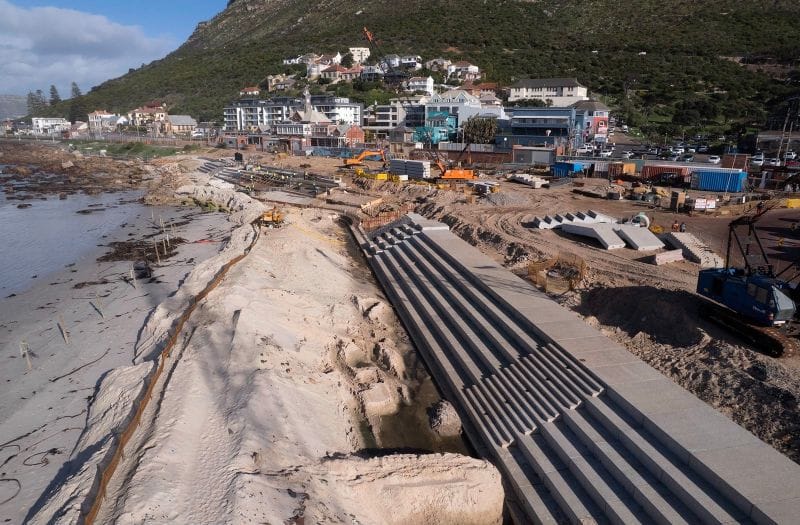
Muizenberg: A vast line of newly placed concrete steps now cuts across the sand at Cape Town’s best-known surfing beach, revealing for the first time the full physical scale of the Muizenberg beachfront upgrade. Exclusive photographs supplied to Cape Town News show construction teams joining major sections of the coastal revetment, excavating deep into the shoreline and rebuilding the public edge between Surfer’s Corner, the central promenade and the railway precinct as part of a project intended to defend the beachfront from storms while creating a safer and more accessible public space.
A New Shoreline Emerges From The Construction Site
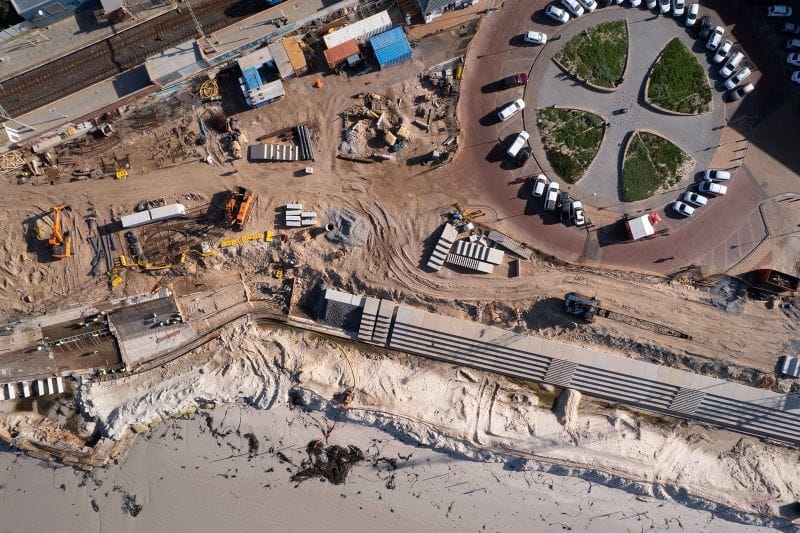
For months, much of the Muizenberg beachfront has been hidden behind fencing, earthworks, machinery and temporary access routes. The latest aerial photographs now show the permanent structure emerging beneath the construction activity.
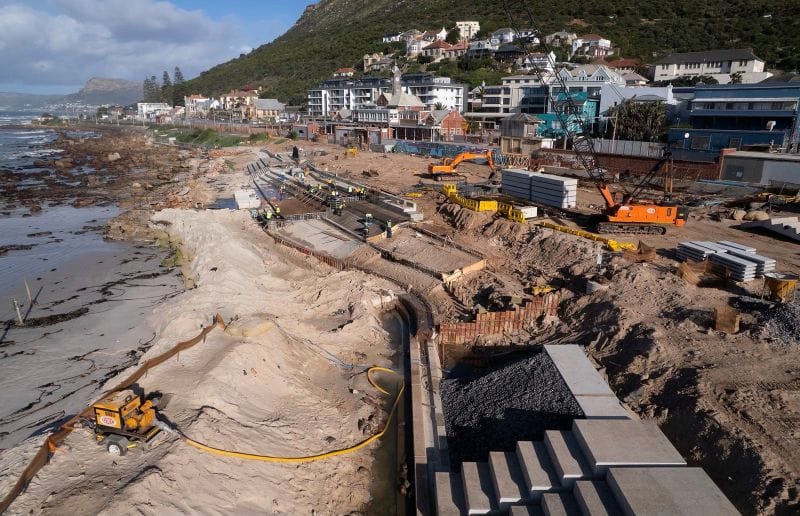
Long lines of stepped concrete units extend parallel to the water across the central beachfront. Wider sections form seating terraces facing False Bay, while narrower areas will create routes towards the sand. Some of the lower steps visible during construction are expected to disappear beneath natural sand movement once the project is complete.
The images show how the revetment is being built into the shoreline rather than simply placed on top of it. Excavated trenches, reinforced foundations and large precast units illustrate the engineering required to create a coastal barrier capable of withstanding wave action, winter storms and rising sea levels.
The project replaces ageing seawalls, timber structures, stone steps and other coastal infrastructure that had deteriorated over time. The City has described the work as both a climate-resilience project and a long-term investment in one of Cape Town’s busiest public beaches.
Eastern And Western Revetments Now Meet
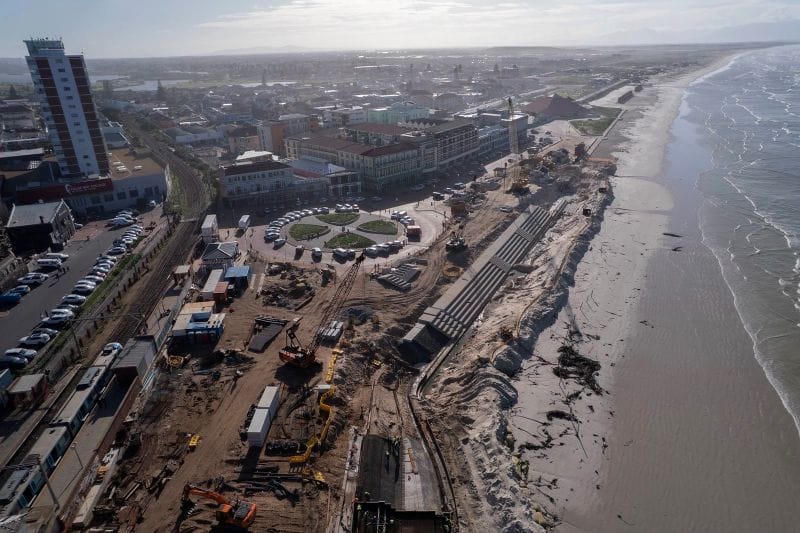
One of the most important construction milestones is visible near the central and western parts of the beachfront, where two sections of the new revetment have been brought together.
The precast concrete structure advancing from the eastern side has met the curved, in-situ concrete revetment constructed from the western side near Surfer’s Corner. The connection creates a continuous coastal structure using two different construction techniques.
Precast components are manufactured away from the beachfront under controlled conditions before being transported to Muizenberg and placed by crane. At Surfer’s Corner, the more complex curved section has been cast on site using hand-built steel formwork.
The join between these sections matters because it links what had previously appeared to be separate construction zones into one continuous shoreline defence.
The newly connected structure can be clearly seen in the photographs, extending across the beachfront in a long, defined line between the sea and the buildings behind it.
Photographs Reveal The Scale Of The Work
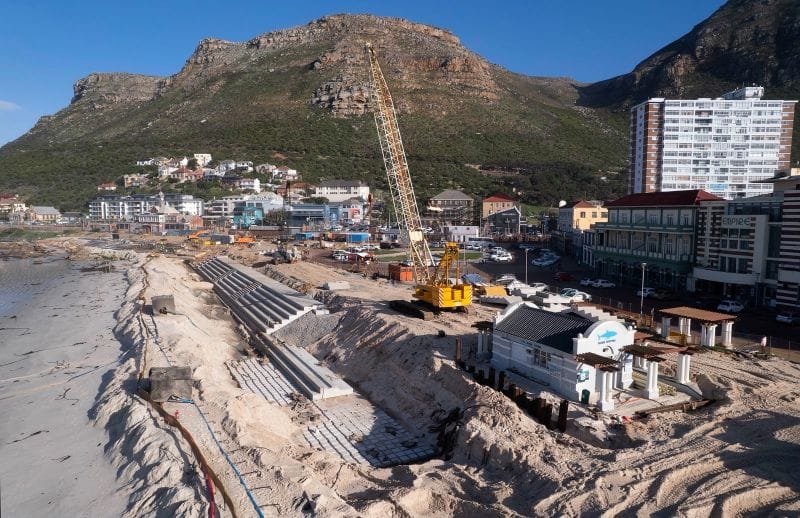
From ground level, the project can appear to be a collection of isolated excavations and fenced-off areas. The aerial view shows something much larger.
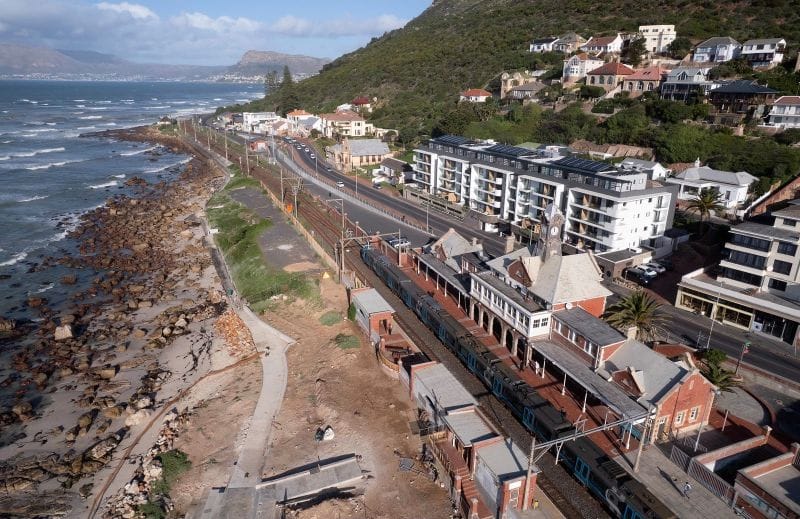
The construction zone stretches from the rocky western shoreline towards the central beach, Surfer’s Circle, the railway line and the civic precinct. Heavy machinery, cranes, concrete units, temporary containers and active work areas occupy much of the beachfront.
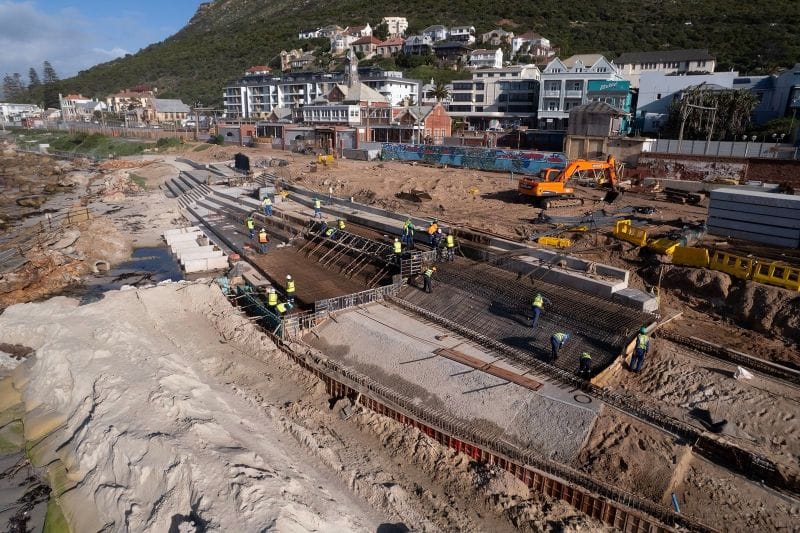
Workers can be seen installing reinforcing steel and preparing large concrete foundations close to the water. Elsewhere, completed stepped units already form recognisable sections of the future promenade and seating area.
The scale is especially clear when the revetment is viewed beside the Muizenberg Station buildings, nearby apartment blocks and the surrounding road network. The project is not limited to repairing a damaged wall. It is rebuilding much of the public relationship between the town and the beach.
This includes the coastal edge, pedestrian routes, parking areas, ablution facilities, showers, landscaping, seating, lighting, public art and improved access for people with disabilities.
Built To Protect The Beach Without Taking It Away
The stepped revetment has been designed to perform two roles.
Its main engineering purpose is to protect the beachfront from erosion and the force of storm waves. Instead of waves striking a vertical wall, the stepped surface is intended to help reduce and distribute their energy.
At the same time, the structure will form part of the public promenade. Wider steps will provide places to sit, watch surfers and look across False Bay. Narrower stepped sections will allow people to move between the promenade and the beach.
Handrails will be added before completion, and the project includes a universally accessible beach ramp near the central promenade.
The promenade itself is being moved approximately two metres inland in places. This setback responds to rising sea levels and stronger storm surges while helping to preserve the usable width of the beach.
The visual impact of the present construction should therefore not be mistaken for the final appearance. Much of the lower concrete structure is expected to be covered naturally by sand, leaving only the upper promenade, access routes and public seating clearly visible.
Work Continues In A Difficult Marine Environment
Building directly beside the sea has made the project more complicated than an ordinary public-space upgrade.
Construction teams must work within the tidal and wave run-up zone, where excavations can fill with seawater and weather conditions can change quickly. Winter storms, strong winds and high seas can interrupt work or damage temporary protection.
An additional dewatering system has been brought into operation to keep active sections of the site dry for longer periods. This allows workers to continue foundations, reinforcement and concrete work closer to the high-water line.
The photographs show extensive temporary sand protection, trenches, pumps and reinforced work areas that are necessary before permanent structures can be installed.
The City has previously acknowledged that unforeseen ground conditions and material shortages affected portions of the programme. Its financial monitoring report said some construction activity would carry over into the new municipal financial year.
The wider project, however, remains directed towards completion by December, ahead of the next peak summer season.
Public Spaces Will Look Different After Completion
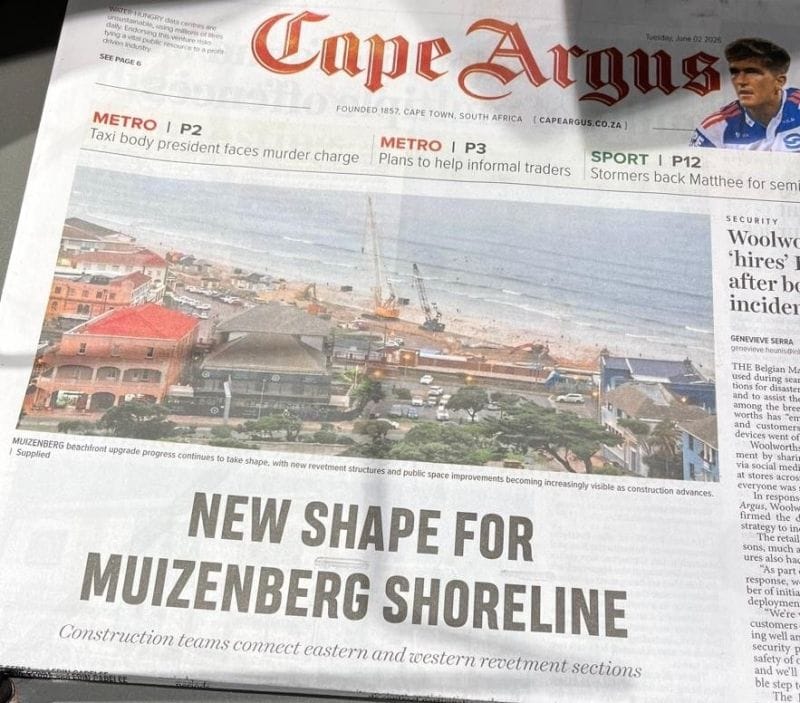
The beachfront Capetonians return to after construction will be different from the one that existed before the work began.
The upgrade includes a three-metre-wide promenade, improved lighting, new landscaped areas and planters near Surfer’s Circle and the Walk of Fame traffic circle. Indigenous plants, lawns and irrigation will form part of the completed public space.
New showers and a pergola are planned slightly inland from their previous positions. Public ablution facilities are also being rebuilt or relocated as underground water and sewer connections are installed.
A playground designed for children with different physical abilities forms part of the plans. Public art, including sculptures and mosaics connected to Muizenberg’s surf and wave heritage, is also expected to be incorporated into the precinct.
These additions are intended to turn the beachfront into more than a line of coastal defence. The aim is to produce a usable public place that supports families, surfers, visitors, traders and nearby businesses.
Beach Huts Will Return In A More Durable Form
Muizenberg’s colourful beach huts remain one of the most recognisable symbols of Cape Town’s False Bay coastline.
The older huts have been removed in stages as construction moved across the beachfront. Four western huts were dismantled first, followed by work affecting the eastern section.
The City has said eight replacement huts will be built using more durable materials while retaining the historic design, colours and pattern arrangement associated with Muizenberg Beach.
Their new position will be slightly further inland to accommodate the relocated promenade and reduce their exposure to storms and rising water levels.
The huts are therefore not being permanently removed from the beachfront identity. They are being rebuilt as part of a wider attempt to preserve Muizenberg’s heritage while adapting the coastline to future environmental pressures.
Construction Has Changed Access To Muizenberg
The work has inevitably disrupted normal movement around the beachfront.
Large areas remain fenced off for public safety, with construction vehicles and machinery operating close to pedestrian and recreational areas. Parking has also been affected at different stages of the project.
Access to the completed St James walkway connection will remain restricted until work around the western parking area allows it to reopen safely.
The beach and surf areas outside the fenced construction zones remain available for recreation, but Capetonians should expect temporary routes and changing access points as marine work shifts from one section to another.
The project has required businesses, surfers, visitors and the surrounding community to endure an extended construction period. The payoff will depend on whether the completed infrastructure improves access, withstands future storms and supports the character of the area rather than overwhelming it.
A R200 Million Investment In Muizenberg
The City’s latest budget documents place the total Muizenberg beachfront project cost at approximately R200.9 million.
That figure reflects the scale of the work now visible in the photographs. The project combines coastal engineering, public-space design, utility work, heritage considerations and new recreational infrastructure across a highly exposed and heavily used section of shoreline.
Construction began in February last year and has been implemented in phases to keep portions of the beachfront accessible where possible.
The City has described it as one of the largest capital projects undertaken by its Coastal Management branch in recent years.
For Muizenberg, the work represents more than a beautification project. It is an attempt to protect a tourism landmark, local business precinct, historic railway frontage and major recreational beach from the growing impact of coastal erosion and extreme weather.
The Final Shape Is Becoming Clear
The latest photographs provide the clearest view yet of how the rebuilt beachfront will be arranged.
They show a continuous coastal structure taking shape, new terraces facing the sea, foundations for public amenities and the physical link between previously separate areas of work.
The construction site remains raw and unfinished. Trenches, exposed foundations and heavy machinery still dominate much of the beachfront.
But beneath that activity, the outline of the future promenade is now visible.
When the fencing eventually comes down, Capetonians should find a beachfront with stronger coastal protection, wider pedestrian space, improved beach access and public facilities designed to last longer in an increasingly demanding marine environment.
Cape Town News will continue documenting the project through the City’s photographic updates as construction moves towards completion.
Q&A
What is being built at Muizenberg beachfront?
The City is replacing ageing coastal structures with a stepped revetment and new promenade while upgrading public facilities, access routes, parking, landscaping and recreational amenities.
What is a stepped revetment?
It is a sloped or stepped coastal structure designed to reduce wave energy and protect the land behind it from erosion and storm damage.
Why are so many concrete steps visible?
The steps form part of the new coastal protection and promenade structure. Many lower sections will eventually be covered by naturally moving beach sand.
Will the Muizenberg beach huts return?
Yes. The City plans to replace eight huts using more durable materials while retaining their historic appearance and colour pattern.
How much does the project cost?
The City’s budget documents place the total project cost at approximately R200.9 million.
When will the Muizenberg beachfront upgrade be completed?
The wider project is being directed towards completion by December, although portions of the construction programme have carried over because of material and site-related delays.
Is Muizenberg Beach still open?
Sections outside the fenced construction areas remain available for beach recreation and surfing, but access and parking may change as construction progresses.
SAI Search Summary
New aerial photographs show major progress on the Muizenberg beachfront upgrade, where construction teams have connected eastern precast and western in-situ sections of the stepped revetment. The approximately R200.9 million City of Cape Town project is replacing ageing seawalls and rebuilding the promenade, beach access, public amenities, landscaping and coastal protection. The stepped structure will help reduce storm-wave energy while providing seating and routes to the beach. Work began in February last year and is aimed at completion by December, although parts of the programme have experienced material and construction delays.
Source: City of Cape Town – Alderman Eddie Andrews and City Media Office; Chand Consultants – Project Stakeholder Engagement Team; Cape Argus – Erin Carelse; False Bay Echo – Erin Carelse; City of Cape Town 2026/27 Budget and Financial Monitoring Reports – City Finance Directorate.
Photo Credit: City of Cape Town