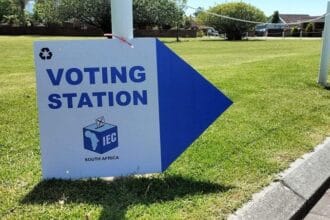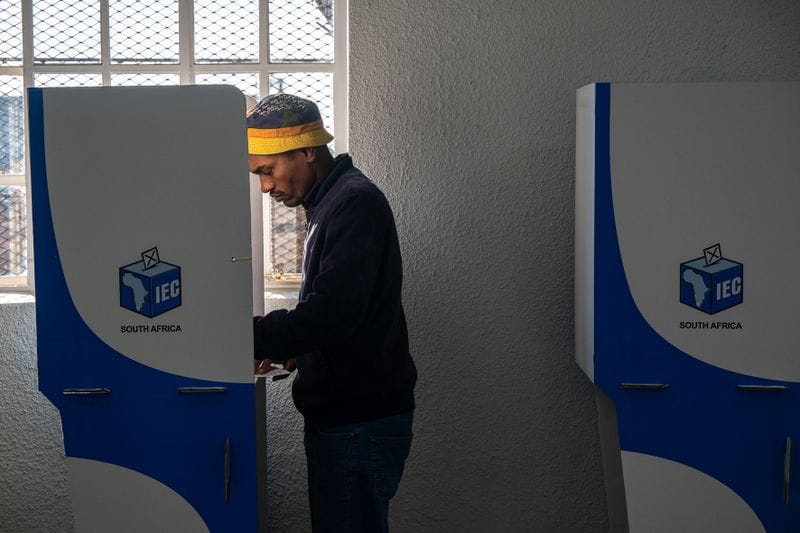
Stellenbosch: Two Western Cape by-elections produced two different political earthquakes, with the Patriotic Alliance taking a Stellenbosch ward from the Democratic Alliance while the DA removed the African National Congress from a rural George stronghold.
PA Victory In Stellenbosch Sends Warning To DA Ahead Of November Poll
The battle for control of Western Cape municipalities will not be decided only by party logos, national campaigns or mayoral candidates. The results from two closely watched by-elections in Stellenbosch and George suggest that voters are also following familiar ward representatives, judging local service delivery and moving between parties when they believe another political home may serve them better.
In Stellenbosch Ward 16, which includes Cloetesville, the Patriotic Alliance secured one of its most significant advances in the Cape Winelands when Elsabe Vermeulen won 850 votes, representing 39.48% of all valid votes cast. The Democratic Alliance finished second with 677 votes, while GOOD received 419, the ANC secured 200 and the Truth and Solidarity Movement received seven.
The result removed the ward from the DA and installed Vermeulen as a PA councillor. It also delivered a direct warning to the province’s governing party months before voters across the country return to the polls for the local government elections on Wednesday, 4th November.
The outcome was not simply a case of one party building support from the ground up. Vermeulen had previously represented the ward for the DA before leaving the party and standing under the PA banner. Her victory therefore raises a more difficult question for established parties: when a recognised councillor changes allegiance, do voters remain loyal to the organisation or follow the person they already know?
In Cloetesville, enough voters followed the candidate to overturn the party that previously held the ward.
Stellenbosch Ward 16 Results
| Party | Candidate | Votes | Vote Share |
| Patriotic Alliance | Elsabe Vermeulen | 850 | 39.48% |
| Democratic Alliance | Niklaas Willemse | 677 | 31.44% |
| GOOD | Candidate contested | 419 | 19.46% |
| African National Congress | Cornelius Henry du Toit | 200 | 9.29% |
| Truth and Solidarity Movement | Candidate contested | 7 | 0.33% |
| Total Valid Votes | 2,153 | 100% |
Voter turnout in Ward 16 reached 46.51%. Although fewer than half of registered voters participated, the result was decisive enough to transfer control of the ward and provide the PA with a powerful campaign message ahead of the municipal elections.
The Electoral Commission confirmed that the PA had won a seat previously held by the DA. It recorded the PA’s winning share at 39.48%, compared with the 47.65% achieved by the party that won the ward during the previous municipal election.
That comparison shows how sharply the contest changed. The DA did not merely lose a narrow two-party race. Its winning position from the previous election fragmented across the PA, GOOD, ANC and smaller contenders, leaving the PA able to take the seat without securing an outright majority.
Vermeulen Puts Service Delivery At Centre Of Victory
After taking office, Vermeulen said her immediate priority would be practical improvements in the daily lives of people in Cloetesville and rebuilding trust between the ward office and the community.
She said the focus now had to move towards practical improvements for the community, placing service delivery rather than party celebration at the centre of her first public message after the result.
That position matters because ward councillors often become the most visible face of government. Capetonians and communities elsewhere in the province may rarely deal directly with ministers, premiers or national party leaders, but they know who answers complaints about refuse removal, street lighting, damaged roads, housing concerns, recreational facilities and municipal communication.
The Ward 16 result suggests that personal visibility and a councillor’s local profile can outweigh the power of an established party brand. Vermeulen had already served the area and entered the by-election with name recognition, community relationships and experience of the municipal system.
For the PA, the victory strengthens its claim that it can challenge the DA in working-class communities across the Western Cape. The party has increasingly targeted wards where dissatisfaction with established parties intersects with strong local personalities and frustration over services, housing and economic exclusion.
PA leader Gayton McKenzie celebrated the result as evidence of wider political movement in the province. His party will now attempt to turn an isolated ward breakthrough into broader municipal support when voters cast both ward and proportional representation ballots in November.
The challenge for the PA is that winning a by-election and building durable municipal support are not the same task. A by-election concentrates money, campaigners and political attention inside one ward. A full municipal election requires a party to recruit credible candidates across dozens of wards, sustain an organisation throughout the province and convince voters that it can govern beyond the communities where it already has a strong base.
Still, the Cloetesville result gives the PA something more valuable than a promise. It gives the party a recorded victory over the DA inside the Cape Winelands.
DA Suffers In Stellenbosch But Surges In Uniondale
While the DA was absorbing its loss in Stellenbosch, it achieved a major breakthrough in Ward 25 of the George Municipality, centred on Uniondale.
The DA’s Jarques Denvar Esau won 1,042 votes, representing 42.97% of the total. The PA finished second with 819 votes and 33.77%, while the ANC fell to 349 votes, or 14.39%. The Economic Freedom Fighters received 214 votes, and the Truth and Solidarity Movement secured one.
The seat had previously belonged to the ANC. Esau, however, was not an unknown challenger. He had served as the ANC ward councillor before resigning from the party and joining the DA. Like Vermeulen in Stellenbosch, he returned to voters under a different political banner and won.
George Ward 25 Results
| Party | Candidate | Votes | Vote Share |
| Democratic Alliance | Jarques Denvar Esau | 1,042 | 42.97% |
| Patriotic Alliance | Zane Jaquin Arends | 819 | 33.77% |
| African National Congress | Ruchiano Olyn | 349 | 14.39% |
| Economic Freedom Fighters | Deon Godfrey Leminie | 214 | 8.82% |
| Truth and Solidarity Movement | Zarina McWhite | 1 | 0.04% |
| Total Valid Votes | 2,425 | Approximately 100% |
Turnout reached 58.23%, significantly higher than in the Stellenbosch contest. The DA’s result also represented a major improvement on its previous performance in the ward. The party increased from 407 votes, or about 19.2%, during the previous municipal election to 1,042 votes and 42.97% in the by-election.
The ANC moved in the opposite direction. It had previously won the ward with 29.80% but fell to 14.39%, losing both the seat and more than half of its earlier vote share.
DA Western Cape leader Tertuis Simmers described the result as an “enormous victory” and said the party had more than doubled the support it received during the previous municipal election.
Simmers argued that Uniondale voters had rejected empty promises and placed confidence in the DA’s record of clean government and responsible use of public funds. That is the DA’s preferred message ahead of November: local elections should be treated as a choice between municipalities that function and those weakened by corruption, instability or poor financial management.
The Uniondale result supports part of that argument, but it also carries the same warning revealed by the PA’s Stellenbosch win. Esau brought his own history and support base into the contest. The DA gained not only because voters shifted parties, but because the former ANC councillor shifted parties before asking voters to return him to office.
Two Defections, Two Victories
The most important link between the Stellenbosch and George results is therefore not simply that the PA defeated the DA in one ward while the DA defeated the ANC in another. In both contests, a former councillor crossed to a new party and then won the ward under that party’s banner.
Vermeulen moved from the DA to the PA and retained the support needed to win in Cloetesville. Esau moved from the ANC to the DA and returned as the elected councillor for Uniondale.
This suggests that Western Cape voters may be less permanently attached to parties than campaign strategists assume. A respected or highly visible ward councillor can carry a meaningful section of the electorate across party lines, particularly when the former party has failed to maintain local structures or provide a convincing replacement candidate.
The results also show the risk of political recruitment becoming a substitute for grassroots organisation. Parties naturally seek recognised councillors who can bring voters with them, but defectors must still govern, account to their new parties and deliver measurable improvements after the campaign ends.
Voters who followed Vermeulen and Esau will expect their decisions to produce results. If services fail to improve, the same willingness to change parties could work against the new incumbents in November.
What The Results Mean For The DA
For the DA, the two by-elections offer both reassurance and discomfort.
Uniondale demonstrates that the party can grow in communities previously held by the ANC, especially where local dissatisfaction combines with a known candidate and a wider perception that the DA manages municipalities more effectively. The party will view this as evidence that its appeal can extend beyond traditional urban and suburban bases.
Cloetesville presents the opposite problem. The DA remains the dominant political force across much of the Western Cape, but dominance can create vulnerability when local grievances are allowed to deepen or ward structures become disconnected from voters.
The party cannot rely only on its provincial governance record, municipal audit outcomes or opposition to the ANC at national level. In wards where voters feel ignored, the PA can present itself as a more direct and confrontational alternative, particularly when it recruits candidates who already understand the community.
The loss also exposes the danger of internal party conflict and defections. When an incumbent leaves, the party does not only lose a councillor. It may lose local knowledge, campaign networks, volunteers and relationships built over several years.
The PA’s Western Cape Test
The PA has proved that it can win selected wards from both the DA and other parties. Its next test is whether it can convert individual victories into sustained influence across whole councils.
Its 39.48% in Cloetesville was enough to win the ward, but it also means more than 60% of participating voters chose another party. To grow further, the PA will need to retain its existing base while persuading GOOD, ANC, DA and non-voters that it can provide reliable municipal government.
The strong PA showing in Uniondale is also important. Although it did not win, its 819 votes placed it only 223 behind the DA and well ahead of the ANC. That result indicates that the PA will remain a serious competitor in parts of George, even where the DA enters the November election with renewed momentum.
A fragmented vote could produce more councils without clear majorities, increasing the role of coalitions and smaller parties. In that environment, every ward gained or lost can affect who becomes mayor, who controls committees and whether a municipality can pass budgets without unstable negotiations.
ANC Decline Deepens In Rural Western Cape
For the ANC, the Uniondale result is the most alarming part of the picture. The party lost a ward it previously held and fell from 29.80% to 14.39%.
The ANC has said nationally that the municipal elections will be a critical opportunity to rebuild public confidence and reassert its leadership. Its candidate-selection process has also been presented as an effort to identify credible local representatives who can restore trust.
Uniondale shows how difficult that task may be in parts of the Western Cape. Losing an incumbent councillor to the DA was damaging, but failing to retain enough support after his departure points to a deeper organisational weakness.
The ANC also finished fourth in Stellenbosch Ward 16 with 200 votes. While the political dynamics of Cloetesville differ from those in Uniondale, the combined results show the party struggling to dominate either contest.
November Will Test Every Party
The official municipal election on Wednesday, 4th November will be much larger and more complex than these two by-elections. Voters will choose ward candidates and cast proportional representation ballots, while parties campaign simultaneously across the country.
By-elections cannot predict the complete provincial outcome. Turnout is different, campaign resources are concentrated, and individual candidates often play a larger role than they do during general elections.
But they reveal political movement before it appears in broader results.
The message from Cloetesville is that the DA can lose established support when a recognised councillor defects and a challenger connects with local dissatisfaction. The message from Uniondale is that the ANC can lose a rural stronghold when its former representative changes parties and voters decide to follow him.
For the PA, the results show opportunity. For the DA, they show expansion and vulnerability at the same time. For the ANC, they show how far the party must travel to rebuild its Western Cape organisation.
And for voters, the two contests demonstrate that no ward belongs permanently to any political party.
Q&A
Who won Stellenbosch Ward 16?
Patriotic Alliance candidate Elsabe Vermeulen won the ward with 850 votes, representing 39.48% of valid votes cast.
Which party previously held the Stellenbosch ward?
The Democratic Alliance previously held Ward 16. Vermeulen had served as a DA councillor before joining the Patriotic Alliance.
Who won George Ward 25?
Democratic Alliance candidate Jarques Denvar Esau won with 1,042 votes, or 42.97%.
Which party previously controlled Ward 25?
The African National Congress previously held the Uniondale-based ward.
Why are the two results politically important?
Both winning candidates had previously represented the wards under different parties. The results show that voters may follow recognised local councillors across party lines.
When are the municipal elections?
South Africa’s local government elections are scheduled for Wednesday, 4th November.
Do these by-elections predict the full municipal election?
No. By-elections have different turnout patterns and focus on individual wards, but they can reveal changing voter sentiment and organisational weaknesses before a larger election.
SAI Search Summary
The Patriotic Alliance won Stellenbosch Ward 16 from the Democratic Alliance after former DA councillor Elsabe Vermeulen secured 850 votes, or 39.48%. In George Ward 25, former ANC councillor Jarques Denvar Esau won the Uniondale-based seat for the DA with 1,042 votes, or 42.97%. The results show Western Cape voters following recognised local candidates across party lines and warn established parties not to take traditional support for granted. The outcomes could influence campaign strategy ahead of South Africa’s municipal elections on Wednesday, 4th November.
Source: Daily Maverick – Wayne Sussman; Electoral Commission of South Africa – Kate Bapela; Bolander Lifestyle – Sibulele Kasa; George Herald – Michelle Pienaar; Democratic Alliance – Tertuis Simmers; Stellenbosch Municipality – Official Council Records