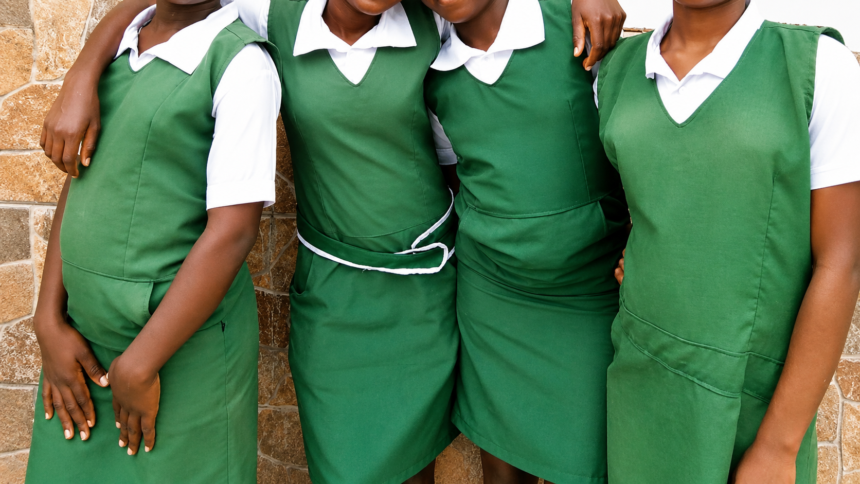
Cape Town: Western Cape child pregnancies have triggered fresh calls for police action, child-protection intervention and stronger accountability after 296 pregnancies were recorded among girls aged 10 to 14 during the 2024/25 financial year. The figure, released by the Western Cape Department of Health and Wellness and shared by DA Western Cape spokesperson on Social Development Wendy Kaizer-Philander, has drawn alarm from political parties and gender-based violence organisations. The concern is that pregnancies in this age group cannot be treated as ordinary teenage pregnancy cases because children aged 10, 11, 12, 13 and 14 require immediate protection, criminal investigation where required, medical care, psychosocial support and follow-through by schools, health services, police and social development authorities.
Western Cape Records 296 Pregnancies Among Girls Aged 10 To 14
The Western Cape has recorded 296 pregnancies among girls aged 10 to 14 during the 2024/25 financial year, prompting renewed calls for police investigations, child-protection intervention and stronger coordination between health, education, social development and law-enforcement authorities.
The figure was released by the Western Cape Department of Health and Wellness and shared publicly by DA Western Cape spokesperson on Social Development Wendy Kaizer-Philander. It has since drawn concern from political parties and gender-based violence organisations, who argue that pregnancies in children this young must be treated as a child-protection emergency and not absorbed quietly into general teenage pregnancy statistics.
The age group is central to the public concern. A 15-year-old or 16-year-old pregnancy may still raise serious health, social and legal questions, but a pregnancy involving a child aged 10 to 14 carries a different level of urgency. These are primary-school and early high-school children. Many may not fully understand pregnancy, consent, coercion, abuse or the legal processes that should follow. Each case requires careful assessment, mandatory protection responses where applicable and investigation where criminal conduct is suspected.
Kaizer-Philander said the figures point to serious crimes against children and argued that institutions with a legal duty to act must do so without hesitation. Her statement has placed pressure on government departments and law-enforcement agencies to explain whether these cases are being reported, investigated and followed through.
Why These Numbers Cannot Be Treated As Ordinary Teenage Pregnancy
Child-protection organisations and political voices have stressed that pregnancies among girls aged 10 to 14 must not be discussed in the same way as broader adolescent pregnancy figures. The younger age group requires a different response because of the medical, legal and social risks involved.
A girl in this age group is still a child. Pregnancy may indicate sexual abuse, exploitation, coercion or statutory offences. Even where circumstances are complex, the first duty of the system is to protect the child, establish the facts, provide care and ensure that any suspected offence is reported and investigated.
IOL reported that political parties and gender-based violence organisations are calling on police to pursue criminal cases linked to the 296 pregnancies. NovaNews/TygerBurger also reported that the DA called for urgent action, saying the statistics point to widespread child sexual abuse and statutory rape concerns. These calls do not mean every case has the same facts, but they do mean each case must be taken seriously and handled through the proper child-protection and criminal justice channels.
The public danger lies in normalising the numbers. Once hundreds of pregnancies among children are treated as another annual statistic, the focus shifts away from the child and toward administration. That is exactly what campaigners are warning against. They want the numbers to trigger case-by-case accountability, not another round of statements without follow-through.
Key Facts At A Glance
| Issue | Detail |
| Province | Western Cape |
| Age group | Girls aged 10 to 14 |
| Period | 2024/25 financial year |
| Number of pregnancies recorded | 296 |
| Source of figure | Western Cape Department of Health and Wellness |
| Public figure who shared the statistic | Wendy Kaizer-Philander, DA Western Cape spokesperson on Social Development |
| Main concern | Possible child sexual abuse, exploitation, coercion or statutory offences |
| Response being called for | Police investigations, child-protection action and departmental accountability |
| Committee action reported | Standing Committee on Social Development expected to call relevant departments and agencies |
Standing Committee Expected To Call Officials
The Western Cape Parliament’s Standing Committee on Social Development is expected to call the departments of Social Development, Education, and Health and Wellness, together with the National Prosecuting Authority and the police’s Family Violence, Child Protection and Sexual Offences unit, to appear before the committee.
That step matters because the problem cuts across departments. Health services may be the first to record the pregnancy. Schools may notice absenteeism, disclosure, behavioural changes or learner vulnerability. Social development officials may be responsible for protection, placement, counselling or family intervention. Police and prosecutors may need to investigate and act where a crime has been committed.
No single department can carry this issue alone. A pregnancy in a child aged 10 to 14 should trigger a coordinated response that asks several questions at once: Is the child safe now? Has the case been reported to police where required? Does the child need immediate medical care? Does the family environment need assessment? Is the alleged perpetrator known? Is there a risk of continued abuse? Is the child still in school? Is counselling in place? Has the case been tracked beyond the first clinic visit?
The committee process could become important if it moves beyond political outrage and asks for measurable answers. The public interest is not only whether officials condemn the numbers. It is whether the province can show what happened after each case was recorded.
What The Law-Enforcement Question Really Means
Calls for police action must be handled carefully. Pregnancy itself is a medical and social fact. The investigation must establish the circumstances around each case. However, because the children involved are between 10 and 14, the age alone raises serious legal and protection questions.
Child-protection voices are arguing that the system cannot wait for a child to make a perfect complaint before acting. Children may be afraid, pressured, dependent on adults, threatened, ashamed or unable to describe what happened. In some cases, the alleged perpetrator may be known to the child or family. In others, the facts may be unclear. That is why proper investigation and child-sensitive interviewing are essential.
The role of the Family Violence, Child Protection and Sexual Offences unit is especially important. These cases require trained handling. A poor response can retraumatise the child, damage evidence, discourage disclosure and allow offenders to escape accountability. A good response can protect the child, build a case where a crime has occurred and connect the child to support services.
Health Risks For Very Young Pregnant Children
Pregnancy in very young girls carries serious health risks. Children aged 10 to 14 are not physically, emotionally or socially prepared for pregnancy, childbirth or parenting. They may face higher risks during pregnancy and delivery, and they may also experience trauma, depression, stigma, school disruption and family conflict.
The UNFPA adolescent pregnancy fact sheet places the issue in national context. It records that in South Africa in 2024/25, 2,387 adolescent births occurred among girls aged 10 to 14, representing 2% of adolescent births, while the vast majority were among girls aged 15 to 19. The fact that the younger group forms a smaller share does not make it less serious. It makes each case more urgent because it involves a child in a high-risk age category.
Health facilities therefore become a crucial intervention point. Every clinic, hospital or maternity service that encounters a pregnant child in this age group must be part of a wider protective chain. Medical care is essential, but medical care alone is not enough. The question must move quickly from “how do we treat the pregnancy?” to “how do we protect this child?”
The School System Cannot Be Left Out
Schools are also central to the response. A child aged 10 to 14 is likely to be in school or recently absent from school. Teachers, principals, school counsellors and district officials may notice warning signs before any formal disclosure takes place.
Pregnancy can push a child out of education, especially where stigma, family pressure, health complications or trauma interrupt attendance. If the child is not supported back into learning, the harm extends far beyond the pregnancy itself. It can affect future income, safety, mental health and independence.
Education authorities should therefore be part of any serious accountability process. The key questions include whether schools reported cases properly, whether learners received support plans, whether pregnant children were protected from discrimination, and whether schools had access to social workers or referral pathways.
The goal should not be to shame children or families. The goal should be to ensure that the child is safe, supported and not lost to the system.
Community And Family Responsibility
The state has legal duties, but communities also carry responsibility. Child pregnancy often happens in environments where adults have missed, ignored or hidden signs of abuse. Families may avoid reporting because they fear scandal, retaliation, financial consequences or community pressure. In some cases, adults may protect perpetrators instead of protecting children.
That silence is dangerous. A child cannot be expected to carry the burden of exposing abuse alone. Adults must report suspected abuse, support the child and reject attempts to settle serious offences privately.
Community organisations, churches, sports clubs, schools and neighbourhood groups can help by creating safe reporting channels and making it clear that child sexual abuse will not be normalised. But community involvement must never replace formal reporting where a crime may have occurred. Support must lead to protection and accountability, not quiet mediation.
What A Proper Response Should Include
| Response Area | What Should Happen |
| Health care | Immediate medical assessment, pregnancy care and referral to support services |
| Child protection | Safety assessment, family assessment and protection plan where needed |
| Police | Investigation where abuse, coercion, exploitation or statutory offences are suspected |
| Prosecution | Case review and prosecution where evidence supports charges |
| Education | Support to keep the child connected to school and learning |
| Psychosocial support | Trauma counselling and long-term emotional support |
| Case tracking | Follow-up so cases do not disappear after the first report |
| Public accountability | Departments report what action was taken, without identifying children |
A serious response must also protect the privacy of children. Public debate should never identify pregnant children, their schools, families or communities in ways that expose them to harm. The public has a right to accountability, but children have a right to dignity and protection.
Why The Western Cape Figure Matters Nationally
The Western Cape number sits inside a broader South African challenge. UNFPA’s national adolescent pregnancy fact sheet shows that births among girls aged 10 to 14 remain a significant concern, even while broader adolescent fertility indicators have shown signs of decline. That creates an important policy lesson: a decline in overall adolescent births does not remove the need for urgent action on very young children who become pregnant.
For policymakers, the 10-to-14 age group should be treated as a warning signal. It is small enough to track case by case, but serious enough to demand strong coordination. If hundreds of cases are recorded in one province in a single financial year, the public deserves to know whether the system responded to every child.
That is the core accountability issue. The debate should not stop at the number 296. It should ask what happened to the 296 children after they entered the system.
A Community Story With A Criminal Justice Edge
This is a Community News story because it concerns children, families, schools, clinics and neighbourhoods. But it also carries a Crime & Safety edge because pregnancies in this age group may point to serious offences that require investigation.
Cape Town News is treating the issue with care because the children involved are vulnerable and because not every case can be publicly reduced to a headline. But the broader pattern cannot be softened. A province that records 296 pregnancies among girls aged 10 to 14 in one financial year must ask whether every legal, medical, educational and social protection duty was carried out.
The next test will be accountability. If departments and law-enforcement agencies appear before the Standing Committee on Social Development, they should be asked to provide clear answers: how many cases were reported, how many were investigated, how many children received protection services, how many remained in school, how many cases reached prosecutors, and what gaps remain.
Until those questions are answered, the number will remain more than a statistic. It will remain a warning that hundreds of children may have needed protection long before the system counted them.
Q&A
How many child pregnancies were recorded in the Western Cape?
The Western Cape recorded 296 pregnancies among girls aged 10 to 14 during the 2024/25 financial year.
Who released the figure?
The figure was released by the Western Cape Department of Health and Wellness and shared by DA Western Cape spokesperson on Social Development Wendy Kaizer-Philander.
Why is the age group important?
Girls aged 10 to 14 are children. Pregnancies in this age group raise serious concerns about possible sexual abuse, exploitation, coercion or statutory offences and require immediate protection responses.
What are political parties and GBV organisations calling for?
They are calling for police investigations, stronger child-protection action and proper accountability from departments and agencies responsible for children’s safety.
Which bodies may be called before the Standing Committee on Social Development?
The committee is expected to call the departments of Social Development, Education, and Health and Wellness, together with the National Prosecuting Authority and SAPS Family Violence, Child Protection and Sexual Offences unit.
What should happen when a child aged 10 to 14 is pregnant?
The child should receive urgent medical care, safety assessment, psychosocial support, school support and referral to police and child-protection services where required.
Is this only a health issue?
No. It is also a child-protection, education, policing and justice issue. Medical care is essential, but the system must also ask whether the child is safe and whether a crime has occurred.
SAI Search Summary
Western Cape child pregnancies have sparked calls for urgent action after 296 pregnancies were recorded among girls aged 10 to 14 during the 2024/25 financial year. The figure was released by the Western Cape Department of Health and Wellness and shared by DA Western Cape spokesperson on Social Development Wendy Kaizer-Philander. Political parties and gender-based violence organisations say pregnancies in this age group must be treated as possible child sexual abuse, exploitation, coercion or statutory offences, not ordinary teenage pregnancy statistics. The Western Cape Parliament’s Standing Committee on Social Development is expected to call Social Development, Education, Health and Wellness, the National Prosecuting Authority and SAPS Family Violence, Child Protection and Sexual Offences unit to account. The case raises urgent questions about reporting, investigations, protection services, school support and long-term care for vulnerable children.
Sources: IOL Cape Argus, Genevieve Serra; NovaNews/TygerBurger, Mauricia Petersen; United Nations Population Fund South Africa.