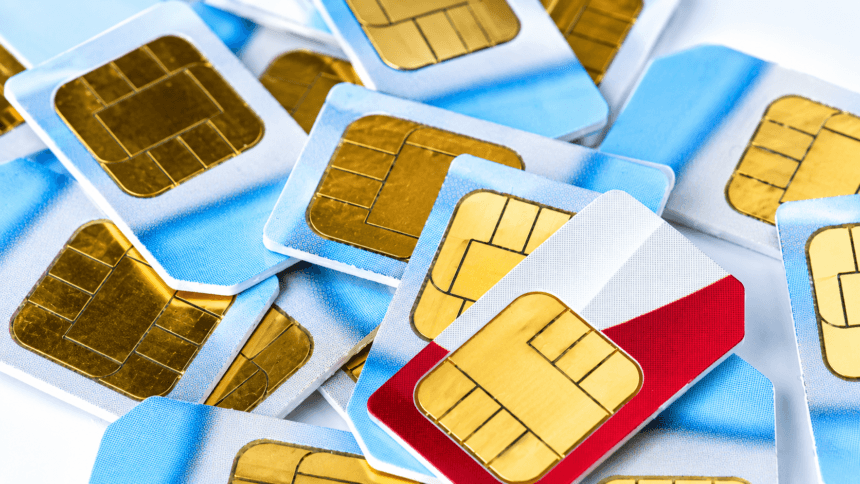
Cape Town: Stricter SIM card rules could soon change how Cape Town cellphone users buy, register and activate mobile numbers as South Africa moves to close loopholes in the RICA system. The Association of Communications and Technology, which represents major mobile operators, says a framework agreement has been developed with government to strengthen customer registration, identity verification, compliance monitoring and cooperation with law enforcement. The move follows concern that irregularly registered SIM cards are being used in serious crimes, including banking fraud, extortion, kidnappings, contract killings and cash-in-transit heists. For ordinary Capetonians, small businesses, informal traders and mobile-first households, the change could mean fewer easy SIM swaps, tighter checks at registration and more pressure to keep personal details accurate.
South Africa Moves To Tighten SIM Card Rules
The days of casually buying an activated SIM card with weak checks may be coming to an end in South Africa as government and the telecommunications industry move to tighten the country’s mobile number registration system.
The change follows concern that irregularly registered SIM cards are being used by criminals to hide identities, coordinate crimes, commit fraud and avoid detection. MyBroadband reports that the Association of Communications and Technology has confirmed the development of a binding framework agreement to tighten RICA, South Africa’s SIM-card registration system.
The issue affects Cape Town directly because the city runs on mobile connectivity. Capetonians use cellphones for banking, WhatsApp, work groups, school communication, ride-hailing, online shopping, emergency contact, home security, social media, business payments and prepaid data. For many households, the cellphone is not a luxury device. It is the main connection to income, services and safety.
That is why the proposed tightening of SIM registration matters. It is not only a telecoms story. It is a public-safety story, a fraud-prevention story and a consumer-rights story. If done well, the new approach could make it harder for criminals to abuse anonymous or badly registered numbers. If handled badly, it could create confusion for ordinary users, especially those who rely on prepaid SIMs, informal retail channels or shared family devices.
Why Government And Operators Are Acting Now
The push comes after growing concern that loopholes in SIM-card registration are undermining crime investigations and consumer protection. MyBroadband reports that improperly registered SIM cards have been linked to serious crimes, including banking fraud, cash-in-transit heists, extortion, contract killings and kidnappings.
The problem is simple but serious. A cellphone number can be used to open accounts, receive one-time pins, contact victims, coordinate criminal activity, impersonate someone else or move money through digital channels. If the SIM card is not correctly linked to a real person, investigators may struggle to trace the user when a crime has been committed.
RICA was designed to prevent that problem by requiring SIM-card users to register their identity and address details. But the law is only as strong as the registration process behind it. If documents are not checked properly, if details are captured incorrectly, if databases are not audited, or if SIM cards circulate outside proper channels, criminals can still exploit the system.
The Department of Justice and Constitutional Development convened an urgent meeting on 26th March to address SIM-card registration challenges. That meeting included ministers and directors-general from the Justice, Crime Prevention and Security Cluster, together with telecoms company CEOs, regulators and licensees. The department said the concern was that registration loopholes were enabling criminals and weakening national security efforts.
What The New Framework Is Expected To Do
ACT says the framework agreement is an immediate industry response to weaknesses in SIM-card registration processes. It includes enhanced customer registration measures and proposed legislative amendments aimed at closing gaps in the current system.
| Reform Area | What It Means For Users And Operators |
| Enhanced identity verification | Users may face stricter checks when registering or replacing SIM cards |
| Stronger registration controls | Retailers and operators may need tighter procedures before activating numbers |
| Compliance monitoring | Operators and sellers could face closer audits of registration practices |
| Law-enforcement cooperation | Properly registered SIMs may help investigators trace suspects more effectively |
| Legislative reform | RICA may be updated to address newer crime and technology risks |
| Database audits | Existing SIM records may be checked for non-compliance or weak registration |
For Cape Town users, the biggest visible change may happen at the point of purchase or activation. Buying a new SIM, replacing a lost SIM, transferring a number or activating a prepaid card may require more careful verification. People may also need to make sure that their SIM is registered in their own name and linked to accurate details.
For operators, the pressure will fall on compliance. Networks and their retail partners will need to show that SIMs are registered properly and that weak registrations are not slipping through the system. That could affect formal stores, independent cellphone shops, spaza-linked sellers and other retail points where prepaid SIMs are commonly sold.
ACT Says A Coordinated Response Is Needed
ACT CEO Nomvuyiso Batyi said the challenges surrounding SIM-card registration in South Africa require a coordinated response from government, industry and law enforcement.
That point matters because mobile operators cannot solve the issue alone. Operators control networks and registration systems, but law enforcement must investigate abuse. Government must set clear rules. Regulators must monitor compliance. Retail channels must follow proper procedures. Consumers must keep their information accurate and avoid handing documents or registered SIMs to others.
ACT said the combined approach of industry-led interventions and longer-term reforms would create a pathway to strengthen consumer protection and support criminal investigations.
In plain language, the goal is to close the gap between the person using a SIM card and the person registered as its owner. When that link breaks, criminals gain cover. When it works properly, fraud becomes harder and investigations become more practical.
Why Capetonians Should Care
Many Capetonians may see this as a boring compliance story until something goes wrong. Then the importance becomes obvious.
A SIM card can become the key to a person’s digital life. It receives banking alerts. It receives one-time pins. It sits inside WhatsApp accounts. It links to delivery apps, social media, email recovery and business payment systems. If a SIM is cloned, swapped, fraudulently registered or used in someone else’s name, the damage can move quickly.
Small businesses are especially exposed. A food trader, hair salon, delivery driver, plumber, security installer or home-based shop may rely on one cellphone number for bookings, payments and customer communication. Losing control of that number, or discovering that the number was not properly registered, can disrupt income.
The same applies to families. Many households use prepaid numbers across children, parents, grandparents and shared devices. If registration rules become stricter, families should check whose name each SIM is registered under and whether the details are still correct.
SIM Cards, Crime And Digital Identity
The modern SIM card is no longer just a little chip that lets a phone make calls. It has become part of a person’s digital identity. That identity can be abused.
| Abuse Type | How A Weak SIM System Can Help Criminals |
| Banking fraud | Criminals use numbers to receive verification codes or contact victims |
| SIM-swap fraud | A victim’s number is moved or hijacked to access accounts |
| Extortion | Anonymous numbers are used to threaten victims or businesses |
| Kidnappings | Phones may be used to coordinate communication and ransom demands |
| Contract killings | Disposable or false-registered numbers can hide communication trails |
| Cash-in-transit crimes | Phones may be used for coordination before and after attacks |
| Money laundering | SIM-linked accounts and digital channels can support hidden transactions |
This does not mean every prepaid SIM is suspicious. Most prepaid users are ordinary South Africans who need affordable connectivity. The problem is that criminals also use the same system when registration is weak.
That is the balance government and operators must strike. The rules must be strong enough to make abuse harder, but practical enough that lawful users are not pushed out of the mobile economy.
Enforcement From 1st July
MyBroadband reports that Justice Minister Mmamoloko Kubayi has expressed a clear intention to strengthen enforcement of existing legal provisions surrounding SIM-card registration. Her department said the law already prescribes penalties of up to R5 million or imprisonment of up to 10 years for non-compliance, with enforcement expected to commence on 1st July.
That does not mean ordinary users should panic. The penalties are aimed at non-compliance with the law, especially where registration systems are abused or ignored. But it does mean users, retailers and operators should take RICA details seriously.
For cellphone shops and SIM sellers, the message is clear: sloppy registration can become a serious legal risk. For users, the practical message is simpler: do not buy SIMs from questionable sources, do not allow someone else to register a SIM in your name unless you understand the consequences, and do not sell or lend registered SIM cards to strangers.
What Cape Town Users Should Check Now
| User Type | What To Check |
| Prepaid users | Make sure your SIM is registered in your own name with accurate details |
| Parents | Check which family SIMs are registered to adults and who is using them |
| Small businesses | Confirm that business numbers are properly registered and recoverable |
| Informal traders | Avoid buying activated SIMs from sellers who skip proper registration |
| Elderly users | Ask a trusted person to help confirm registration details if unsure |
| Victims of fraud | Report suspicious SIM-swap or account activity immediately |
| Employers | Keep business phones and staff SIMs documented and controlled |
Cape Town users should also be cautious with identity documents. RICA requires proof of identity and address, but users should not casually hand copies of ID documents to unknown sellers or WhatsApp strangers claiming they can “activate SIMs fast”. Fraud often begins when personal documents are copied, photographed or reused without permission.
People should use official operator stores, recognised retailers or trusted channels. Where possible, they should keep proof of purchase and registration.
What This Means For eSIMs And Future Mobile Access
The MyBroadband headline speaks to saying goodbye to SIM cards as South Africans know them, but the change is not only about the small plastic card. It is about the registration system behind mobile access.
Even as more devices move toward eSIM technology, the same identity question remains. A digital SIM still connects a user to a mobile number and a network. If the registration process is weak, the same abuse can continue in a new form. If the process is strong, eSIMs can be convenient without weakening traceability.
Cape Town’s tech users are already familiar with eSIMs through newer smartphones, smartwatches and travel data services. But most South Africans still rely heavily on physical prepaid SIM cards because they are cheap, easy to buy and widely available. Any reform must therefore work for both worlds: the smartphone user activating an eSIM online and the prepaid customer buying airtime and data near home.
The Consumer Protection Question
There is also a consumer protection side to the story. Better SIM registration could help reduce fraud, but stricter rules may also create frustration if people are locked out of services because of outdated details, missing documents or poor customer support.
Consumers will need clear communication from mobile operators. They should know what is changing, what documents are needed, whether existing SIMs must be checked, how to correct registration errors and what to do if a SIM has been registered incorrectly.
The industry should avoid creating a system where only people with perfect paperwork can move easily. South Africa has many people who move often, rent informally, live in shared households or struggle with proof-of-address requirements. A fair system must verify identity without blocking lawful users from communication.
This is where policy design will matter. The country needs a system that is strict enough to stop abuse but flexible enough to serve real people.
A Small Card With Big Consequences
The SIM card is one of the smallest pieces of technology most Capetonians use, but it carries enormous consequences. It connects people to banks, employers, schools, families, emergency services, social grants, delivery platforms and customers.
That is why the tightening of SIM registration rules deserves attention. It may sound technical, but it reaches deep into daily life. A safer SIM system could make fraud harder, help police trace serious crimes and protect consumers from identity abuse. But it must be implemented carefully so that ordinary users do not get caught in confusion or unnecessary red tape.
For now, the practical advice is simple. Capetonians should know whose name their SIM is registered under, avoid suspicious activated SIM deals, protect identity documents, use trusted registration channels and treat their mobile number as part of their digital identity.
The days of treating a SIM card as disposable may be ending. In the next phase of South Africa’s mobile market, the number in your phone may need to prove who is really behind it.
Q&A
What are the stricter SIM card rules about?
South Africa’s government and telecommunications industry are moving to tighten SIM-card registration under RICA. The aim is to close loopholes that allow SIM cards to be unregistered, incorrectly registered or misused by criminals.
Why is this happening now?
Authorities are concerned that improperly registered SIM cards are being linked to serious crimes, including banking fraud, extortion, kidnappings, contract killings and cash-in-transit heists.
Who is involved in the new framework?
The Association of Communications and Technology, mobile operators, the Department of Justice and Constitutional Development, regulators and law-enforcement structures are involved in the process.
What changes could users notice?
Users may face stricter identity checks when buying, replacing or activating SIM cards. Retailers and operators may also face tighter compliance monitoring.
Will existing SIM cards be affected?
The proposals include audits of existing SIM-card databases to identify and address non-compliance. Users should make sure their SIM details are accurate and registered in their own name.
What penalties apply for non-compliance?
The Department of Justice has indicated that the law already allows penalties of up to R5 million or imprisonment of up to 10 years for non-compliance, with enforcement expected from 1st July.
What should Capetonians do now?
Capetonians should avoid suspicious activated SIMs, protect identity documents, use trusted registration channels and confirm that important cellphone numbers are correctly registered.
SAI Search Summary
Stricter SIM card rules could soon change how Cape Town users buy, register and activate mobile numbers as South Africa moves to tighten RICA enforcement. The Association of Communications and Technology says a framework agreement has been developed with government to strengthen customer registration, identity verification, compliance monitoring and cooperation with law enforcement. The move follows concern that irregularly registered SIM cards are being linked to serious crimes, including banking fraud, extortion, kidnappings, contract killings and cash-in-transit heists. Justice Minister Mmamoloko Kubayi’s department has indicated that enforcement of existing penalties is expected from 1st July, with non-compliance carrying penalties of up to R5 million or 10 years’ imprisonment. Cape Town users should check that SIMs are correctly registered, avoid suspicious activated SIMs and treat mobile numbers as part of their digital identity.
Sources: MyBroadband, Myles Illidge; Association of Communications and Technology; Department of Justice and Constitutional Development; SAPS.