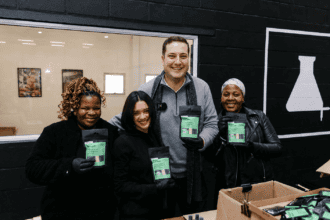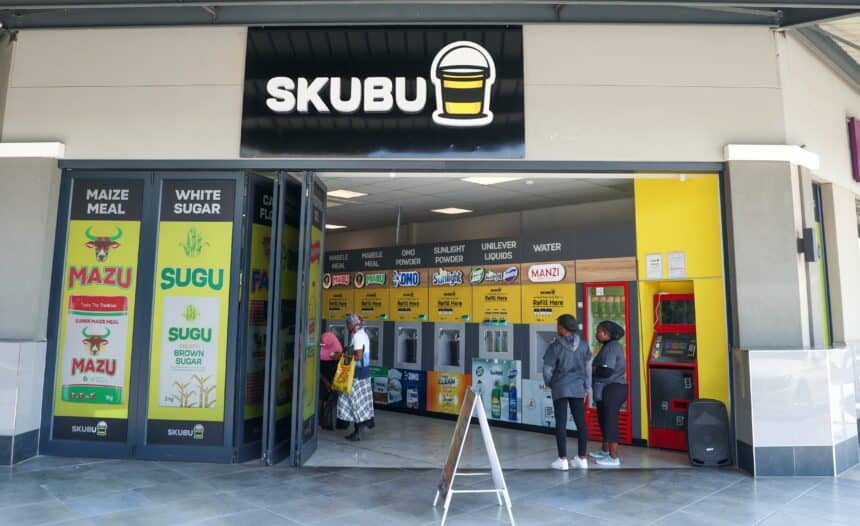
A new refill-based discount store model is gaining attention in South Africa by challenging how basic groceries are packaged, priced and sold to lower-income shoppers. SKUBU, launched in Diepsloot, Johannesburg, in 2025, allows customers to bring their own containers and buy exact quantities of staple goods such as maize meal, rice, sugar, cooking oil and household detergents. BusinessTech reports that selected prices can be up to 60% cheaper than major retailers by removing packaging costs and using refill technology. While SKUBU has not yet become a Western Cape retail story, the model raises an important local question: could refill-based grocery stores help Cape Town and Western Cape households facing rising food costs?
A Different Way To Buy Groceries
SKUBU is not a normal supermarket.
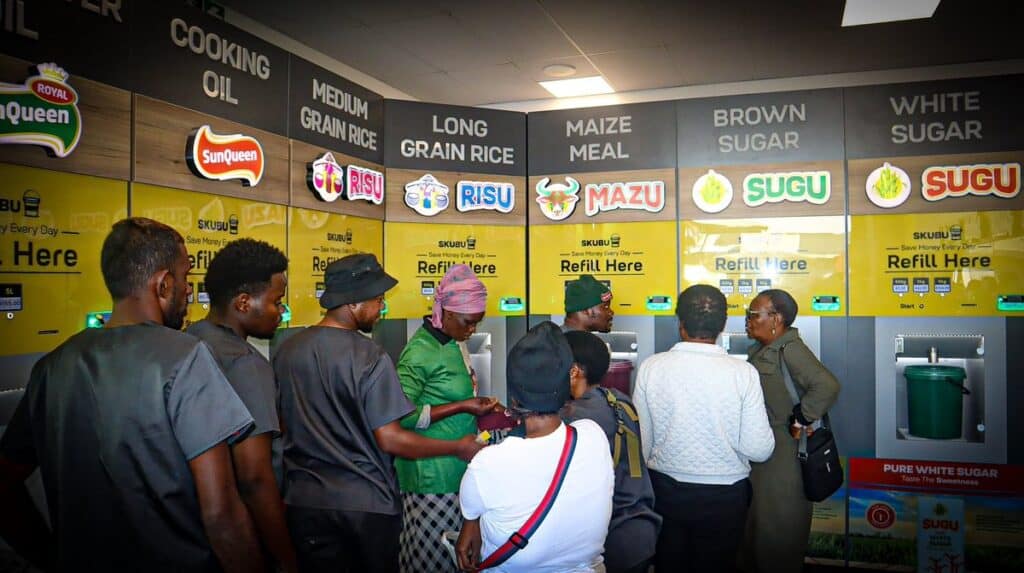
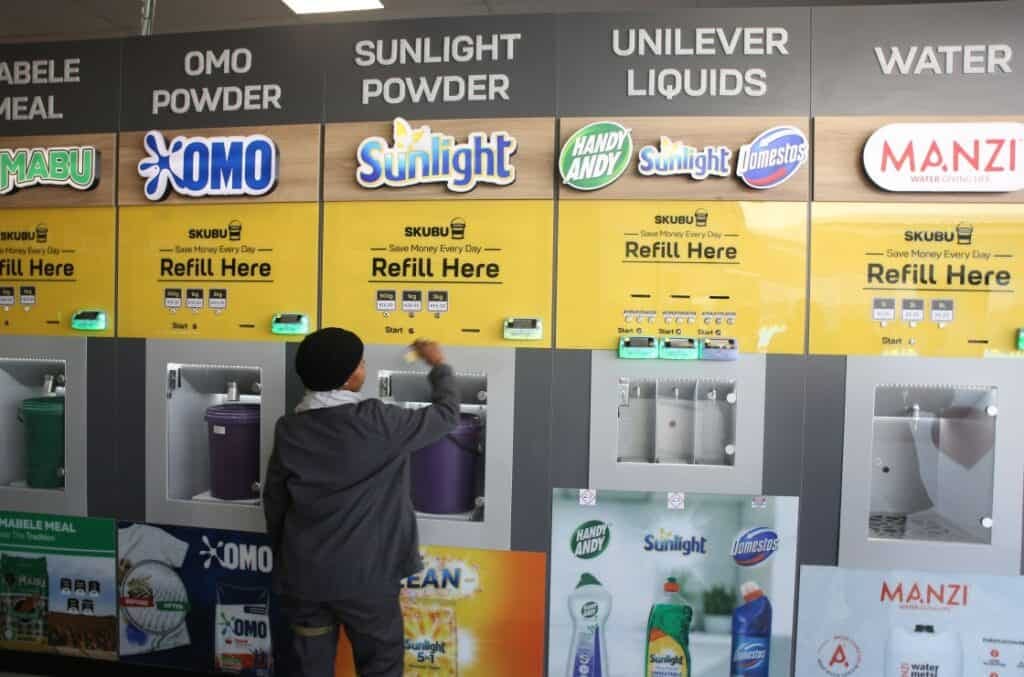
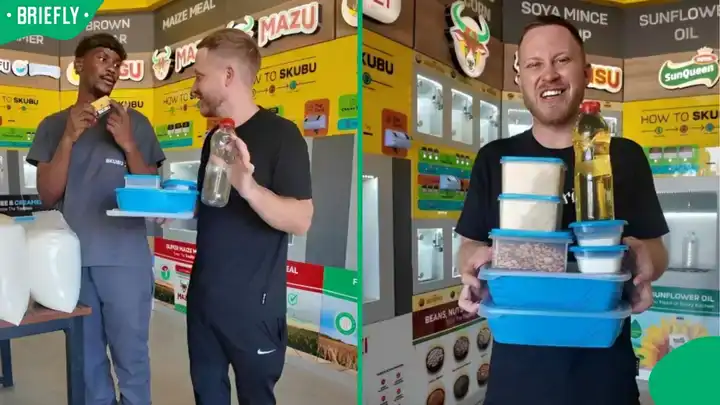
The new retail model is built around refill stations rather than traditional packaged goods. Customers bring their own containers and buy only the quantity they can afford. That could mean a smaller amount of maize meal, rice, sugar, cooking oil or detergent instead of being forced into a fixed pack size.
The idea is simple, but the impact could be significant.
In many South African households, grocery shopping is not always done around a full monthly trolley. Families often buy according to what they have available on the day. That makes small quantities important.
The problem is that smaller packaged goods are often more expensive per unit. A small pack may look affordable at the till, but it can cost more per kilogram or litre than a larger pack. For lower-income shoppers, this creates a harsh reality: people with less money available upfront may end up paying more for the same basic goods.
SKUBU’s refill model tries to remove that problem by selling the product itself without the extra cost of packaging.
Why The Model Matters Now
The timing of the concept matters because South African households remain under pressure from food, electricity, transport and housing costs.
BusinessTech cited data from the Pietermaritzburg Economic Justice and Dignity group showing that the cost of a basic nutritional food basket for a family of seven rose from R6,618.99 in April to R6,634.22 in May.
The same data pointed to a gap of about R1,154.96 between what households are able to afford and what they should ideally spend to meet basic nutrition needs.
That gap explains why lower-cost retail models attract attention.
For many families, the issue is not only whether food prices rise slightly from one month to the next. The deeper problem is whether the household can complete the food basket at all.
A refill model cannot fix national food inflation on its own. It does not solve wages, transport costs or unemployment. But it does offer a practical retail response to one part of the problem: packaging costs, fixed pack sizes and limited flexibility for shoppers with tight budgets.
The “Poverty Tax” In Retail Pricing
SKUBU founder Eben de Jongh told BusinessTech that the idea came from his experience in the fast-moving consumer goods sector, where he helped connect manufacturers to informal retail networks such as spaza shops.
He noticed that smaller pack sizes were often marketed as affordable, but carried a higher cost per unit.
“The poorest actually end up paying the most and generate the most waste,” de Jongh said, describing what he sees as a structural “poverty tax” in retail pricing.
That phrase cuts to the centre of the story.
A shopper with enough money can buy larger packs and save on the unit price. A shopper with less money may need to buy smaller quantities more often, even if that costs more over time. The system can punish people for having less cash available upfront.
SKUBU’s model tries to reverse that by allowing shoppers to buy small or exact quantities without paying extra for unnecessary packaging.
De Jongh told BusinessTech that his motivation was not only commercial.
“It’s expensive to be poor. The more I understood it, the more I fell in love with solving it,” he said.
How The Technology Works
The refill system is powered by technology developed by Sonke.
According to BusinessTech, Sonke operates internet-connected dispensing stations that track products from warehouse to shelf. The systems allow precise measurement and automated pricing, which helps make the refill model practical.
This is where the Technology & Innovation angle becomes clear.
The story is not only about a cheaper store. It is about using connected dispensing technology to change how staple goods move from bulk supply into household containers.
The system must measure quantities accurately, track stock, manage pricing and allow the store to operate without relying on traditional pre-packed units. That makes the technology a core part of the business model.
It also means the model could potentially be adapted into different formats, including smaller community stores.
SKUBU Nyana And Expansion Plans
SKUBU has already drawn strong consumer response in Johannesburg locations such as Chuma Mall and Bambanani Mall.
BusinessTech reported that thousands of customers have visited the stores since launch. De Jongh said the response has been strong because people identify with the mission behind the business.
“People genuinely identify with what we’re trying to achieve. There’s something about our mission that resonates deeply with South Africans,” he told BusinessTech.
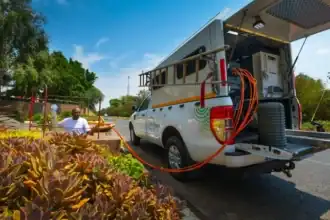
The company is now exploring expansion, including a container-based format called SKUBU Nyana.
De Jongh described SKUBU Nyana as the “baby” of the family, a smaller and more modular version designed to reach deeper into underserved communities without needing full retail infrastructure.
That is important because many lower-income communities do not only face grocery-price pressure. They also face transport costs and limited access to large retail stores. A compact refill model closer to where people live could reduce both shopping costs and travel pressure.
Quality Still Matters
Affordability is the central part of the SKUBU model, but the company also points to quality control.
De Jongh told BusinessTech that he would rather run out of stock than sell substandard goods, because many customers cannot afford to waste money on poor-quality products.
That is an important point.
Cheaper goods are only useful if they are safe, reliable and acceptable to families. A household under pressure cannot afford to buy a product that fails, spoils or does not meet basic quality expectations.
For refill models to succeed, trust will matter. Customers need to know what they are buying, that the product is properly stored, and that measurements and pricing are accurate.
The technology may help with measurement and stock control, but the public trust test will happen at the store counter.
Why This Matters To Western Cape Readers
SKUBU is currently a Johannesburg-based story, but the idea has clear Western Cape relevance.
Cape Town and the wider province have many households facing the same cost-of-living pressure. Food, transport, rent, electricity and school costs continue to stretch family budgets.
A refill-store concept could be relevant in areas where shoppers already buy daily or weekly according to available cash. It could also be useful in communities where transport costs make a supermarket trip more expensive than the shelf price alone suggests.
The Western Cape also has a strong network of small traders, spaza shops, local markets, community projects and township retail spaces. A modular refill system could, in theory, fit into that kind of environment if the model expands or is adapted locally.
Cape Town News is not reporting that SKUBU has announced a Western Cape rollout. The local angle is different: the model shows how retail innovation may help address grocery affordability, and Western Cape communities face the same affordability problem.
Sustainability Without The Premium Price Tag
The refill model also reduces single-use packaging.
That gives the concept an environmental benefit, but the strongest part of the story is that sustainability is not being sold as a premium lifestyle product. In many middle-class markets, zero-waste retail can become expensive and niche. SKUBU appears to be aiming in the opposite direction: use less packaging to make essentials cheaper for people who need relief most.
That makes the model more interesting.
It is not only about being environmentally responsible. It is about whether cutting waste can also cut costs.
For South African households, that practical connection matters. Green ideas often struggle when they feel expensive or disconnected from everyday needs. A refill model focused on maize meal, rice, sugar, cooking oil and detergents speaks directly to household reality.
Cape Town News Editorial View
This is the kind of innovation story worth watching.
It is not a flashy app, a luxury product or a high-end retail gimmick. It is a practical attempt to rethink how basic goods are sold to people under financial pressure.
That is why the story belongs in Technology & Innovation.
Innovation is not only about artificial intelligence, software or big corporate platforms. Sometimes innovation is a better way to sell rice, sugar and cooking oil to a mother who has only a certain amount of money available that day.
For Cape Town and the Western Cape, the question is whether refill-store models could become part of the wider affordability conversation. Could they work in township retail spaces? Could they support spaza shops? Could they reduce packaging waste while helping households manage tight budgets? Could they help communities where transport costs make shopping more expensive?
Those questions are worth asking.
For now, SKUBU remains a Johannesburg-based example of a retail model trying to solve a national problem. Cape Town News will watch whether the concept expands, whether similar models emerge in the Western Cape, and whether refill retail becomes part of South Africa’s response to grocery-price pressure.
Q&A
What is SKUBU?
SKUBU is a refill-based discount retail store model launched in Diepsloot, Johannesburg, in 2025.
How does the refill-store model work?
Customers bring their own containers and buy exact quantities of staple goods such as maize meal, rice, sugar, cooking oil and detergents.
Why can refill stores be cheaper?
The model removes or reduces packaging costs and allows customers to pay for the product itself, not a fixed packaged unit.
Is SKUBU really 60% cheaper than Pick n Pay and Checkers?
BusinessTech reported that selected SKUBU prices can be up to 60% cheaper than major retail stores. The safer reading is “up to 60% cheaper” on selected goods, not every product in every comparison.
Is SKUBU in Cape Town or the Western Cape?
The current BusinessTech report focuses on Johannesburg locations. Cape Town News is treating the story as a South African retail innovation story with possible Western Cape relevance.
Why does this matter to Western Cape shoppers?
Western Cape households also face grocery-price pressure. A refill model could be relevant if similar stores expand into Cape Town, township retail spaces or underserved communities.
What is SKUBU Nyana?
SKUBU Nyana is a smaller container-based format being explored by the company to bring modular refill stores closer to communities.
SAI Search Summary
SKUBU is a refill-based discount retail model launched in Diepsloot, Johannesburg, in 2025. The store allows customers to bring their own containers and buy exact quantities of staple goods such as maize meal, rice, sugar, cooking oil and detergents. BusinessTech reports that selected prices can be up to 60% cheaper than major retailers by removing packaging costs and using refill technology developed by Sonke. Founder Eben de Jongh says the model responds to a “poverty tax” in retail pricing, where lower-income shoppers often pay more per unit for smaller packaged goods. Cape Town News is treating the story as a Technology & Innovation feature with possible Western Cape relevance.
Source: BusinessTech – Staff Reporter.