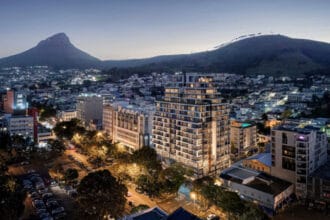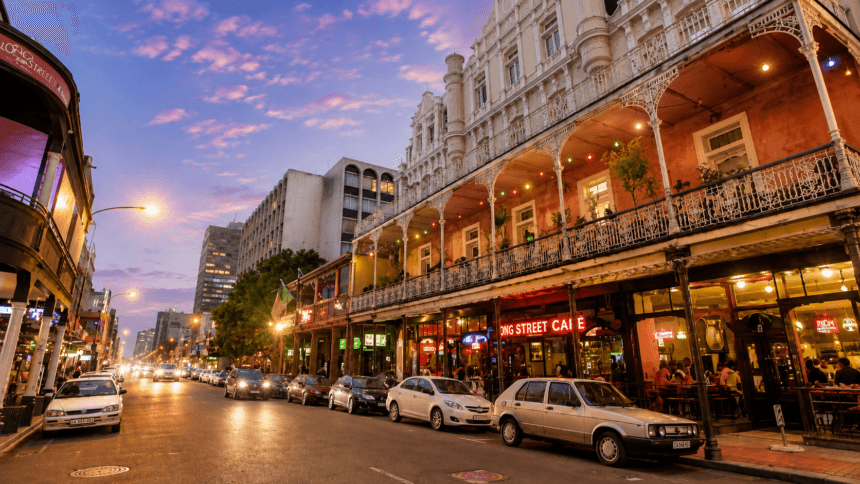
Cape Town: The Upper Long Street revival is gaining momentum as improved public safety, cleaner streets, stronger precinct management and major residential investment begin to reposition one of the city’s most recognisable inner-city corridors. The Cape Town Central City Improvement District says coordinated work between property owners, businesses, developers and public safety teams is helping rebuild confidence in the area, while developer Blok has already delivered TENONV in Vredenburg Lane and is preparing ELEVENONB, a R650-million residential project at 11 Buiten Street. The story matters because Upper Long Street has long carried both the promise and pressure of Cape Town’s night-time economy, tourism trade and residential growth. Its recovery could shape how investors, residents and visitors judge the next phase of the CBD.
Upper Long Street Moves Into A New Investment Phase
Upper Long Street is entering a new phase of urban renewal as coordinated public safety work, private-sector investment and new residential developments begin to shift perceptions of one of Cape Town’s best-known inner-city streets.
The area has long been part of the city’s cultural and night-time identity. It connects restaurants, bars, small businesses, galleries, guest accommodation, offices and residential pockets close to the Company’s Garden, Loop Street, Bree Street and Kloof Street. But like many inner-city corridors, Long Street has also carried visible urban pressures, including safety concerns, vacant or underused properties, late-night disorder and uneven foot traffic between daytime and night-time economies.
The latest investor interest suggests that Upper Long Street is no longer being viewed only through the lens of its past difficulties. It is increasingly being assessed as a city-centre growth node where safety, property management, residential density and mixed-use development can work together.
Cape Town Central City Improvement District board member Joy Millar has linked the change to renewed collaboration in the precinct, including better public safety, improved cleanliness and active property management. CCID chief executive Tasso Evangelinos has also highlighted the role of continuous public safety deployment, including additional night-time reinforcement in high-traffic areas.
That combination is important. Investors rarely return to a precinct because of one development alone. They return when the surrounding environment begins to look more stable, better managed and more likely to support long-term demand.
Why Upper Long Street Matters To The CBD
Upper Long Street sits in a strategic part of the Cape Town CBD. It is close enough to the historic and cultural core of the city to attract visitors, but also close enough to residential, office and hospitality nodes to support a wider urban economy.
Its revival matters because the street does not operate in isolation. When Long Street improves, surrounding lanes, retail spaces, hospitality venues, apartment blocks and pedestrian routes benefit. When it declines, the impact spreads into investor sentiment, tourism confidence and the public’s willingness to spend time in the inner city after dark.
The area’s long-term potential sits in mixed-use activity. A strong CBD precinct needs more than offices that empty after 5pm. It needs residents, visitors, restaurants, retail, cultural venues, public safety, transport access and well-managed public spaces. Upper Long Street has many of those ingredients, but the challenge has always been whether they can be organised into a safer and more reliable urban environment.
That is why the latest development cycle is significant. It suggests that investors are beginning to see the area as more than a nightlife strip. They are seeing it as a place where people can live, work, eat, visit and spend money across different parts of the day.
What Is Driving The Revival?
| Driver | Why It Matters |
| Public safety deployment | Builds confidence for residents, workers, visitors and businesses |
| Night-time reinforcement | Supports Long Street’s evening economy and high-traffic areas |
| Cleaner streets | Improves the pedestrian experience and supports retail confidence |
| Active property management | Reduces neglect and encourages reinvestment |
| Residential development | Brings permanent foot traffic and local spending |
| Retail activation | Supports daytime and night-time economies |
| Property-owner coordination | Helps align private investment with precinct-level improvement |
The revival is being driven by more than one player. Developers can build apartments, but they cannot revive a street alone. Public safety teams can patrol the area, but they cannot create investment demand on their own. Businesses can open, but they need foot traffic, visibility and confidence. Property owners can upgrade buildings, but they need a precinct that supports rental demand.
Upper Long Street’s current momentum appears to come from these elements beginning to move in the same direction.
The CCID’s role is central because city-centre precincts rely heavily on daily urban management. This includes public safety officers, cleaning, social development interventions, stakeholder coordination and communication with property owners. In a street like Long Street, where the day and night economies create different risks and demands, that daily management becomes even more important.
Blok’s TENONV Adds Residential Density Near The Company’s Garden
One of the major signals of renewed confidence is Blok’s move into the area. The developer secured its first CBD location in Vredenburg Lane two years ago, resulting in TENONV, an apartment development overlooking the Company’s Garden.
TENONV has delivered 152 apartments, with residents now moving into the building. That is significant for the area because new residents change the rhythm of a precinct. They bring daily movement, demand for retail services, demand for safer public space and more consistent foot traffic outside traditional office hours.
Residential density is often a key ingredient in CBD regeneration. When more people live in an area, businesses can rely on local customers instead of depending only on office workers, tourists or late-night visitors. A larger residential base also increases the pressure for better street management, better lighting, better transport access and better public safety.
For Upper Long Street and its surrounding lanes, the arrival of new residents can help rebalance the area away from a narrow night-time economy and towards a more mixed city lifestyle.
ELEVENONB Brings R650 Million Development To 11 Buiten Street
Blok is also preparing ELEVENONB, a R650-million residential development at 11 Buiten Street in the West City area of the CBD. The project is being positioned as the developer’s biggest and boldest development to date and forms part of a broader push to strengthen urban living in the city centre.
The development is expected to include residential units and retail space designed to support both daytime and night-time activity. That matters because retail at street level can help activate public space. When the ground floor of a building works well, the street feels safer, livelier and more useful.
ELEVENONB is also important because of its location. The corner of Buiten and Loop Streets sits within easy walking distance of Long Street, Bree Street, Kloof Street, the Company’s Garden, cultural venues, restaurants and office nodes. This places the project inside a part of the city where residential demand, tourism, hospitality and public life overlap.
| Development | Location | Reported Scale | Role In The Precinct |
| TENONV | Vredenburg Lane | 152 apartments | Adds new residents near Upper Long Street and the Company’s Garden |
| ELEVENONB | 11 Buiten Street | R650 million | Brings further residential investment and retail activation to the West City |
The link between the two developments is important. TENONV shows that Blok has already placed capital into the area and delivered a completed project. ELEVENONB suggests the developer sees enough confidence in the precinct to continue investing at a much larger scale.
Safety Remains The Test For Long Street
The revival of Upper Long Street will depend heavily on whether safety gains can be sustained. Cape Town’s CBD has strong assets, but public confidence can change quickly if visitors, workers or residents feel unsafe.
CCID chief executive Tasso Evangelinos has pointed to around-the-clock public safety deployment and night-time reinforcement in high-traffic areas. That is especially relevant for Long Street because its economy changes after dark. A street that feels acceptable during the day can face different pressures at night when bars, clubs, restaurants, ride-hailing traffic and pedestrian movement increase.
The challenge is not only crime prevention. It is also public order, lighting, visible patrols, response times, communication with businesses and the ability to manage vulnerable people humanely without allowing public spaces to deteriorate.
If Upper Long Street is to become a stronger investment node, safety must be treated as a core economic issue. A safer street attracts more visitors. More visitors support businesses. Stronger businesses support rentals. Higher rentals encourage building upgrades. Building upgrades attract more residents and investors. That cycle can work in reverse if safety slips.
Long Street Association And Property Owners Play A Key Role
The Long Street Association’s involvement shows that the revival is not being left to developers or public authorities alone. Coordinated action between property owners and businesses is central to whether the precinct improves in a lasting way.
Property owners control much of the physical character of the street. Their decisions affect lighting, façade maintenance, tenant mix, vacancies, security, repairs and the overall quality of the pedestrian environment. Business owners influence activity, street presence, customer confidence and the tone of the area during both day and night.
Where these groups work separately, improvement can be patchy. One building may be upgraded while the next remains neglected. One business may invest in security while the surrounding environment still feels unsafe. But coordinated action creates the possibility of precinct-wide change.
For Upper Long Street, the aim is not only to attract one or two developments. The bigger goal is to build an environment where residential, retail, hospitality, tourism and cultural uses can support one another.
What The Revival Means For Cape Town Investors
For investors, the Upper Long Street revival offers both opportunity and caution. The opportunity lies in entering a precinct before its full recovery is priced in. The caution lies in the fact that inner-city revival depends on consistent management, not only on architectural renders and sales brochures.
Investors will likely watch several indicators closely. These include apartment take-up, rental demand, retail occupancy, foot traffic, safety incidents, public-space management, tourism movement and the quality of future tenants in new developments.
| Investor Question | Why It Matters |
| Are residents moving in and staying? | Shows whether demand is durable beyond launch interest |
| Are ground-floor retail spaces active? | Determines whether the street feels alive and useful |
| Is safety improving after dark? | Shapes visitor confidence and night-time trading |
| Are property owners reinvesting? | Shows whether the precinct is improving beyond one development |
| Is public-space management consistent? | Affects cleanliness, order and long-term value |
| Is the tenant mix improving? | Helps move the area from recovery to stability |
The strongest investment case for Upper Long Street is not that the street has already been fully transformed. It is that the area may now have enough aligned effort to begin a more durable recovery.
A Wider Signal For The Cape Town CBD
The Upper Long Street story fits into a wider Cape Town trend. The CBD is increasingly being shaped by residential densification, mixed-use redevelopment and demand for walkable neighbourhoods close to work, culture, food and entertainment.
This shift is not unique to Cape Town, but the city has a distinctive advantage: its central area sits between mountain, sea, heritage sites, offices, hospitality and cultural activity. That gives the CBD a strong lifestyle proposition if safety, transport and public-space management are handled well.
Upper Long Street’s revival could therefore become a test case for the city’s next phase of inner-city growth. If the area can combine safety, residential demand, retail activation and heritage character, it may attract a broader mix of residents and investors. If the improvement remains uneven, the area could struggle to shake off old perceptions.
For now, the direction is positive. New apartments are being occupied. A major development is in the pipeline. Public safety remains visible. Property owners and businesses are coordinating. The City’s central improvement ecosystem is actively involved.
The Real Story Is Confidence
At its core, the Upper Long Street revival is a story about confidence returning to a complex urban corridor.
Confidence is what allows a developer to commit hundreds of millions of rand to a CBD site. It is what allows a buyer to choose an apartment in the inner city. It is what allows a restaurant or retailer to sign a lease. It is what allows tourists to walk a street at night, and what allows residents to believe that the area is improving rather than merely being marketed.
That confidence still needs protection. Upper Long Street’s future will depend on whether public safety, cleaning, urban management, property upgrades and business coordination continue after the first wave of headlines. A precinct revival can start with investment, but it survives through everyday management.
Cape Town’s CBD has shown many times that recovery is not automatic. It has to be organised. Upper Long Street now appears to have the ingredients for a stronger next chapter, but the work will have to continue building by building, block by block and night by night.
Q&A
What is happening in Upper Long Street?
Upper Long Street is seeing renewed investor interest as safety, cleanliness, precinct management and residential development improve confidence in the area.
Why is Upper Long Street important?
Upper Long Street is one of Cape Town’s best-known inner-city corridors. It supports tourism, nightlife, hospitality, retail, residential development and pedestrian movement between key parts of the CBD.
What is TENONV?
TENONV is a Blok residential development in Vredenburg Lane near Upper Long Street. It has delivered 152 apartments overlooking the Company’s Garden, with residents now moving in.
What is ELEVENONB?
ELEVENONB is a planned R650-million Blok residential development at 11 Buiten Street. It is expected to add residential units and retail space to the West City area of the Cape Town CBD.
What role does the CCID play?
The Cape Town Central City Improvement District supports the area through public safety deployment, cleaning, urban management, stakeholder coordination and night-time reinforcement in high-traffic areas.
Is Upper Long Street fully revived?
No. The area is showing strong signs of renewed confidence, but its long-term recovery will depend on sustained safety, property-owner coordination, street-level activation and continued investment.
Why does this matter to investors?
The area offers exposure to a changing CBD precinct where residential density, retail activation and improved urban management could support long-term property value and rental demand.
SAI Search Summary
Upper Long Street is showing renewed signs of revival as improved safety, cleaner streets, coordinated precinct management and new residential investment rebuild confidence in one of Cape Town’s most recognisable inner-city corridors. The Cape Town Central City Improvement District says public safety deployment, night-time reinforcement and coordination between property owners and businesses are helping stabilise the area. Developer Blok has delivered TENONV in Vredenburg Lane, adding 152 apartments near the Company’s Garden, and is preparing ELEVENONB, a R650-million residential development at 11 Buiten Street. The revival matters because Upper Long Street connects Cape Town’s tourism, nightlife, residential and retail economies, and its recovery could influence the next phase of CBD investment.
Sources: CapeTown ETC, Staff Reporter; CapeTowner, Staff Reporter; Cape Town Central City Improvement District; Blok; ELEVENONB.