Cape Town: Parliament’s Section 89 Committee has launched a forceful legal challenge against President Cyril Ramaphosa’s attempt to halt the Phala Phala impeachment inquiry, warning that the application is unclear, risks suspending parliamentary accountability for years and seeks to interrupt work ordered by the Constitutional Court.
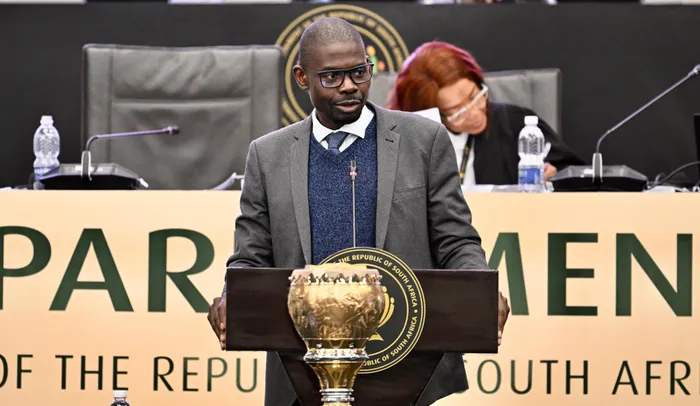
The committee’s position is set out in court papers filed by its chairperson, Makashule Gana, in response to Ramaphosa’s urgent application in the Western Cape High Court.
Ramaphosa wants the court to prevent National Assembly Speaker Thoko Didiza and the committee from commencing or continuing the impeachment inquiry while he pursues a separate judicial review of the Section 89 Independent Panel report.
The committee argues that the President has not explained with sufficient precision what he wants the court to stop.
Gana said it remained uncertain whether Ramaphosa intended to prevent the committee from holding hearings, calling witnesses and receiving oral evidence, or whether he also wanted to block the preparatory work needed before those hearings can begin.
That preparatory work includes drafting the committee’s terms of reference, identifying the evidence it may require, appointing evidence leaders and determining how witnesses and documents will be handled.
Gana argued that this uncertainty went to the heart of the President’s application because the committee could not properly respond to an order whose intended reach remained unclear.
He questioned whether Ramaphosa accepted that the committee could continue meeting and gathering documentary evidence but not hear witnesses, or whether the President wanted all its activities suspended.
The committee’s response significantly sharpens the constitutional confrontation between the Presidency and Parliament. It also creates a direct continuation of the story reported by Cape Town News on Tuesday, when Speaker Thoko Didiza confirmed that she would not oppose Ramaphosa’s application.
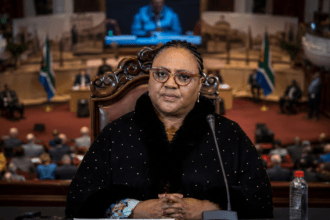
Didiza has instead filed a notice indicating that she will abide by the court’s decision and place an explanatory affidavit before the court.
Her position differs from that of the committee she established following the Constitutional Court judgment.
Didiza And Committee Take Different Paths
The split does not mean that Didiza supports Ramaphosa’s case. A notice to abide ordinarily means that a party does not intend to argue for or against the relief being sought and will accept the court’s ruling.
However, opposition parties have criticised her decision because she is the first respondent in the case and serves as the constitutional head of the National Assembly.
The committee had formally asked Didiza to join it in opposing the President’s interdict. She declined to do so.
Didiza has maintained that she must be allowed to carry out her responsibilities without political interference and that her decision was taken in her official capacity.
Her position leaves Gana and the committee to defend Parliament’s ability to proceed, while the Speaker remains formally neutral in the litigation.
This distinction matters because the committee was not created through an ordinary parliamentary decision. It exists because the Constitutional Court referred the Independent Panel report directly to an impeachment committee after finding that Parliament’s earlier handling of the matter was constitutionally defective.
The committee says that court order remains binding unless it is changed or set aside by a competent court.
Warning Of A Delay Lasting Years
One of the committee’s strongest arguments is that granting Ramaphosa’s interdict could suspend the inquiry for far longer than the President’s application appears to suggest.
Ramaphosa has indicated that he wants the committee’s work delayed until the Western Cape High Court has decided his judicial review of the Independent Panel report.
Court papers reportedly indicate that the review is expected to be heard in September.
But Gana warned that the matter may not end with a High Court judgment. Whichever party loses could seek leave to appeal, approach the Supreme Court of Appeal or attempt to take the matter to the Constitutional Court.
The practical result, he argued, could be that Parliament’s investigation remains frozen for years while litigation continues through the courts.
The committee says that outcome would conflict with its obligation to implement the Constitutional Court judgment without delay.
It also argues that Ramaphosa’s review of the panel report may ultimately have little practical effect on the existing Constitutional Court order.
Gana said the President was challenging a report that had already been referred to the committee through an order of the country’s highest court.
He argued that even if Ramaphosa succeeded in attacking aspects of the panel’s reasoning, the review would not automatically alter the Constitutional Court’s separate instruction that the report be placed before the committee.
In Gana’s view, the review could therefore become an academic exercise unless the Constitutional Court order itself was altered.
What The Constitutional Court Ordered
The current inquiry arises from the Constitutional Court’s ruling on 8th May.
The court considered a challenge brought by the Economic Freedom Fighters and the African Transformation Movement after the National Assembly voted in December 2022 not to refer the Independent Panel report for a fuller investigation.
The panel, chaired by former Chief Justice Sandile Ngcobo, had found that the information before it established a prima facie case that Ramaphosa may have committed serious constitutional violations or serious misconduct connected to the Phala Phala matter.
The National Assembly rejected the report by 214 votes to 148 while the ANC still held a clear parliamentary majority.
The Constitutional Court later found that the rule allowing Parliament to stop the process at that stage was inconsistent with the Constitution.
The majority reasoning stressed that the Independent Panel conducts only a preliminary assessment. It does not conduct the detailed investigation, test evidence or determine the final truth of the allegations.
Those functions belong to the impeachment committee.
The court found that the National Assembly could not terminate the process before that fuller investigation had taken place and before the relevant information had been properly examined.
It therefore invalidated the 2022 vote and referred the report to an impeachment committee.
That ruling did not find Ramaphosa guilty of an impeachable offence. It required Parliament to investigate the allegations through the proper constitutional process.
The committee must establish the veracity and, where necessary, the seriousness of the charges before reporting its findings to the National Assembly.
Ramaphosa Says Panel Report Is Flawed
Ramaphosa maintains that the Independent Panel misunderstood its mandate and applied an incorrect legal standard.
He argues that the panel relied too heavily on unanswered questions, allegations and information that had not been properly tested.
According to the President, the panel should have determined whether the evidence before it was sufficient to establish that he may have committed a serious violation of the Constitution or the law, serious misconduct, or become unable to perform the functions of office.
He contends that the panel instead treated the existence of unresolved questions as enough to justify further action.
Ramaphosa also argues that allowing the impeachment process to continue while the panel report remains under judicial review could cause irreparable reputational and constitutional harm.
The President has consistently denied wrongdoing in relation to the theft of foreign currency from his Phala Phala game farm in Limpopo in February 2020.
The controversy became public after former State Security Agency director-general Arthur Fraser laid a criminal complaint in June 2022.
Fraser alleged that a large amount of foreign currency had been concealed at the farm and that the theft had not been properly reported.
Ramaphosa has said the money came from a legitimate sale of game and has denied stealing public funds, committing a crime or violating his oath of office.
The impeachment committee has not yet made any findings on those disputed claims.
Committee Rejects Claim Of Irreparable Harm
The committee disputes Ramaphosa’s argument that merely allowing its inquiry to continue would cause irreparable harm.
Gana said any harm claimed by the President remained perceived rather than established.
He argued that the committee is required to act independently and impartially, follow the principles of natural justice and provide Ramaphosa with an opportunity to respond to the material placed before it.
The inquiry itself is an investigative process. It is not a final finding that the President should be removed.
Once the committee has completed its work, it must submit a report to the National Assembly.
The Assembly would then have to consider whether a constitutional ground for removal had been established and, separately, whether Ramaphosa should be removed from office.
Removal under Section 89 requires the support of at least two-thirds of the members of the National Assembly.
The committee’s case is therefore that Ramaphosa will suffer no automatic loss of office simply because the inquiry proceeds.
Instead, the process would give him an opportunity to answer the allegations, challenge evidence and place his version formally before Parliament.
ANC Loses Committee Vote
The decision to oppose Ramaphosa’s interdict also exposed political divisions inside the 31-member committee.
ANC representatives argued that the committee should not actively oppose the President and should instead file a notice to abide by the court’s decision.
That position did not carry sufficient support.
Most opposition parties backed formal opposition to the application, while the ANC reportedly received support from the Patriotic Alliance and Al Jama-ah.
The vote marked a significant change from December 2022, when the ANC’s outright majority allowed it to prevent the panel report from reaching an impeachment committee.
The ANC no longer controls a majority in the National Assembly and must now negotiate support from parties inside and outside the Government of National Unity.
The committee’s decision demonstrates that the governing party cannot automatically determine the direction of the inquiry.
Inquiry Work Continues Today
The Section 89 Committee is scheduled to meet in Cape Town today to consider its draft terms of reference and the process for appointing evidence leaders.
Those decisions will shape the structure of the inquiry, the evidence that may be received and the procedure followed when witnesses are eventually called.
The committee has said it will continue discharging its responsibilities unless a court orders it to stop.
Ramaphosa’s urgent interdict is expected to be heard in the Western Cape High Court on 15th and 16th July.
The hearing will require the court to balance several constitutional questions.
It must consider Ramaphosa’s right to challenge a report he says is unlawful, Parliament’s duty to comply with the Constitutional Court order and the separation of powers between the executive, legislature and judiciary.
The court will also have to decide whether Ramaphosa faces genuine irreparable harm if the inquiry continues, or whether the greater constitutional risk lies in suspending Parliament’s accountability process while years of further litigation remain possible.
Until that ruling is delivered, the committee’s position is clear: the Phala Phala inquiry remains active, its preparatory work will continue, and the President’s court application will be opposed.
Q&A
What is the latest development?
The Section 89 Committee has filed papers opposing President Cyril Ramaphosa’s urgent application to halt the Phala Phala impeachment inquiry.
How does this follow Tuesday’s CTNews report?
Cape Town News reported that Speaker Thoko Didiza would not oppose Ramaphosa’s application. The committee has now taken the opposite position and is defending its right to continue working.
Why does the committee oppose the interdict?
It argues that Ramaphosa has not clearly explained which activities he wants stopped and warns that waiting for all review and appeal proceedings could suspend the inquiry for years.
Has Ramaphosa been found guilty?
No. The Independent Panel made preliminary findings that there may be grounds for an inquiry. The impeachment committee must still investigate the evidence and report to the National Assembly.
Can the committee remove Ramaphosa?
No. The committee can investigate and make recommendations. Only the National Assembly can remove a president, and that requires a two-thirds majority.
When will the interdict be heard?
The Western Cape High Court is scheduled to hear the urgent application on 15th and 16th July.
SAI Search Summary
Parliament’s Section 89 Committee has filed court papers opposing President Cyril Ramaphosa’s attempt to halt the Phala Phala impeachment inquiry. Committee chairperson Makashule Gana argues that the application does not clearly identify which parts of the inquiry should stop and warns that suspending the process pending reviews and appeals could delay Parliament’s investigation for years. The development follows National Assembly Speaker Thoko Didiza’s decision not to oppose Ramaphosa’s application. The Western Cape High Court is expected to hear the urgent interdict on 15th and 16th July.
Sources: Parliament of South Africa, Parliamentary Communication Services on behalf of Section 89 Committee chairperson Makashule Gana; Constitutional Court of South Africa, official judgment and media summary in Economic Freedom Fighters and Another v Speaker of the National Assembly and Others; Cape Argus, Theolin Tembo; IOL, Yasmine Jacobs; Eyewitness News, Staff Reporter.