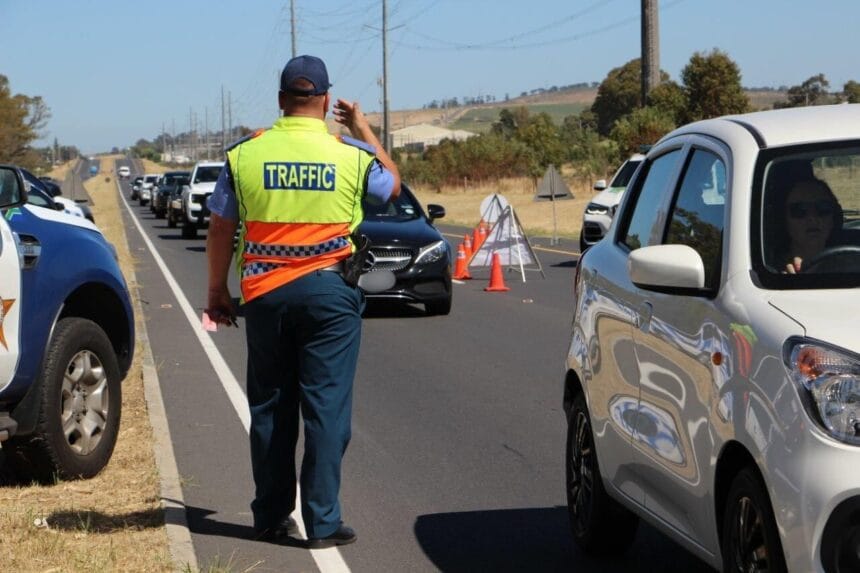
Cape Town: South Africa’s new Administrative Adjudication of Road Traffic Offences system is scheduled to begin its phased rollout in 62 municipalities on 1st July, changing how motorists receive, pay and challenge traffic fines while moving most infringement cases from the criminal court process into a central administrative system managed by the Road Traffic Infringement Agency. Cape Town, George, Stellenbosch and Beaufort West appeared in the government’s earlier first-phase plans, although an updated official list has not yet been published, and motorists should understand that the rollout starting next week introduces the new fine-administration process rather than immediately activating the full national demerit-point system.
AARTO Rollout Starts After Another Delay
The long-delayed expansion of South Africa’s AARTO system is scheduled to begin next week after the Department of Transport moved the start date from December last year to 1st July.
Transport Minister Barbara Creecy and Deputy Minister Mkhuleko Hlengwa postponed the previous implementation date after a national readiness assessment identified gaps in municipal training, back-office preparation, system integration and funding. The department said the delay would give participating authorities more time to align their traffic-enforcement systems with the national AARTO framework.
The phased model has been retained, with 62 municipalities expected to enter the next stage from 1st July. AARTO has already operated for several years in Johannesburg and Tshwane, but the new rollout will extend the administrative model to authorities that have historically processed most traffic offences under the Criminal Procedure Act.
The change is important for Western Cape motorists because it affects more than the method used to pay a fine. AARTO creates a prescribed sequence of notices, response periods, representations and enforcement action. Failing to respond can move a motorist further through the administrative process, even where the original offence may have appeared minor.
However, a major uncertainty remains days before implementation. The Department of Transport has not publicly released an updated official list identifying all 62 municipalities that will enter the system on 1st July.
Cape Town, George, Stellenbosch and Beaufort West appeared in the earlier phase-two rollout programme. Motoring publications have continued listing them among the expected participants, but their inclusion should not be treated as finally confirmed until the department or Road Traffic Infringement Agency publishes the revised proclamation or municipality schedule.
What AARTO Changes
AARTO shifts the handling of most road traffic infringements away from the ordinary criminal court process and into an administrative system managed nationally through the Road Traffic Infringement Agency, known as the RTIA.
Under the current system used across most of the Western Cape, a traffic fine may eventually lead to a summons and a criminal court process if it is not resolved. AARTO instead creates a structured administrative route with set documents, deadlines and response options.
A motorist who receives an infringement notice may pay the penalty, nominate another person who was driving, make a formal representation explaining why the notice should be cancelled, or elect to have the matter heard in court.
The system is intended to standardise enforcement across municipalities and reduce the number of routine traffic matters reaching already burdened criminal courts. National authorities also present AARTO as a road-safety measure designed to improve compliance and eventually support a national demerit-point system.
The practical concern is that motorists will need to understand the administrative process and respond within the required periods. Ignoring correspondence may lead to a courtesy letter, additional fees and an enforcement order.
Current System Compared With AARTO
| Issue | Current System In Most Western Cape Areas | AARTO System |
| Main legal process | Criminal Procedure Act | Administrative AARTO process |
| Fine administration | Municipality or issuing authority | Central RTIA-linked system |
| Initial response | Pay, dispute or await summons, depending on notice | Pay, nominate a driver, submit a representation or elect court |
| Discount | Depends on issuing authority and arrangement | RTIA currently states payment within 32 days qualifies for a 50% discount |
| Failure to respond | May lead to summons and court action | Courtesy letter, added fees and possible enforcement order |
| Court access | Usually through summons process | Motorist may elect to be tried in court |
| Demerit points | No national system | Planned for a later AARTO phase |
| Licence consequences | Depend on offence and court outcome | Future demerits may lead to suspension; enforcement orders may also affect administrative transactions |
Demerit Points Will Not Start Immediately
The biggest misunderstanding around next week’s rollout is that motorists will immediately begin losing licence points from 1st July.
Available implementation guidance indicates that the demerit-point component will follow during a later phase. The first step is focused on extending the AARTO administrative system to more municipalities and connecting enforcement authorities to the national process.
Motorists should therefore distinguish between two developments. The first is the introduction of new procedures for dealing with traffic infringements. The second is the eventual national activation of licence demerit points.
When the demerit system begins, points will be allocated for specified infringements and offences. A driver who exceeds the prescribed threshold of 15 points could face suspension, while repeated suspensions may eventually lead to licence cancellation.
Those consequences are serious, but they should not be described as beginning automatically next week. The Department of Transport and RTIA must announce the implementation stage and applicable commencement date before points can be applied nationally.
This distinction is important because public discussion of AARTO often combines the fine-processing system and the demerit regime as though they begin at the same time.
What Happens After A Motorist Receives A Notice
The RTIA says motorists have several options after receiving an AARTO infringement notice. The correct response will depend on whether the recipient accepts responsibility, disputes the allegation or was not driving the vehicle.
A motorist who accepts the infringement may pay within the prescribed period. The RTIA currently states that payment within 32 days qualifies for a 50% discount on the penalty.
Where the registered owner was not driving, the owner may nominate the person who was in control of the vehicle. That process is important for business fleets, family vehicles, rental arrangements and vehicles regularly used by more than one driver.
A recipient who believes that the notice is incorrect or should be cancelled may make a formal representation. The RTIA forwards the submission to an independent representations officer for consideration.
Motorists may also elect to have the matter heard in court. This preserves access to judicial determination where the recipient disputes liability and does not accept the administrative outcome.
Main Options Under AARTO
| Motorist’s Position | Available Action | Practical Effect |
| Accepts responsibility | Pay within the stated period | Matter is settled; early payment may qualify for a discount |
| Was not the driver | Nominate the actual driver | Liability may be redirected after verification |
| Disputes the infringement | Submit a representation | Independent representations officer considers the case |
| Wants a judicial hearing | Elect to go to court | Matter proceeds through the court process |
| Takes no action | Notice progresses through enforcement stages | Extra fees and an enforcement order may follow |
Motorists should retain copies of notices, payment records, representations and nominations. They should also use official channels when checking fines because fraudulent SMS and payment messages remain a risk.
Enforcement Orders Could Create Problems
AARTO’s enforcement process gives unpaid or unresolved infringements greater administrative consequences.
Where a motorist does not act after receiving the prescribed notices, the matter may progress to an enforcement order. Additional fees may be added, and the order may create problems when the person attempts certain licensing or vehicle-related transactions.
Motoring organisations and legal commentators have warned that the system places a greater burden on motorists to monitor notices and keep their personal information updated. A person who has moved but failed to update an address may not see correspondence in time, while vehicle owners may face notices relating to another person’s driving.
This makes accurate information on the national traffic register especially important. Motorists should check that their residential and postal addresses, identity details and vehicle ownership records are correct.
They should also avoid assuming that an infringement disappears because no physical letter arrived. AARTO allows for several forms of service, and the precise legal status of electronic communication has formed part of earlier public debate and court challenges.
The safest approach is to check fines through official RTIA or municipal systems and respond before the stated deadline.
Western Cape Raised Readiness Concerns
Western Cape Mobility Minister Isaac Sileku welcomed the decision to postpone the earlier rollout date, saying the additional time gave municipalities, enforcement agencies and operational teams an opportunity to prepare properly.
Sileku said successful implementation depended on alignment between the different spheres of government and ensuring that municipal officials were trained and systems were ready.
“This deferment is an opportunity to do things properly. We must walk this road together as all spheres of government and stakeholders,” Sileku said when the postponement was announced.
His response reflected wider concerns identified by the national department. Municipalities use different traffic-fine platforms, administrative systems and back-office arrangements, all of which must connect with the RTIA framework.
The parliamentary Portfolio Committee on Transport also supported a cautious approach after hearing that municipalities were not ready. Committee chairperson Donald Selamolela said proper preparation was preferable to a rushed launch.
“We agree with the Minister granting the request, because cautious implementation is much better than haphazardness,” Selamolela said.
He added that traffic enforcement should be punitive but fair if government wanted to address the country’s high road-death toll.
The comments point to the central test facing AARTO. A national administrative system may create greater consistency, but only if municipal systems work, notices are served correctly, disputes are handled fairly and motorists can access reliable information.
Cape Town’s Earlier Objections
Cape Town has previously questioned aspects of the AARTO model, including its administrative cost, the impact on municipal revenue and whether the system will improve road safety.
Under AARTO, fine revenue and administration are divided differently from the present municipal process. Municipalities have warned that transferring a portion of traffic-fine income to the RTIA could reduce revenue available for local enforcement and road-safety operations.
The City has also raised concerns about the complexity of integrating its existing traffic systems with a national platform.
These concerns do not automatically exempt Cape Town from national legislation. However, they show why the absence of an updated official municipality list matters. Local authorities and motorists need certainty about where the system begins, what notices will look like and how unresolved fines issued before 1st July will be handled.
The Department of Transport should publish the final rollout schedule before implementation and explain whether existing municipal fines will remain under the current system while only new infringements move into AARTO.
Without that clarity, motorists could face two parallel processes: older fines administered under the Criminal Procedure Act and newer infringements processed through AARTO.
Two Fine Systems Could Operate During Transition
The phased rollout means South Africa will not move to one national process overnight.
A motorist could receive an AARTO notice in one participating municipality and a conventional traffic fine under the Criminal Procedure Act in another area that has not yet joined the system.
The location of the offence will determine which process applies. The driver’s home address does not necessarily decide the matter.
This could create confusion for people travelling between Cape Town, the Cape Winelands, the Garden Route and smaller municipalities. A driver may need to use different portals, follow different dispute procedures and meet different deadlines depending on where each infringement was issued.
Businesses operating vehicle fleets face an even greater administrative burden. They will need systems for identifying drivers, responding to notices, nominating responsible employees and keeping records across municipalities operating under different legal processes.
Clear municipal communication will therefore be essential. Each participating authority should explain when it enters AARTO, how existing fines will be treated, where new notices can be checked and how motorists can obtain help.
Why Government Wants AARTO
National government says the system is intended to promote road safety, encourage compliance and create a fairer and more consistent way of handling traffic infringements.
South Africa continues to record a high number of road deaths, with speeding, reckless driving, alcohol use, unsafe overtaking and pedestrian vulnerability repeatedly identified as major causes.
AARTO’s supporters argue that fines alone have not changed behaviour because enforcement is inconsistent and many notices remain unpaid. A central system, combined with future demerit points, is intended to create consequences that follow the driver rather than remaining an isolated municipal penalty.
The eventual point system is designed to identify repeat offenders. Instead of treating each fine as a separate financial matter, repeated infringements would accumulate towards possible licence suspension.
Critics question whether administrative penalties will improve road safety without stronger visible policing, working public transport, reliable road infrastructure and effective enforcement against unlicensed or unroadworthy vehicles.
They also warn that an automated system could penalise motorists unfairly if notices are sent to outdated addresses, vehicle ownership records are incorrect or representations are delayed.
The success of the system will therefore depend on both enforcement and procedural fairness.
What Western Cape Motorists Should Do Now
Motorists should not panic or assume that every licence will begin accumulating demerit points next week. They should instead prepare for a new administrative process and confirm whether the municipality in which they travel has entered the rollout.
The first step is to ensure that personal, vehicle and address details are correct on official licensing records. The second is to check any infringement notice carefully, including the issuing authority, notice number, offence details, response deadline and payment channel.
Payments should be made only through verified government, RTIA, municipal or recognised banking platforms. Motorists should not follow unfamiliar links sent by SMS without independently checking the notice.
Anyone who was not driving should use the nomination process rather than ignoring the fine. A person who disputes the notice should prepare a representation supported by evidence, such as photographs, vehicle records, proof of sale or documents showing that the vehicle was elsewhere.
Drivers should also keep copies of every submission and confirmation.
The Department of Transport and RTIA still need to provide final clarity on the municipality list, the handling of existing fines and the precise timetable for the later demerit phase.
Until then, the most accurate description is that AARTO’s phased administrative rollout starts on 1st July, while the full point-based licence penalty system remains to follow.
Q&A
What is AARTO?
AARTO is the Administrative Adjudication of Road Traffic Offences system. It moves most traffic infringement cases from the criminal court process into a national administrative framework managed by the RTIA.
When does the new rollout begin?
The Department of Transport says the phased rollout begins on 1st July.
Will Cape Town be included?
Cape Town appeared in the earlier rollout plan, but the department has not yet published an updated official list confirming all 62 municipalities starting on 1st July.
Which other Western Cape municipalities were previously listed?
George, Stellenbosch and Beaufort West appeared in the earlier phase plan. Their inclusion in the revised 62-municipality rollout still requires official confirmation.
Will demerit points begin next week?
No. Available implementation guidance indicates that the demerit-point system will begin during a later phase.
What can motorists do after receiving an AARTO notice?
They may pay, nominate the actual driver, submit a representation disputing the notice or elect to have the matter heard in court.
Is there an early-payment discount?
The RTIA currently states that motorists who pay within 32 days qualify for a 50% discount.
What happens if a motorist ignores the notice?
The matter may progress to a courtesy letter and then an enforcement order, with additional fees and possible licensing-related administrative consequences.
Could motorists face two systems?
Yes. During the phased transition, offences in participating municipalities may fall under AARTO while offences elsewhere continue under the Criminal Procedure Act.
How can motorists avoid scams?
They should verify fines through official RTIA or municipal channels and avoid paying through unfamiliar links sent by SMS or email.
SAI Search Summary
South Africa’s phased AARTO rollout is scheduled to begin in 62 municipalities on 1st July, introducing a national administrative process for traffic infringements. Cape Town, George, Stellenbosch and Beaufort West appeared in earlier rollout plans, but an updated official list has not yet been published. Motorists will be able to pay, nominate another driver, submit representations or elect a court hearing. The full national demerit-point system will begin during a later phase and will not automatically take effect next week.
Sources: Department of Transport, Minister Barbara Creecy and national spokesperson Collen Msibi; Road Traffic Infringement Agency, official AARTO process guidance; Western Cape Mobility Department, Provincial Minister Isaac Sileku and acting spokesperson Ntobeko Mbingeleli; Parliament of South Africa, Portfolio Committee on Transport chairperson Donald Selamolela and Parliamentary Communication Services; TopAuto, Michael Taylor; AutoTrader, Ryno Fourie.