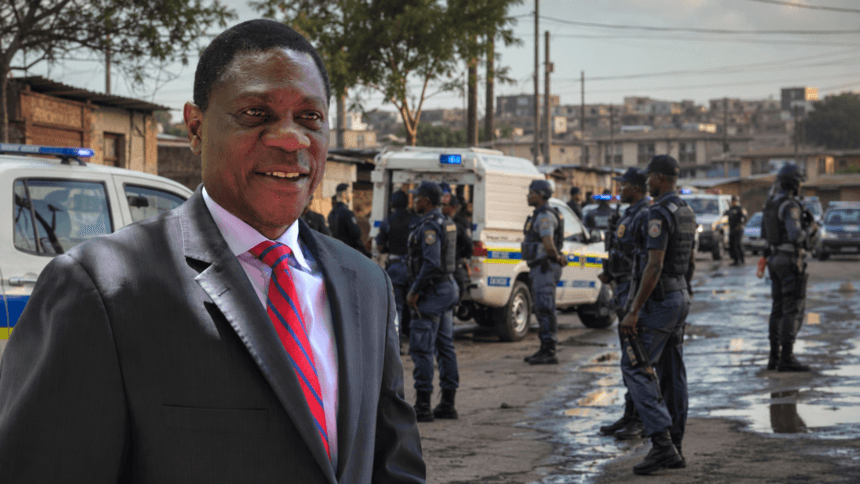
Cape Town: Deputy President Paul Mashatile’s promised Cape Flats town hall remains outstanding nearly four weeks after he told community members in Tafelsig, Mitchells Plain, that he would return for a formal meeting on gang violence, policing and the impact of Operation Prosper. No public date, venue or programme has been announced by the Presidency, while News24 has reported that more than 40 people were killed across the Cape Flats during the period in which arrangements for the meeting stalled, raising fresh questions about national government accountability and whether the joint SAPS and SANDF intervention is reducing violent crime in Cape Town’s worst-affected communities.
Town Hall Promise Remains Unfulfilled
Deputy President Paul Mashatile has yet to return to the Cape Flats for the formal community meeting he promised during an oversight visit to Mitchells Plain on 27th May, despite continuing shootings and growing concern about whether the national government’s anti-gang intervention is producing lasting results.
Mashatile made the commitment after community members gathered in Tafelsig and asked to speak directly to him about gang violence, drugs, shootings and the daily fear experienced by families in affected neighbourhoods.
The Deputy President told the gathering that his programme that day was focused on inspecting Operation Prosper and receiving operational briefings from the South African Police Service and South African National Defence Force. He said he would return at a later stage for a formal engagement in a community hall.
That meeting has not yet taken place, and the Presidency has not publicly announced a date, venue, agenda or list of participating communities.
The delay has become more serious because violence has continued after Mashatile’s visit. News24 reported this week that more than 40 people had been killed on the Cape Flats while arrangements for the promised town hall remained stalled.
The precise period and police breakdown behind that figure should remain attributed to News24 unless SAPS publishes a matching consolidated total. However, the wider pattern of shootings is supported by police reports, provincial statements and continued mass-killing investigations across Cape Town.
The unanswered question is no longer simply when Mashatile will return. It is whether the national government is prepared to listen directly to affected communities and explain what Operation Prosper has achieved beyond arrest figures and visible patrols.
Mashatile Visited After Admitting Knowledge Gap
Mashatile’s oversight visit followed criticism of remarks he made in Parliament several days earlier, when he acknowledged that he did not have sufficient first-hand knowledge of conditions on the Cape Flats.
His admission drew criticism from opposition parties and community representatives, who argued that the scale of gang violence and the national decision to deploy soldiers should already have placed the crisis at the centre of the Deputy President’s attention.
The Presidency subsequently announced that Mashatile would visit the Cape Flats to assess the implementation of Operation Prosper, the joint security intervention involving SAPS and SANDF personnel.
His programme included a briefing at Lentegeur Police Station and visits to Tafelsig and Gugulethu. The purpose was to inspect operational deployments, speak to officials and assess whether the army’s supporting role was strengthening police action in gang-affected areas.
The Presidency said the visit followed a commitment Mashatile had made in the National Assembly to inspect measures aimed at combating gang violence.
During the visit, Mashatile said he was encouraged by the operational briefing and the level of cooperation between police and soldiers. He nevertheless acknowledged that more work was required and that communities remained deeply concerned about their safety.
The encounter in Tafelsig exposed the gap between an official oversight programme and what community members wanted. They were not merely asking to watch politicians and security officials walk through the area. They wanted a structured opportunity to describe what was happening in their streets, challenge those responsible for policing and hear what government intended to do next.
Mashatile responded by promising a formal meeting at a later stage. That commitment created a clear expectation that national government would return with time set aside for direct public engagement.
Nearly four weeks later, the absence of a date has turned the promise into an accountability issue.
Killings Continued After Oversight Visit
The weeks following Mashatile’s visit have brought further shootings across several Cape Town communities.
Police intensified their presence in Khayelitsha after three mass shootings in which multiple people were killed. In one series of attacks, gunmen opened fire on groups of men, prompting SAPS to deploy additional personnel and investigators.
Western Cape authorities have also condemned deadly shootings in Lotus River, Grassy Park and Manenberg. In one Lotus River attack, four men were killed and another was seriously wounded. A separate shooting in Manenberg left one person dead and several others injured, including a police officer.
These incidents were not all formally classified as gang-related at the time of the first reports. Motives remain subject to investigation, and police must establish the circumstances in each case.
However, the repeated use of firearms, multiple-victim attacks and concentration of violence in already burdened communities have reinforced concern that the current security response has not disrupted the networks driving murder, drugs and illegal-gun circulation.
Western Cape Police Oversight and Community Safety Minister Anroux Marais said the shootings demonstrated that conventional policing measures were not enough. She called for intelligence-led operations, stronger investigations and the removal of illegal firearms from gang strongholds.
The provincial government has repeatedly argued that visible patrols and short-term deployments must be supported by detectives, crime intelligence, prosecutions and firearm-tracing work.
Without those elements, police may make arrests and confiscate individual weapons without dismantling the organisations controlling drug markets and directing shootings.
Operation Prosper Recorded More Than 1,200 Arrests
Operation Prosper was announced after President Cyril Ramaphosa said during the State of the Nation Address that soldiers would be deployed to support police in communities affected by gang violence and organised crime.
The SANDF does not replace SAPS and does not lead criminal investigations. Soldiers provide support within the limits of their deployment mandate, while police remain responsible for arrests, evidence collection, detective work and the preparation of criminal cases.
Authorities reported that more than 1,200 people were arrested during Operation Prosper activities in May. The operation also produced firearm and drug confiscations, roadblocks, searches and visible patrols in several Cape Town crime hotspots.
Those results show that the deployment has generated law-enforcement activity. They do not, on their own, answer whether the operation has reduced murders, disrupted gang command structures or improved the ability of residents to move safely through their neighbourhoods.
Arrest figures require context. They may include people detained for drug possession, outstanding warrants, immigration offences, traffic matters and other crimes. A large total does not necessarily indicate that gang leaders, shooters or illegal-firearm suppliers have been removed from the streets.
The more meaningful measures would include the number of illegal firearms recovered and linked through ballistics, murder suspects arrested, successful prosecutions, extortion networks dismantled and gang-related cases brought before court.
Communities also need to know how many soldiers and police officers are deployed, which areas are receiving support, how long the operation will continue and what will happen when the SANDF deployment ends.
A public town hall would give national government an opportunity to present those results, answer criticism and explain the next phase of the intervention.
Provincial Government Questions Long-Term Impact
Western Cape Premier Alan Winde and provincial safety officials have offered cautious support for additional national resources while continuing to question the design and long-term effectiveness of Operation Prosper.
Winde has argued that soldiers cannot compensate for structural weaknesses within SAPS. He has raised concerns about inadequate detective capacity, weak crime intelligence, slow investigations and the province’s share of national policing resources.
The Western Cape Government maintains that the province remains under-resourced despite carrying a disproportionate burden of gang-related violence.
Provincial officials have also called for the devolution of greater policing powers and more direct control over law-enforcement priorities. National government has resisted broader attempts to shift core SAPS powers to provincial or local authorities.
This political disagreement forms part of the background to Mashatile’s promised meeting.
A town hall would allow national officials to explain what resources have been added, how operational responsibilities are divided and why communities should believe the present intervention will succeed where previous deployments and special operations have failed.
It would also allow provincial and City representatives to account for their own responsibilities, including the role of LEAP officers, Metro Police, law enforcement, neighbourhood watches and violence-prevention programmes.
Cape Flats communities are served by several overlapping safety structures. The public often sees uniforms from different institutions without receiving a clear explanation of who is responsible for intelligence, patrols, arrests, investigations and prosecutions.
That confusion makes direct public accountability more important.
Communities Wanted More Than An Inspection
Mashatile’s visit took place under controlled conditions, with officials, police, soldiers, media representatives and security personnel moving through selected areas.
Such oversight visits can provide senior politicians with operational information, but they do not necessarily reflect the full experience of families who live with shootings, extortion and drug dealing.
Residents wanted an opportunity to speak without the strict time limits of an inspection programme. Their concerns included the continued availability of illegal firearms, fear of reporting gang activity, poor witness protection, slow police response times and the ability of known offenders to return to communities after arrest.
They also wanted answers about why schools, public transport routes, shopping areas and homes remain exposed to shootings despite repeated anti-gang operations.
A formal community hall meeting could bring together residents, community policing forums, neighbourhood watches, religious leaders, schools, victim-support groups, SAPS commanders, prosecutors and political leaders.
It would also allow Mashatile to hear criticism directly rather than through briefing documents prepared by officials responsible for implementing the operation.
The delay risks reinforcing a familiar pattern in which senior politicians visit during a crisis, make public commitments and leave communities waiting for follow-through.
The Human Cost Behind The Statistics
Murder totals and arrest figures can obscure the daily effect of gang violence.
Each shooting leaves families grieving, witnesses afraid to cooperate and children exposed to trauma. Businesses close early, taxis change routes and schools sometimes interrupt activities when gunfire erupts nearby.
Families may keep children indoors or prevent them from walking to friends and relatives. Emergency workers and police officers face danger when responding to shootings, while stray bullets place people with no connection to gangs at risk.
The consequences continue long after a crime scene has been cleared. Survivors may require medical treatment, counselling and financial support. Children can struggle at school, while families may lose income when a breadwinner is killed or injured.
Gang violence also weakens trust in government. When police operations fail to produce visible safety, communities may stop reporting crimes or cooperating with investigators.
That loss of trust benefits criminal organisations, which depend on fear and silence to protect their members.
A town hall will not end gang violence, but it could become an important test of whether national leaders are prepared to hear those experiences and explain their strategy publicly.
Presidency Must Clarify The Plan
The Presidency should now clarify whether Mashatile’s town hall remains part of the programme and, if so, when it will take place.
The announcement should identify the venue, participating communities and government departments expected to attend. It should also make clear whether members of the public will be able to raise questions directly.
Mashatile should provide an account of what has changed since his oversight visit. That should include verified information on murders, arrests, firearm recoveries, cases referred for prosecution and the operational role of the SANDF.
The public also deserves an explanation of how long Operation Prosper will continue, what outcomes would justify extending it and what plan will replace the military support when the deployment ends.
Without those details, the operation risks being judged mainly through announcements and arrest totals while shootings continue.
Mashatile’s original promise was straightforward: he would return for a formal engagement with the community.
The continued absence of a date has now become part of the Cape Flats safety story itself.
Q&A
What did Paul Mashatile promise?
Mashatile told community members in Tafelsig on 27th May that he would return at a later stage for a formal engagement in a community hall.
Has the town hall been scheduled?
No public date, venue or programme has been announced by the Presidency.
Why did Mashatile visit the Cape Flats?
He conducted an oversight visit to assess Operation Prosper, the joint SAPS and SANDF intervention aimed at combating gang violence and organised crime.
Were more than 40 people killed after the visit?
News24 reported that more than 40 people were killed on the Cape Flats while arrangements for the town hall stalled. Until SAPS releases a matching consolidated breakdown, the figure should remain attributed to News24.
What results has Operation Prosper reported?
Authorities reported more than 1,200 arrests during May, together with firearm and drug confiscations, searches, patrols and roadblocks.
Does the SANDF investigate gang murders?
No. Soldiers support SAPS under the deployment mandate. Police remain responsible for arrests, criminal investigations, evidence gathering and court cases.
Why does the town hall matter?
It would allow affected communities to question national, provincial and local officials directly about murders, policing resources, illegal firearms, investigations and the future of Operation Prosper.
What information should Mashatile provide?
He should announce whether the meeting is still planned and provide verified data on arrests, firearm recoveries, murder investigations, prosecutions and the duration of the deployment.
SAI Search Summary
Deputy President Paul Mashatile’s promised Cape Flats town hall remains outstanding nearly four weeks after his 27th May oversight visit to Mitchells Plain. Mashatile told Tafelsig community members that he would return for a formal meeting on gang violence and Operation Prosper, but the Presidency has not announced a date or venue. News24 has reported that more than 40 people were killed on the Cape Flats while arrangements stalled. Operation Prosper recorded more than 1,200 arrests during May, but continued mass shootings have raised questions about whether the SAPS and SANDF intervention is producing lasting reductions in violent crime.
Sources: News24, Lisalee Solomons; The Presidency of South Africa, official advisory on behalf of Deputy President Paul Mashatile; Eyewitness News, Camray Clarke, Nkosikhona Malinga-Mnisi, Celeste Martin and Mihle George; Western Cape Government, Minister Anroux Marais and Premier Alan Winde; South African Police Service, official operational statements.