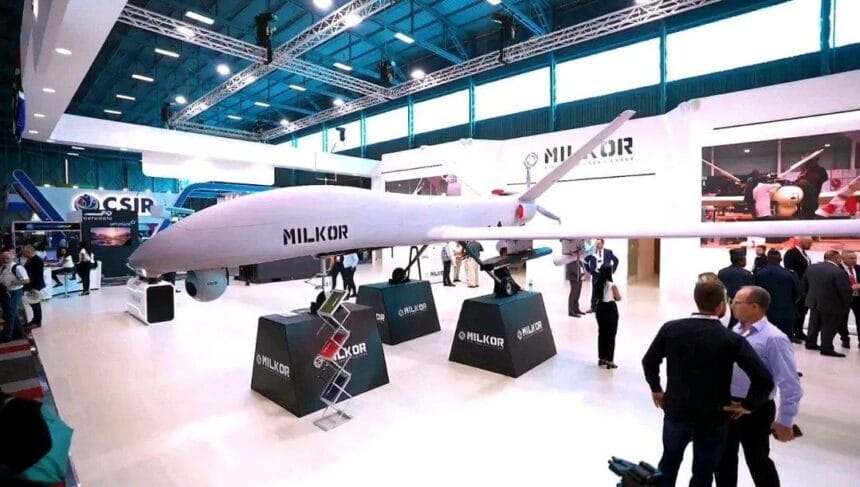
Cape Town: Africa’s rapidly expanding drone industry will confront its most difficult question in Cape Town this week: not whether unmanned aircraft can inspect mines, survey farms, support emergency teams or carry urgent supplies, but whether regulators, operators and technology developers can build the safety systems required to deploy them at commercial scale. The three-day Africa Drone Summit begins at the Taj Hotel on Wednesday, bringing aviation specialists and industry users together as artificial intelligence, autonomous flight and longer-range operations push drones beyond photography and into essential industrial services.
Three-Day Summit Opens In Central Cape Town
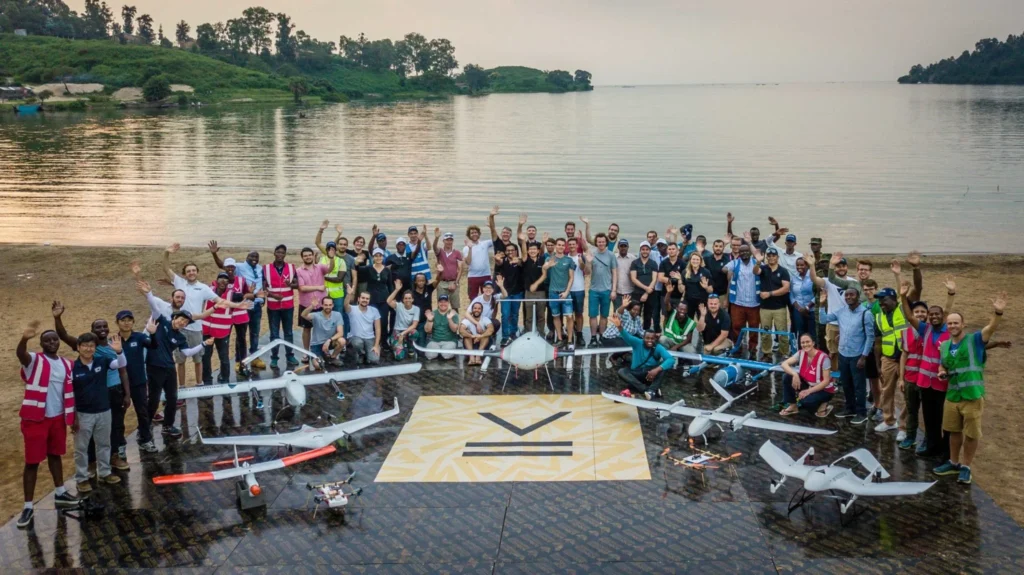
The Africa Drone Summit will run from Wednesday, 24th June, until Friday, 26th June, at the Taj Hotel Cape Town.
Organisers say the conference will bring together drone-industry stakeholders, national and international organisations, public authorities, private companies and organisations using unmanned aircraft in their daily operations.
The event is not aimed only at manufacturers or pilots. Its programme has been designed around the wider systems required before drones can become routine industrial tools, including aviation regulation, operator certification, software, artificial intelligence, safety, data analysis and the commercial demand for unmanned services.
That broader approach matters because a drone does not operate independently of the economy around it. Successful deployment depends on trained pilots, reliable aircraft, communications networks, airspace permissions, insurance, data protection and a customer able to justify the cost of the service.
The Cape Town discussions will therefore examine both what the technology can do and what must change before it can be used more widely.
Summit Details At A Glance
| Event Detail | Confirmed Information |
| Event | Africa Drone Summit |
| Dates | 24th to 26th June |
| Venue | Taj Hotel Cape Town |
| City | Cape Town |
| Main focus | Commercial drones and autonomous aviation |
| Core themes | Regulation, AI, safety, industrial applications and sustainability |
| Industries | Agriculture, mining, logistics, healthcare, security and mapping |
| Organiser | Institute of Corporate Learning |
Artificial Intelligence Is Changing Drone Operations
Artificial intelligence is one of the summit’s central themes because modern drones are increasingly used as data-gathering and decision-support systems rather than remote-controlled cameras.
A drone inspecting electrical infrastructure, for example, can collect thousands of images during a flight. The value lies not only in capturing those images, but in using software to identify cracks, heat differences, vegetation encroachment or equipment showing signs of failure.
In agriculture, similar systems can analyse crop health, water stress and pest damage across large fields. Mining operations can use aerial data to measure stockpiles, inspect hazardous areas and update maps without placing survey teams in unnecessary danger.
Artificial intelligence allows operators to process that information more quickly, but it also introduces new risks. An algorithm may incorrectly classify an object, overlook a defect or produce a recommendation based on incomplete data.
Human oversight remains necessary, particularly where an automated decision could affect safety, healthcare, security or expensive infrastructure.
The summit will examine how AI can support autonomy, decision-making and data analysis without removing accountability from the organisations operating the systems.
Beyond Visual Line Of Sight Is The Industry’s Major Test
Beyond-visual-line-of-sight operations, commonly referred to as BVLOS, allow a drone to travel beyond the distance at which its pilot can maintain direct unaided visual contact.
This capability is essential for many of the applications promoted by the commercial drone industry.
A drone inspecting hundreds of kilometres of pipelines, delivering medical supplies between distant facilities or monitoring a large agricultural area cannot remain within a short visual radius of the operator throughout the mission.
However, longer-range flight introduces greater airspace risk.
The aircraft must detect or avoid other traffic, maintain reliable communications, respond safely when a link fails and remain within approved operational areas. Regulators must also know who is responsible if a drone loses control, enters restricted airspace or causes damage far from the pilot.
South Africa allows specialised operations through its aviation approval system, but ordinary private drone use remains restricted to visual-line-of-sight flying unless the Civil Aviation Authority grants the necessary approval.
The summit’s emphasis on BVLOS reflects the reality that commercial growth will remain limited until operators can conduct longer flights safely and lawfully.
South Africa’s Drone Rules Remain Strict
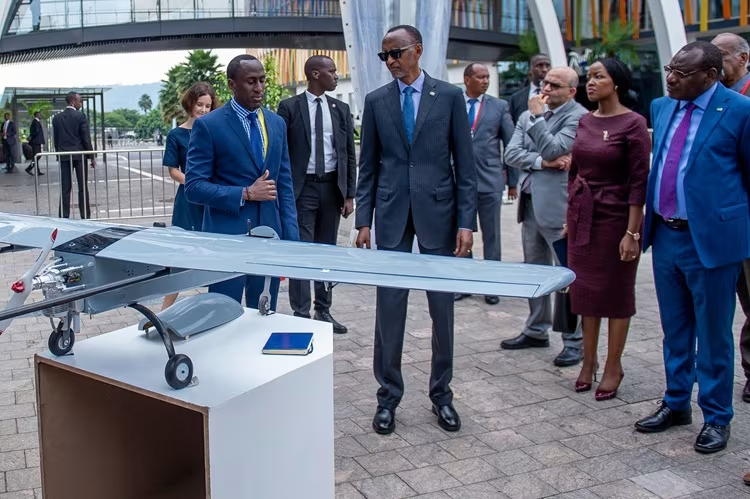
The South African Civil Aviation Authority regulates unmanned aircraft through Part 101 of the Civil Aviation Regulations.
Commercial operators generally require registered aircraft, properly licensed remote pilots and an Unmanned Aircraft Systems Operating Certificate. Additional permissions may be necessary depending on the airspace, altitude, purpose and nature of the operation.
Private users face restrictions intended to protect people, property and conventional aircraft. Drones should remain within visual line of sight, operate during daylight and avoid controlled, restricted or prohibited airspace unless permission has been obtained.
The regulator also restricts ordinary flights near airports, crowds, public roads and property where the owner has not granted permission.
These requirements can appear burdensome to businesses seeking to enter the sector, but aviation rules are built around the principle that an unmanned aircraft shares airspace with helicopters, medical flights, passenger aircraft and other users whose safety cannot depend on informal arrangements.
The industry’s challenge is therefore not simply persuading authorities to remove restrictions. It is developing technology and procedures capable of satisfying aviation safety requirements without making commercial operations prohibitively slow or expensive.
Drone Rules At A Glance
| Operating Issue | General South African Position |
| Aircraft registration | Required for regulated commercial operations |
| Commercial operator approval | Unmanned Aircraft Systems Operating Certificate generally required |
| Pilot qualification | Remote pilot licensing applies to regulated operations |
| Visual contact | Drone should remain within visual line of sight unless specially approved |
| Airport proximity | Flights near aerodromes require regulatory approval |
| Controlled airspace | Approval required |
| Flights over people | Restricted unless authorised |
| Property access | Owner permission generally required |
| Maximum ordinary private height | 150 feet unless otherwise approved |
The exact requirements depend on the type of operation, and companies planning commercial flights must work directly with the aviation regulator rather than relying on general internet guidance.
Drones Are Moving Into Essential Services
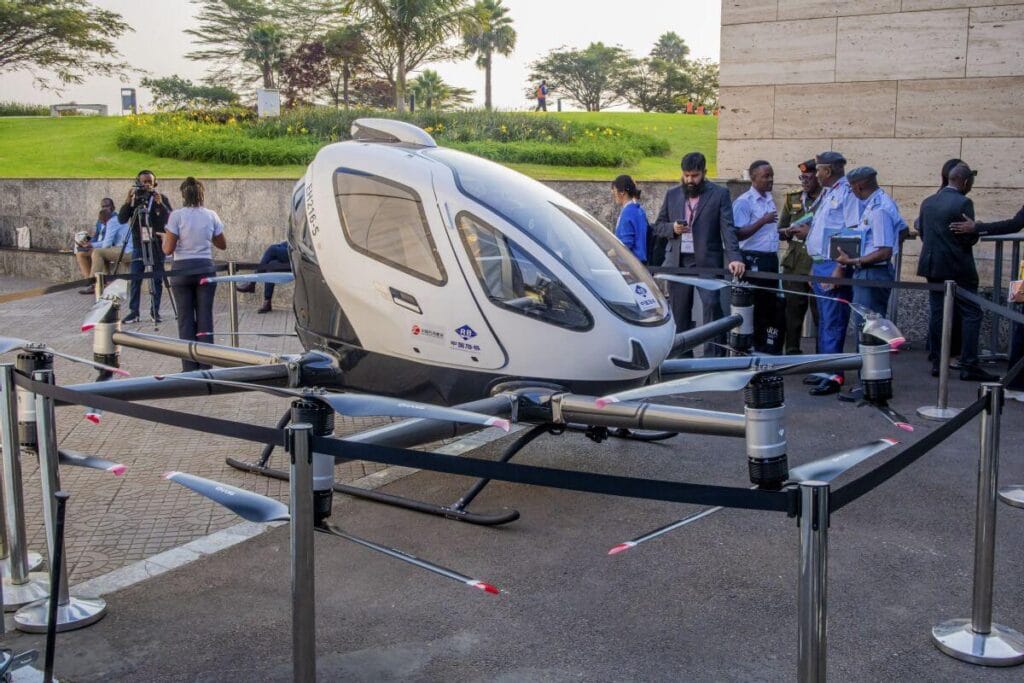
The summit programme identifies agriculture, mining, logistics, healthcare and security as industries where drone technology could produce measurable benefits.
In farming, unmanned aircraft can survey fields more quickly than ground teams and collect information at a level of detail that satellite imagery may not always provide. Producers can use the data to target irrigation, identify diseased plants or apply agricultural inputs more precisely.
Mining companies use drones to measure excavation areas, monitor stockpiles and inspect sites that may expose workers to unstable ground or dangerous machinery.
Construction teams can compare aerial surveys with project plans, while municipalities and utilities can inspect roofs, power lines, water systems and other infrastructure without sending personnel into every location.
Healthcare presents one of the strongest public-interest uses. Drones can potentially move blood products, laboratory samples, medicines and emergency equipment between facilities where roads are slow, damaged or inaccessible.
These services require far more than purchasing an aircraft. Each use case needs specialised payload systems, maintenance procedures, trained staff and a legal framework defining who may operate the service.
Western Cape Has Already Tested Public-Service Potential
The Western Cape Government has previously used unmanned aircraft within its Emergency Medical Services operations after obtaining the required aviation certification.
The province became the first South African government institution authorised to operate drones under a formal remotely piloted aircraft operator certificate.
Its programme demonstrated how drones could assist emergency teams with aerial observation, search support and situational awareness in areas where rescuers may not immediately understand the terrain or hazards.
Cape Town and the wider Western Cape offer a particularly relevant environment for these technologies. The province includes mountains, coastlines, farms, dense urban neighbourhoods and remote rural areas where emergency response, fire monitoring and infrastructure inspection can be difficult.
The same landscape also contains tightly controlled airspace around Cape Town International Airport, military facilities, helipads and emergency aviation routes.
That combination makes the Western Cape a useful testing ground for the benefits and constraints of drone integration.
First Responders Form A Dedicated Summit Theme
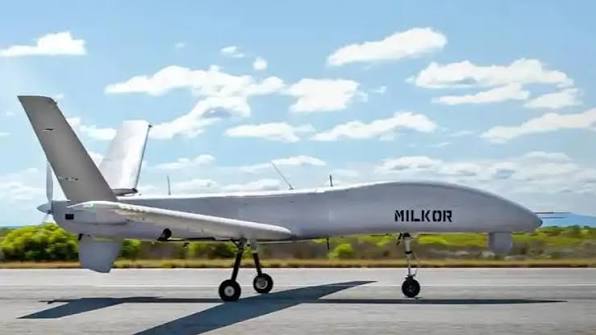
Drones as first responders form one of the official conference topics.
The concept involves deploying an unmanned aircraft before or alongside a conventional emergency team so that responders receive live information before reaching the scene.
A drone dispatched to a fire could show the direction of the flames, nearby buildings and access routes. During a search operation, thermal imaging may help identify a missing person or reveal terrain that ground teams cannot see.
At a serious road crash, aerial footage could help emergency managers understand vehicle positions, traffic disruption and the number of response resources required.
The technology should not be confused with replacing firefighters, paramedics or police officers. A drone cannot provide medical treatment, question witnesses or physically rescue someone trapped in danger.
Its value lies in delivering information quickly, allowing human responders to make better decisions and reduce unnecessary exposure to risk.
Security Applications Require Strong Safeguards
Security will be another prominent subject because drones can patrol industrial sites, monitor perimeters and provide aerial observation during emergencies.
South African mining, infrastructure and private-security companies already form an important commercial market for these services.
However, surveillance technology creates difficult questions about privacy and data retention.
A drone used to protect a mine or warehouse may also record neighbouring homes, workers or people using nearby public spaces. Organisations must determine who may view the footage, how long it is stored and whether facial recognition or other automated analysis is being used.
The increasing ability of drones to fly autonomously makes those safeguards more important. A system capable of following a route and identifying objects can gather large amounts of information without continuous manual direction.
Innovation cannot be separated from rights and accountability. Commercial operators need clear policies explaining what they collect, why they collect it and how individuals can challenge improper use.
Swarm Technology Extends The Possibilities

The summit will also consider swarm technology, in which multiple drones operate together as a coordinated group.
A swarm can cover a larger area than a single aircraft and divide work between several units. Agricultural monitoring, search operations, mapping and disaster assessment are among the possible applications.
During a widespread flood, for example, several drones could inspect different communities simultaneously and send data to a central response team.
The same capability can also be used for military and security purposes, making swarm technology one of the more sensitive areas of unmanned aviation.
Coordination between aircraft requires dependable software and communications. A failure affecting one drone should not cause the entire group to enter unsafe airspace or collide with other aircraft.
Regulators will need to understand not only how an individual drone performs, but how the full system responds when communications fail, weather changes or one aircraft develops a fault.
Speakers Bring Operational And International Experience
The summit’s published speaker list includes representatives from drone analytics, emergency-response technology, training and commercial operations.
Kay Wackwitz, chief executive of Drone Industry Insights, brings international market research and industry analysis. Michael Scheibenreif represents the Malawi African Drone and Data Academy associated with UNICEF, while Amit Ramdath of AutonoSky works on drone systems for first responders and law-enforcement applications.
South African operators include Kim James of UAV Aerial Works, Heico Kühn of UAV and Drone Solutions and Ajay Harduth of RocketDNA.
The programme also lists Jose Ignacio Rexach of EHang, a company associated with autonomous aerial mobility technology.
Their backgrounds reflect the summit’s attempt to connect technology development with practical deployment. The most useful discussions will be those that move beyond promotional claims and explain where projects have worked, what they cost and which regulatory obstacles remain unresolved.
Skills Development Must Match Technology Growth
Commercial expansion will require more trained pilots, engineers, technicians, software specialists and data analysts.
A drone operator may need aviation knowledge, but the wider service also depends on people capable of maintaining batteries, repairing aircraft, managing communications systems and interpreting the data collected.
This creates opportunities for technical training and new businesses, particularly where African companies develop solutions suited to local agriculture, terrain and infrastructure rather than importing complete systems designed for different conditions.
Training standards must remain credible.
A rapidly growing industry can attract providers promising quick qualifications without sufficient practical instruction. Operators entering commercial aviation need to understand weather, airspace, emergency procedures, human factors and aircraft limitations in addition to basic flight controls.
The credibility of the sector will depend partly on whether clients and regulators can trust the people operating the technology.
Cape Town Summit Must Produce More Than Optimism
Drone conferences naturally focus on innovation, but the sector’s progress will ultimately be measured through functioning services rather than demonstrations.
Agricultural operators need evidence that aerial analysis improves yields or reduces costs. Emergency services need proof that drones shorten response times or improve safety. Logistics companies need reliable aircraft capable of completing routes under real weather and airspace conditions.
Regulators, in turn, need safety information showing that longer-range and more autonomous operations can coexist with conventional aviation.
The Africa Drone Summit creates a platform for those groups to compare experience and identify opportunities. Its greater value will come from whether participants build partnerships, regulatory proposals and commercial projects that continue after the conference closes.
Cape Town will host the discussion from Wednesday to Friday. The longer test is whether Africa can build a drone industry that is innovative, locally relevant and safe enough to earn the confidence of aviation authorities and the public.
Q&A
When is the Africa Drone Summit?
The summit takes place from Wednesday, 24th June, until Friday, 26th June.
Where will it be held?
The event will be hosted at the Taj Hotel Cape Town.
What will the summit discuss?
Topics include regulation, artificial intelligence, autonomous drones, safety, sustainability, industry applications and drones used by first responders.
Which industries could use commercial drones?
Applications include agriculture, mining, construction, logistics, healthcare, security, mapping and infrastructure inspection.
What does BVLOS mean?
It means beyond visual line of sight, where a drone operates farther away than the pilot can see directly.
Are commercial drones regulated in South Africa?
Yes. Commercial operations fall under South African Civil Aviation Authority regulations and generally require approved aircraft, licensed pilots and an operating certificate.
Can private users fly anywhere in Cape Town?
No. Restrictions apply near airports, people, public roads, controlled airspace and property where permission has not been granted.
Can drones operate autonomously?
The technology can support autonomous flight, but operations still require approved procedures, safety systems and accountable human oversight.
Who is organising the summit?
The event is presented by the Institute of Corporate Learning.
How can people register?
The official Africa Drone Summit website provides a registration form through which prospective attendees can request or reserve a place.
SAI Search Summary
The Africa Drone Summit will take place at the Taj Hotel Cape Town from 24th to 26th June. Aviation specialists, drone operators, technology companies and industry users will discuss artificial intelligence, autonomous flight, beyond-visual-line-of-sight operations and unmanned aircraft regulation. The programme covers applications in agriculture, mining, logistics, healthcare, security, construction and emergency response. South Africa regulates commercial drones through the Civil Aviation Authority, with aircraft registration, remote-pilot licensing and operator certification forming part of the framework. The summit will examine how Africa can expand commercial drone services while maintaining aviation safety and public trust.
Source: Africa Drone Summit – Institute of Corporate Learning; South African Civil Aviation Authority – Unmanned Aircraft Systems Department; Western Cape Government Health Emergency Medical Services – Provincial Communications; Drone Industry Insights – Kay Wackwitz; Malawi African Drone and Data Academy – Michael Scheibenreif; AutonoSky – Amit Ramdath.