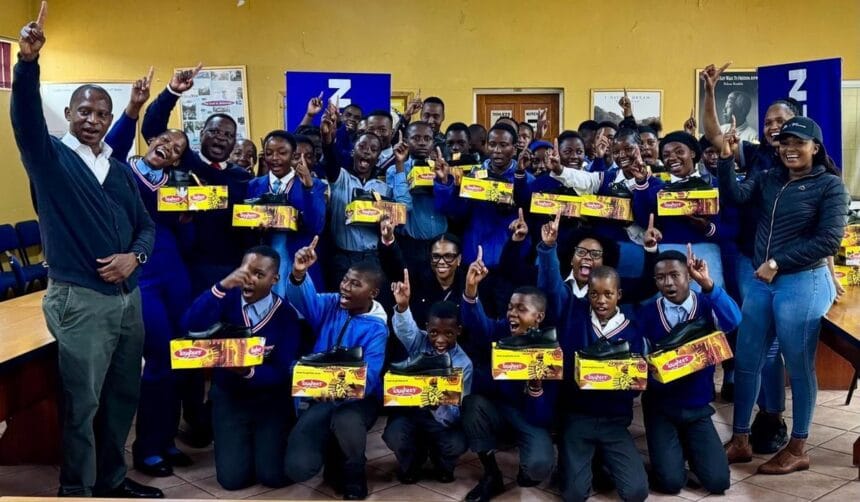
Cape Town: A locally developed crowdfunding platform is giving South African schools and families a structured way to raise money for needs that ordinary education budgets do not always cover, from retaining specialist educators to helping individual learners remain in school. GetGo Fund says it has now hosted 90 education campaigns, combining digital fundraising with school verification, tracked donations and direct payments to institutions in an effort to turn everyday community generosity into accountable support for classrooms and learners.
Ninety Campaigns Built Around Education Needs
GetGo Fund recently marked the presence of 90 campaigns on its platform, describing them as 90 stories and opportunities to help move education forward.
The number reflects campaigns created for schools, educational projects and individual learners rather than 90 schools receiving identical assistance. Each campaign has its own target, purpose and circumstances, allowing donors to choose a cause they understand and want to support.
The platform focuses exclusively on education, separating it from general crowdfunding sites where school appeals compete with medical emergencies, personal projects, business ideas and other causes.
That narrower purpose allows GetGo Fund to concentrate on the administrative realities surrounding education donations, including school verification, payment controls and the issuing of tax certificates.
The campaigns can cover anything from learner fees and bursaries to educational materials, staff retention, extracurricular support and facilities needed by schools.
GetGo Fund’s central argument is that many South Africans already help educate children outside their immediate households, but much of that support takes place informally. The platform is intended to give those contributions a clearer structure and allow donors to see the specific need their money supports.
How The Platform Works
Schools, parents or authorised campaign organisers submit an education need through the platform.
GetGo Fund says schools are vetted before being onboarded, reducing the risk of donors sending money to an unverified institution or campaign.
Once approved, the campaign receives an online page explaining the educational need, fundraising target and intended beneficiary. Supporters can then donate digitally and monitor the campaign’s progress.
Funds are disbursed directly to the relevant school rather than being paid into a learner’s or organiser’s personal bank account.
This distinction strengthens accountability because the money remains connected to the institution responsible for delivering the education or project.
Donors can also download Section 18A tax certificates where the contribution qualifies. These certificates allow individuals or companies to claim eligible donations as deductions when completing South African tax returns, subject to the applicable tax rules.
GetGo Fund At A Glance
| Platform Detail | Confirmed Position |
| Main purpose | Crowdfunding for schools and learners |
| Geographic reach | South African education campaigns |
| Campaign milestone | 90 campaigns reported by GetGo Fund |
| School onboarding | Schools are vetted |
| Payment destination | Funds are paid directly to schools |
| Donation monitoring | Contributions and campaign progress are tracked |
| Tax benefit | Section 18A certificates available for qualifying donations |
| Chief executive | Donna Shefer |
| Platform structure | Registered South African non-profit company |
Cape Town Campaign Supports Masiphumelele High School
One of the platform’s current Cape Town campaigns is raising money to help Masiphumelele High School retain a dedicated chess educator.
The no-fee school uses the programme for more than competitive chess. GetGo Fund chief executive Donna Shefer has described the teacher’s role as combining education, mentorship and a safe supervised activity for learners after school.
Chess can encourage planning, concentration and problem-solving, but the more immediate community value lies in maintaining a structured space where learners can remain engaged under adult supervision.
The campaign is raising support to retain the teacher through March next year.
GetGo Fund reported that the school had reached approximately 18% of its campaign goal when Shefer highlighted the appeal.
The campaign illustrates the type of need that can fall between conventional budget categories. A school may be able to pay its permanent teaching staff and basic operating costs while still struggling to preserve enrichment programmes that provide educational and social value.
Without additional funding, these programmes can disappear even when teachers and school leaders believe they are helping learners.
Individual Learners Can Also Receive Support
The platform is not limited to school-wide projects.
Another Cape Town-linked campaign supports Grace, a nine-year-old learner who is continuing her education at Capella House.
GetGo Fund says donations for her campaign are paid directly to the school and that the institution was vetted before the appeal was listed.
This protects the learner and donor by keeping the transaction connected to the educational institution rather than placing the money under the control of an unknown individual.
Other campaigns can assist learners whose families cannot meet fees, transport, stationery or related costs.
The platform’s broader aim is to prevent financial hardship from interrupting a child’s education when a community of smaller donors may be willing to help.
Such campaigns do not replace the responsibility of government to fund basic education or the obligation of schools to follow lawful fee and exemption processes. They provide an additional route for needs that remain unresolved after ordinary resources have been exhausted.
Why Schools Turn To Crowdfunding
South African schools operate under sharply different financial conditions.
No-fee schools depend heavily on government funding and cannot collect compulsory school fees from families, while fee-charging public schools rely partly on contributions approved through their governing bodies.
In both systems, schools can face expenses that exceed available allocations.
Buildings require repairs, technology becomes outdated, sports equipment wears out and learners arrive needing uniforms, transport, food or specialist support.
Schools may also want to retain reading coaches, therapists, facilitators or extracurricular instructors whose posts are not permanently funded by education departments.
Traditional fundraising often involves food sales, raffles, concerts and appeals to parents. These methods remain valuable but place pressure on communities that may already have limited disposable income.
Digital crowdfunding allows a school to reach former learners, local businesses, professional networks and donors living outside the immediate community.
A compelling campaign can therefore draw support from people who would never see a poster at the school gate or attend a fundraising event.
Transparency Determines Whether Donors Trust The System
Crowdfunding depends heavily on confidence.
A donor needs to know that the school exists, the organiser is authorised and the money will be used for the stated educational purpose.
GetGo Fund says it addresses this by vetting schools, tracking donations and paying funds directly to institutions.
Its terms also state that campaign proceeds can be disbursed even when the full target has not been reached, allowing schools to benefit from the amount raised rather than losing every contribution because a campaign fell short.
That approach is useful for education projects where partial funding may still purchase books, equipment or a portion of the service required.
However, campaign organisers must explain clearly what can be achieved if only part of the target is raised.
Donors should also read the individual campaign information, confirm whether a Section 18A certificate applies and understand any platform or payment-processing costs before contributing.
Transparency cannot depend only on technology. Schools must provide accurate needs, realistic budgets and updates showing how support has been used.
Fitness Campaign Invites Capetonians To Help
GetGo Fund has also launched an initiative called #GetGoTheDistance, inviting people to connect personal fitness challenges with education fundraising.
Participants can choose an existing campaign, pledge a run, walk, gym target or other movement challenge and ask friends, relatives and colleagues to contribute.
The initiative is not restricted to professional athletes or marathon runners. A five-kilometre run, weekly walking target or personal fitness goal can become the basis of a fundraising appeal.
Shefer said many South Africans want to assist learners and schools but do not always know where to begin or whether a small contribution will have a visible effect.
The campaign gives supporters a simple entry point by linking something they are already doing to a verified education need.
It also turns individual donors into campaign ambassadors. Someone unable to make a large contribution can still help by sharing the appeal with a wider network.
Companies Can Support Specific Outcomes
The platform can also help companies direct corporate social investment funding towards clearly defined educational outcomes.
A business may prefer to fund computer equipment, a teaching programme, bursaries or a specific school project rather than make a general donation without visible reporting.
Campaign pages allow companies to see the fundraising target and understand the purpose before contributing.
Section 18A certificates can also make formal educational giving more accessible to businesses that require proper documentation for financial and governance purposes.
Smaller companies may benefit particularly because they do not always have dedicated corporate social investment teams capable of identifying, assessing and monitoring school projects.
The platform does not remove the need for a company to conduct its own due diligence. It provides an additional layer of structure that can make smaller education campaigns easier to discover and support.
Platform Still Faces The Challenge Of Reaching Donors
Hosting 90 campaigns does not guarantee that every one will reach its target.
Crowdfunding campaigns succeed only when enough people see, trust and share them.
GetGo Fund has acknowledged that it needs more individual donors and volunteers willing to act as connectors between campaigns and potential supporters.
The organisation has called for education champions who can share appeals within personal and professional networks.
It is also seeking technical and fundraising support as it attempts to grow the platform, including volunteers who can assist with donor acquisition and mobile development.
These requests show that the project itself remains in a growth phase.
Its future impact will depend on whether it can attract a sufficiently large donor community while maintaining verification and administrative standards as more campaigns join.
Rapid growth without proper oversight could weaken trust, while strong controls without enough donors would leave many campaigns struggling to reach their goals.
Community Funding Cannot Replace The State
Crowdfunding can respond quickly to a particular learner or school, but it cannot solve structural inequality across South African education.
Schools in wealthier communities generally have larger parent networks, stronger alumni associations and greater access to corporate donors. Those advantages can carry into digital fundraising.
Poorer schools may have more urgent needs but fewer people able to donate or promote campaigns.
Platforms must therefore avoid creating a system in which schools with the best photographs, writing or social networks receive the most support while less visible communities remain behind.
GetGo Fund’s role should be understood as complementary. It can mobilise additional support and help specific campaigns, but government remains responsible for safe infrastructure, teachers, learning materials and equitable access to public education.
The value of crowdfunding lies in closing immediate gaps while those wider obligations continue.
From Informal Help To Measurable Support
GetGo Fund emerged from a familiar South African practice: households helping to pay for the education of someone else’s child.
Shefer has explained that this support often happens quietly through school fees, uniforms, transport or learning materials without being recognised as formal philanthropy.
The platform attempts to turn that goodwill into a process that is measurable, documented and connected directly to schools.
Its milestone of 90 campaigns suggests growing demand for such a service.
The greater test will be how many campaigns reach meaningful outcomes, how clearly schools report the use of donations and whether donors remain engaged beyond one appeal.
For learners and schools facing urgent needs, the platform provides another door through which support may arrive.
For donors, it offers a way to move from concern about education to a specific contribution whose destination can be identified and tracked.
Q&A
What is GetGo Fund?
GetGo Fund is an education crowdfunding platform that helps South African schools, families and learners raise money for verified educational needs.
How many campaigns has it hosted?
GetGo Fund says it has reached a milestone of 90 campaigns.
Is every campaign for an entire school?
No. Campaigns can support school projects, teaching programmes, bursaries or individual learners.
How are schools checked?
The platform says schools are vetted before being onboarded and allowed to raise funds.
Where does the donated money go?
Funds are paid directly to the school or educational institution rather than to a personal bank account.
Do donors receive tax certificates?
Qualifying donors can download Section 18A certificates through the platform.
Which Cape Town schools are involved?
Current examples include a campaign to retain a chess educator at Masiphumelele High School and support for a learner attending Capella House.
What is #GetGoTheDistance?
It is an initiative encouraging people to connect a run, walk or personal fitness challenge with an education fundraising campaign.
Does crowdfunding replace government education funding?
No. It provides supplementary support for specific needs, while government remains responsible for adequately funding public education.
How can people support a campaign?
They can choose a campaign through GetGo Fund, donate directly or share the appeal with friends, relatives and professional networks.
SAI Search Summary
GetGo Fund says its South African education crowdfunding platform has now hosted 90 campaigns supporting schools, projects and individual learners. The platform vets schools, tracks donations, pays funds directly to educational institutions and provides Section 18A tax certificates for qualifying contributions. Cape Town campaigns include an appeal to retain a chess educator at Masiphumelele High School and support for a learner attending Capella House. GetGo Fund has also launched #GetGoTheDistance, encouraging people to turn runs, walks and fitness goals into fundraising campaigns for education.
Source: SA Good News – Staff Reporter; GetGo Fund – Chief Executive Donna Shefer and GetGo Fund Communications; TygerBurger – Staff Reporter; Lifestyle & Tech – LnT Desk; ForGood – GetGo Education Crowdfunding profile.