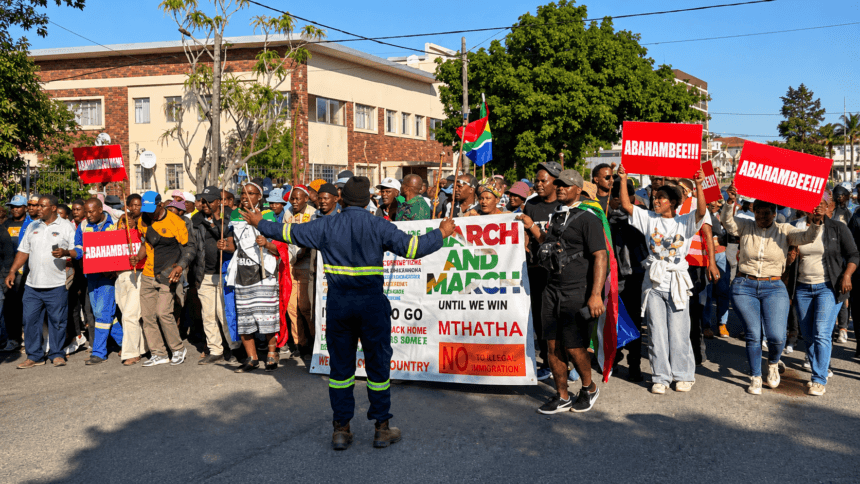
Parklands: The Parklands protest against undocumented migration tested Cape Town’s public-order response on Saturday when about 100 demonstrators marched along Main Road under heavy police and metro police watch, after officers delayed the march over sticks and knobkieries before allowing it to continue peacefully as City and provincial leaders warned against violence ahead of the 30 June deadline.
A Parklands protest against undocumented migration remained peaceful on Saturday, but the heavy police presence, the early dispute over sticks and knobkieries, and the wider official warnings around 30 June show that Cape Town is now managing a sensitive public-safety moment rather than a routine street march.
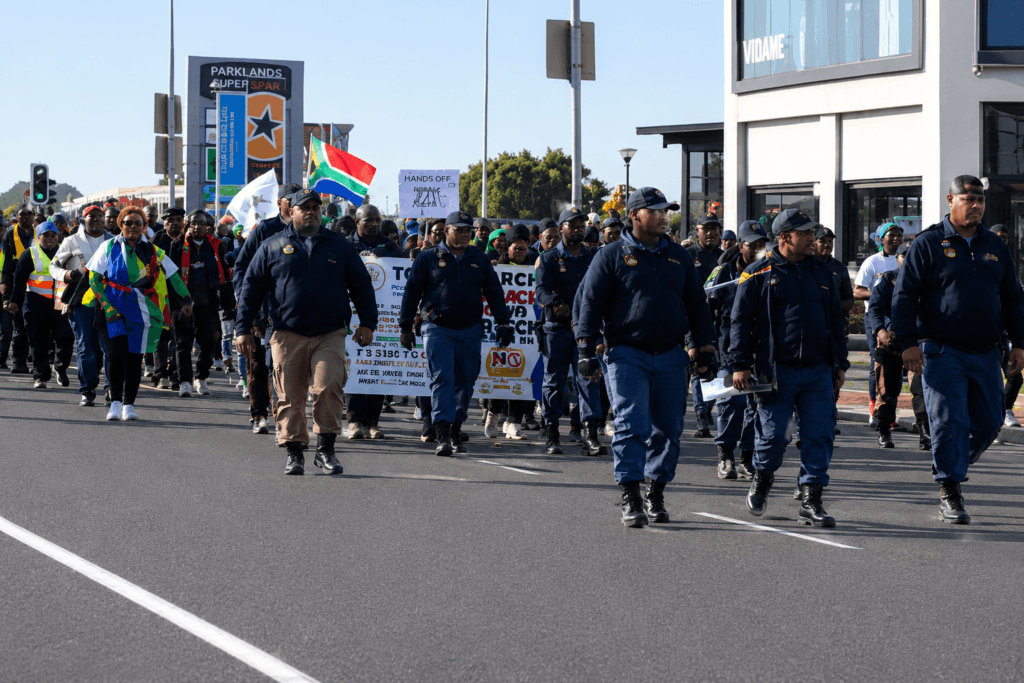
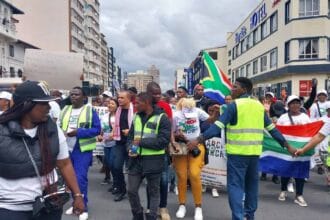
The demonstration, organised by March and March, drew about 100 protesters to Main Road in Parklands. Demonstrators called for stronger action against undocumented foreign nationals and repeated demands linked to the informal 30 June deadline that anti-immigration groups have promoted across South Africa.
Police said the march remained lawful and under control. Public Order Police and metro police were deployed in large numbers to monitor the gathering, manage the route and prevent any escalation. According to IOL, police spokesperson Constable Ndakhe Gwala said protesters were verbally warned to put away weapons, and that they complied. He said the march was peaceful and that no injuries were reported.
EWN reported that the start of the march was delayed after Public Order Police raised concern about protesters carrying knobkieries and sticks. That detail matters because it shows how quickly a lawful gathering can become a public-order risk when symbolic or traditional weapons appear in a tense environment.
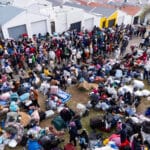
The Parklands march took place against a much wider backdrop of fear, anger and official concern over anti-migration protests planned for 30 June. In Cape Town, that tension is already visible in two ways: protesters are taking to the streets in neighbourhoods such as Parklands, while hundreds of Zimbabwean nationals have gathered outside the Zimbabwean Consulate seeking repatriation help before the deadline.
Mayor Geordin Hill-Lewis has urged South Africans not to turn frustration over unemployment, crime and weak border enforcement into hatred or violence against foreign nationals. In remarks reported by News24 and EWN, Hill-Lewis said immigration law must be enforced by the state, not vigilantes, and appealed for calm ahead of the planned protests.
His warning is important for Cape Town because the City has to protect three things at the same time: the right to lawful protest, the safety of foreign nationals, and public order in neighbourhoods where emotions are already high. Parklands shows how difficult that balance can become when local grievances, national politics and fear collide on one road.
Premier Alan Winde has also warned that anti-foreigner protests could spark wider instability if tensions are not contained. The Western Cape Government said the province had activated a coordinated response through a Joint Operations Centre led by the Provincial Disaster Management Centre. That structure includes SAPS, the SANDF, Home Affairs, the United Nations High Commissioner for Refugees and municipalities.
The province said its plan focuses on visible policing in hotspots, stronger intelligence networks, proactive communication, rapid mediation and engagement. It also confirmed that SAPS is monitoring social media platforms for signs of incitement or planned unrest.
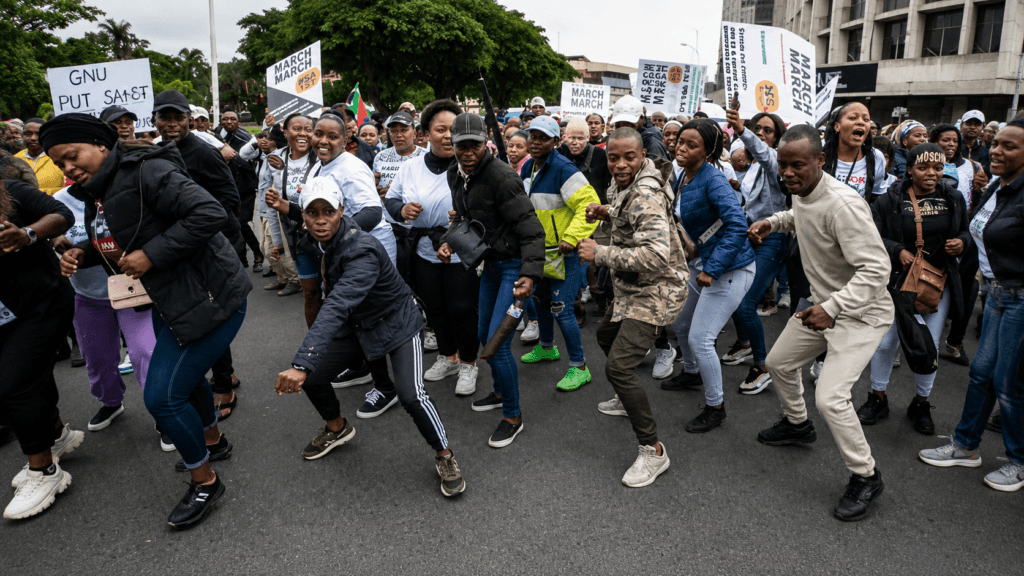
Those preparations help explain the policing posture in Parklands. Officers did not simply stand by while the march moved through the area. They intervened at the start, dealt with the weapons concern, and then allowed the lawful protest to continue once protesters complied.
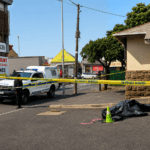
The protest also exposed the local roots of the tension. EWN reported that protesters linked their action to an earlier violent incident in April, when alleged Nigerian gangsters reportedly shot at each other in broad daylight. That local grievance appears to have fed into a broader national demand for action against undocumented foreign nationals.
But officials have repeatedly warned that crime concerns cannot justify vigilantism or attacks on foreign nationals. Acting Police Minister Firoz Cachalia has criticised organisers of planned disruptive protests, warning that those who incite violence could face criminal prosecution and civil liability for injury or damage to property.
The Parklands march therefore sits at the centre of a difficult public debate. Many South Africans want immigration laws enforced and communities protected from crime. At the same time, the Constitution does not allow communities or protest groups to threaten, intimidate, assault or expel people themselves.
Cape Town has seen this pattern before, where national pressure lands in local streets. The danger is that fear spreads faster than official information. For foreign nationals, the 30 June deadline has already triggered anxiety, consulate queues and repatriation efforts. For communities, protest organisers are using crime, unemployment and weak enforcement as rallying points.
Saturday’s march ended without injury, which matters. But it should not be read as proof that the risk has passed. The presence of Public Order Police and metro police, the delay over sticks and knobkieries, and the provincial security planning all show that authorities are treating the coming days with caution.
The City of Cape Town has not yet issued a fresh Parklands-specific public statement in the initial reports, but Hill-Lewis’ broader warning against hate and vigilantism now forms the City’s clearest political position before 30 June. The Western Cape Government’s preparedness plan adds the provincial response, while SAPS remains the lead authority on public-order policing.
For Capetonians, the message from Saturday is clear. Protest may be lawful, but intimidation is not. Immigration enforcement belongs to the state, not to street groups. And with 30 June approaching, Cape Town’s police and civic leaders will be under pressure to prevent a political deadline from becoming a public-safety crisis.
Q&A
What happened in Parklands?
About 100 protesters marched along Main Road in Parklands against undocumented migration.
Was the Parklands protest peaceful?
Yes. Police said the protest was lawful and peaceful, with no injuries reported.
Why was the march delayed?
EWN reported that Public Order Police delayed the start after protesters carried sticks and knobkieries. Police warned them to put the weapons away, and they complied.
What did police say?
Police spokesperson Constable Ndakhe Gwala said the protest was lawful, protesters complied with the weapons warning, and no injuries were reported.
What has Mayor Geordin Hill-Lewis said about the wider issue?
Hill-Lewis has urged South Africans not to turn frustration into hatred or violence against foreign nationals, saying immigration law must be enforced by the state.
What has Premier Alan Winde said?
Winde has warned that anti-foreigner protests could spark wider instability if tensions are not contained. The Western Cape Government says it has activated coordinated planning through a Joint Operations Centre.
Why does this matter now?
The protest took place days before the 30 June deadline promoted by anti-immigration groups, while foreign nationals in Cape Town are already seeking repatriation because of safety fears.
SAI Search Summary
The Parklands protest against undocumented migration remained peaceful under heavy police and metro police monitoring. About 100 demonstrators marched along Main Road after Public Order Police delayed the start over sticks and knobkieries. Police said protesters complied with a warning to put weapons away and that no injuries were reported. The march came as Mayor Geordin Hill-Lewis, Premier Alan Winde and police officials warned against violence, intimidation and social unrest before the 30 June anti-migration deadline.
Source: IOL, Mthobisi Nozulela; Eyewitness News, Quinton Mtyala; Western Cape Government, Office of the Premier; News24, Carol Paton; Eyewitness News, Staff Reporter.