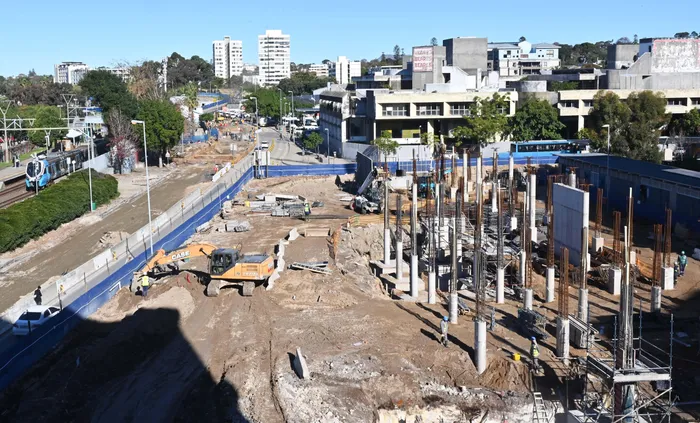
Claremont: Construction of Cape Town’s new MyCiTi station has reached a major milestone, with all 583 concrete foundation piles installed as the City builds what is expected to become one of the metropole’s most connected public transport hubs.
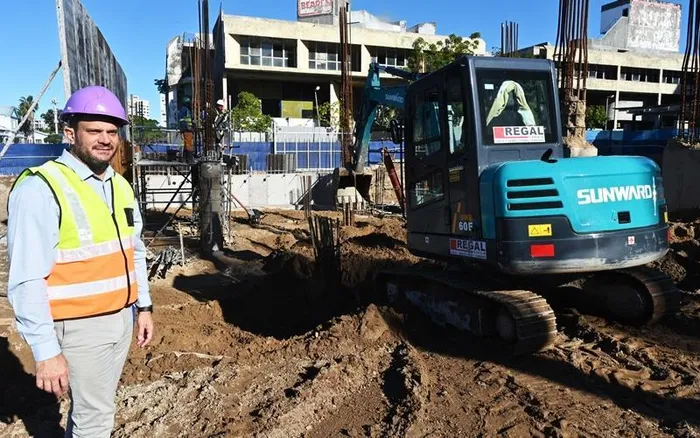
The new Claremont MyCiTi station is beginning to take shape above ground after construction teams completed one of the most difficult stages of the project. Eight months after the site was handed over, all 583 reinforced concrete piles needed to support the station and its future overhead development have been installed.
The project now moves into a more visible phase, with teams casting the concrete pile caps, lift shafts, stairwells and ground-floor columns. If construction remains on schedule, the station is expected to become operational by March 2028 as part of the wider MyCiTi Phase 2A expansion.
The Phase 2A corridor, also known as the Metro-South East Corridor, is being developed to improve public transport connections between Khayelitsha, Mitchells Plain, Wynberg and Claremont. For commuters travelling between the metro south-east and the southern suburbs, the station is intended to create a more direct and organised interchange between different transport services.
Five Public Transport Services in One Precinct
The Claremont facility is designed as more than a standalone MyCiTi station. Once completed, MyCiTi, Golden Arrow Bus Services, the University of Cape Town Shuttle, passenger rail and minibus taxis will all operate within approximately 120 metres of one another.
The station is being built along Claremont Boulevard between Hawthorne Road and Newry Street on the site of the former bus terminus. The old facility has been demolished, allowing the City to redesign the precinct around easier pedestrian movement and shorter transfer distances.
Claremont railway station and the minibus-taxi facility in Ralph Street are both within walking distance of the construction site. Golden Arrow buses will use a dedicated lane along Central Street, while the UCT Shuttle will operate nearby at the Stadium-on-Main entrance.
City Mayoral Committee Member for Urban Mobility Rob Quintas said the precinct was set to become one of Cape Town’s most connected and integrated transport hubs. He said the project would allow commuters to move more easily between bus, rail, taxi and university transport services without having to cross a widely dispersed interchange.
Why Claremont Matters to Cape Town’s Transport Network
Claremont is already one of the busiest commercial and public transport centres in Cape Town’s southern suburbs. Thousands of commuters move through the area each day to reach schools, universities, offices, healthcare facilities, shops and surrounding residential suburbs.
The area also serves as an important interchange between rail, buses and minibus taxis. However, the different transport modes have historically operated from separate points, forcing commuters to walk between disconnected facilities and busy roads.
The new station is intended to address that problem by placing the different services within one organised transport precinct. For commuters from Khayelitsha and Mitchells Plain, this could create a more direct connection to employment, education and services in Claremont and Wynberg.
Cape Town’s metro south-east has long been affected by lengthy travel times, high transport costs and fragmented services. The Phase 2A network will not remove every weakness in the system, but it could make transfers easier and reduce some of the uncertainty commuters face when changing from one service to another.
What the New Station Will Include
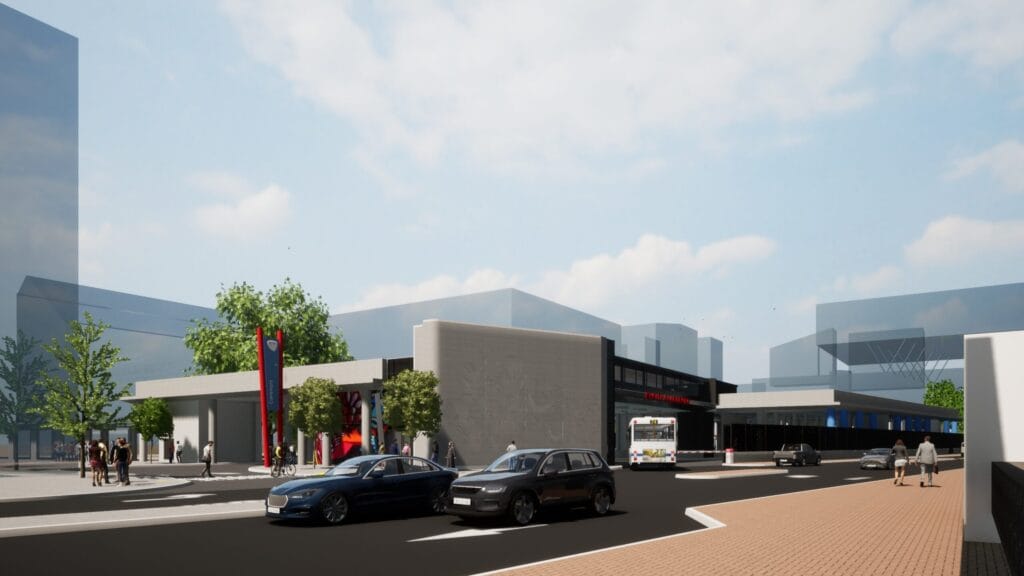
The enclosed MyCiTi facility will contain four bus platforms with electronic access gates, a ticketing area, administrative offices and universally accessible pedestrian routes. Bicycle lock-up facilities will also be included for commuters who combine cycling with public transport.
Existing public toilets will be upgraded, while the station will include lifts, stairways and walkways designed for people with reduced mobility. A smaller holding facility beneath Stadium-on-Main will accommodate up to five buses during off-peak periods and allow for driver shift changes.
The surrounding precinct will receive new landscaping and trees, although mature trees will be retained where construction allows. Safer pedestrian routes are also planned between the MyCiTi station, railway station, taxi rank and nearby bus stops.
Controlled access gates, lighting and closed-circuit television systems are expected to support security inside the station. However, the overall success of the development will also depend on safe and well-maintained pedestrian links between the different transport services.
Station Designed for Development Above It
The Claremont site occupies valuable City-owned land in the centre of a busy commercial district. Instead of constructing a low-rise station that permanently uses the entire property, the City designed the foundations and overhead deck to carry a possible future mixed-use development.
Quintas said development above the station could eventually rise to approximately ten storeys, subject to future planning and development approval. The additional space could be used for residential, commercial or other purposes.
The design follows the City’s transit-oriented development strategy, which encourages homes, offices, shops and public facilities to be located close to reliable public transport. The aim is to reduce dependence on private vehicles while using well-located public land more effectively.
By building upwards, the City hopes the Claremont site can support both public transport and future development. This would allow the precinct to generate wider economic and social value rather than functioning only as a bus station.
Energy and Water-Saving Features
The City says environmental measures have been included in the station design. Solar photovoltaic panels and lithium battery systems will support electricity generation and provide backup power during interruptions.
Energy-efficient LED lighting will be managed through occupancy sensors and systems that respond to available daylight. Water-saving sanitary fittings will reduce consumption, while indigenous and water-wise plants will be used in the landscaped areas.
Construction teams are also separating waste before it is sent to accredited recycling facilities. Excavated material suitable for reuse is being retained for backfilling, while surplus material is being transported to sites where it can be used in other projects.
Existing shelters will be refurbished and incorporated into the new transport facility. Paving and operational closed-circuit television equipment removed from the old site will be reused at other municipal facilities.
Stormwater Work Becomes the Next Challenge
The next major stage will involve the installation of stormwater pipes along Claremont Boulevard. This work will take place several metres underground beside a heavily used road and among existing municipal services.
Quintas said construction had made substantial progress after the completion of the 583 foundation piles. He added that teams were now casting the lifts, stairwells and structural columns that would support the ground floor and future deck.
The underground stormwater installation will require temporary traffic arrangements while parts of the road remain operational. Road users should expect delays and should continue following construction signs and traffic-control measures around the precinct.
Claremont Boulevard Restrictions Continue
A temporary partial closure remains in place along Claremont Boulevard between Stanhope Road and Hawthorne Road. The restriction began on the 23rd of March and is expected to remain in place until the end of February next year.
The closure allows contractors to complete underground services, road changes and transport infrastructure linked to Phase 2A. The City has asked Capetonians travelling through Claremont to allow additional time and use alternative routes where possible.
Quintas said the project was also improving nearby infrastructure, including sections of Claremont Boulevard, Stanhope Bridge, Imam Haron Road and Palmyra Road.
The longer-term benefits of the station must therefore be weighed against the disruption currently affecting businesses, pedestrians and road users. The City has thanked the public for its patience while the construction continues.
Connections to Khayelitsha and Mitchells Plain
The Claremont station forms part of a much larger network of bus lanes, depots, staging facilities and interchange upgrades across Cape Town.
A new public transport interchange is also being developed in Makhaza, Khayelitsha, where MyCiTi and Golden Arrow buses will operate from the same facility. The City currently expects the Makhaza interchange to become operational during December.
A large staging facility is being developed off Wetton Road near Wynberg. It will accommodate approximately 145 MyCiTi buses and will have capacity for up to 200 vehicles.
The Claremont station will become one of the main destinations for routes travelling from Khayelitsha and Mitchells Plain. Its success will therefore depend on the completion of the wider corridor and the availability of buses, drivers, fare systems and supporting infrastructure.
Public Art Will Reflect Claremont’s Identity
The City has invited artists and creative practitioners to propose artwork for the new station. Because of its size and expected commuter volumes, Claremont has been identified as one of the major public art sites within the Phase 2A programme.
Possible locations include internal walls, exterior spaces, the curved glass façade and areas suitable for sculpture. The artwork is expected to reflect the history, communities and natural environment surrounding Claremont.
The public art programme is intended to make the station more than a functional transport structure. Similar projects at existing MyCiTi stations have been used to give local identity to public spaces used by thousands of commuters.
What the Station Could Change for Commuters
The central promise of the new station is easier movement between transport modes. A commuter arriving from Khayelitsha or Mitchells Plain by MyCiTi could transfer to a train, Golden Arrow bus, minibus taxi or UCT Shuttle without travelling across a large and disconnected area.
Rail passengers would also be able to transfer to buses serving destinations beyond the railway network. Students travelling towards the University of Cape Town would have direct access to the UCT Shuttle within the same precinct.
Bicycle facilities could support commuters who cycle part of their journey, while improved pedestrian routes may make transfers safer and more convenient.
The station building alone cannot guarantee reliable public transport. The connecting services must also be affordable, safe and punctual. However, the project creates the physical infrastructure needed for a more integrated transport network.
March 2028 Remains the Target
The City expects the Claremont station to open by March 2028, provided construction continues according to schedule. The date remains a target and may be affected by underground services, weather, contractor performance or changes to the wider Phase 2A programme.
The station must also be completed in step with the connecting routes, vehicle fleet and operating systems required for the service to function.
For now, the completion of all 583 foundation piles marks a major turning point. The work is becoming increasingly visible above ground as the station begins to rise in the centre of Claremont.
For thousands of Capetonians who already move through the precinct every day, the project offers the prospect of a transport hub where buses, trains, taxis, bicycles and university services can connect within a short walking distance.
Official Contacts
MyCiTi Transport Information Centre: 0800 65 64 63
Email: transport.info@capetown.gov.za
The information centre operates 24 hours a day for general transport enquiries.
Official Links to Add Within the Article
Claremont MyCiTi station construction update
Claremont Bus Facility project page
MyCiTi Phase 2A overview
Claremont Boulevard road-closure notice
MyCiTi routes and timetables
City of Cape Town transport service-request portal
Q&A
When will the Claremont MyCiTi station open?
The City expects the station to become operational by March 2028 if construction remains on schedule.
How far has construction progressed?
All 583 concrete foundation piles have been installed. Teams are now working on pile caps, lifts, stairwells and ground-floor columns.
Which communities will the Phase 2A route connect?
The corridor will connect Khayelitsha and Mitchells Plain with Wynberg and Claremont.
Which transport services will operate nearby?
MyCiTi, Golden Arrow, the UCT Shuttle, passenger rail and minibus taxis will operate within approximately 120 metres.
Will the station be accessible?
Yes. The design includes lifts, universally accessible pedestrian routes and facilities for commuters with reduced mobility.
Will there be bicycle parking?
Yes. Secure bicycle lock-up facilities form part of the station design.
Why were 583 foundation piles required?
The piles will support the station, the overhead deck and possible future development above the facility.
How tall could the future development be?
The City says development above the station could rise to approximately ten storeys, subject to future approval.
Are roads currently affected?
Yes. Part of Claremont Boulevard between Stanhope Road and Hawthorne Road remains partially closed until the end of February next year.
SAI Search Summary
Construction of the new Claremont MyCiTi station has reached a major milestone with all 583 concrete foundation piles installed. The station forms part of Phase 2A, which will connect Khayelitsha and Mitchells Plain with Wynberg and Claremont. Once complete, commuters will have access to MyCiTi, Golden Arrow, the UCT Shuttle, passenger rail and minibus taxis within approximately 120 metres. The facility will include four enclosed platforms, universal access, bicycle storage, solar power and foundations capable of supporting future mixed-use development. The City expects the station to become operational by March 2028.
Source: City of Cape Town Urban Mobility Directorate; MyCiTi; statement by Mayoral Committee Member for Urban Mobility Rob Quintas; Cape Argus / IOL