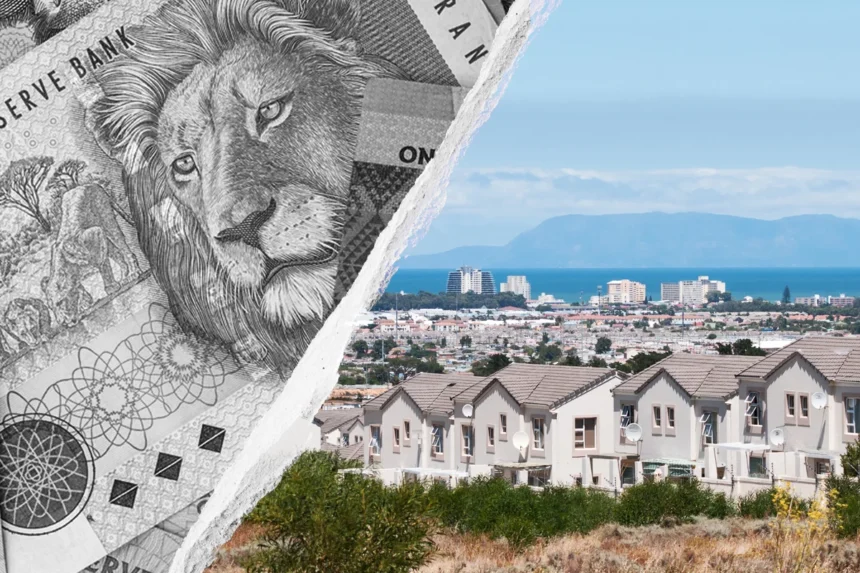
For years, Cape Town has carried the reputation of being South Africa’s most desirable property market. From mountain-facing apartments in the city bowl to family homes in the northern suburbs and coastal properties stretching along False Bay, demand for homes in the Mother City has remained remarkably resilient through economic uncertainty, interest rate cycles, and political turbulence. But as prices continue to climb well ahead of national trends, a growing number of working Capetonians are beginning to ask a difficult question.
Who can still afford to buy here?
Fresh residential property data suggests Cape Town’s housing market is not only outperforming the rest of the country, but increasingly pulling away from it. According to new figures released by Statistics South Africa, residential property prices in the City of Cape Town rose by ten percent year-on-year in October twenty twenty five. That places the city significantly above the national residential property inflation rate of six point eight percent and comfortably ahead of every other major metropolitan market in the country.
Across metropolitan South Africa as a whole, annual residential inflation came in at six point nine percent, with Cape Town alone emerging as the single biggest contributor to that growth. The Western Cape also delivered exceptional performance, recording annual property growth of nine point one percent, making the province one of the strongest contributors to national residential inflation.
For property owners, investors, and estate agencies, those numbers point to confidence, resilience, and long-term value. But for many working residents hoping to enter the market for the first time, the same figures tell a very different story. They point to rising affordability pressure, shrinking opportunity, and a growing sense that home ownership in Cape Town is becoming increasingly difficult to achieve.
Industry analysts say one of the biggest drivers behind Cape Town’s continued growth remains semigration. Over the past decade, thousands of families from Gauteng, KwaZulu-Natal, and other provinces have relocated to the Western Cape in search of cleaner governance, stronger municipal services, improved schooling, better infrastructure, and the lifestyle appeal that continues to attract buyers to the region.
That demand has created sustained upward pressure across almost every segment of the market. Suburbs once considered affordable alternatives are now experiencing their own pricing surge as buyers move further away from traditional premium zones in search of value. Areas such as Durbanville, Somerset West, Gordon’s Bay, Kraaifontein, Blouberg, and parts of the West Coast corridor have all benefited from this spillover demand.
At the same time, supply remains under pressure. Developers continue to face lengthy planning approval processes, rising construction costs, infrastructure limitations, and ongoing land availability challenges. Affordable housing delivery also remains significantly behind population growth, placing additional strain on lower and middle-income buyers trying to enter the market.
And demand is no longer being driven solely by owner-occupiers. Statistics South Africa data shows stronger annual growth in resold properties compared to first-time transactions, with the Residential Property Price Index for resold homes rising by seven point four percent between October twenty twenty four and October twenty twenty five. This suggests that much of the activity is now being driven by existing homeowners, landlords, and investors rather than new entrants.
For younger buyers hoping to secure their first property, the numbers are becoming increasingly difficult to ignore. Deposit requirements are rising, transfer costs remain high, and monthly bond repayments continue to climb alongside interest rates. And as Cape Town News recently reported in its investigation into municipal billing, fixed property charges and service levies are also increasing at a pace many residents say far exceeds salary growth.
Different segments of the market are also moving at different speeds. Sectional title units, including apartments, flats, and townhouses, are now recording some of the strongest annual growth, suggesting that many buyers are moving away from traditional freestanding homes in favour of smaller, higher-density developments that are perceived to offer better value.
But even these alternatives are becoming increasingly expensive. Rental prices continue to rise across much of Cape Town, while the expansion of short-term accommodation and tourism-focused property conversions has reduced long-term rental stock in several popular neighbourhoods. This is placing additional pressure on working residents who may no longer qualify to buy, yet are also finding it increasingly difficult to rent.
Cape Town’s property market remains one of the strongest in South Africa. Demand is high, investor confidence remains solid, and property values continue to climb. But for many working families, young professionals, pensioners, and first-time buyers, the city’s housing boom is raising an increasingly urgent question: if property costs continue to rise faster than salaries, infrastructure, and affordability, who will Cape Town still be affordable for in the years ahead?
Source: IOL – Murray Swart.