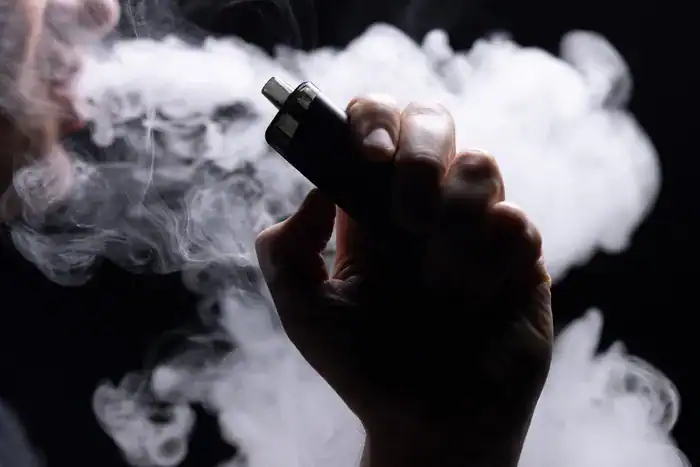
Tobacco and vaping are no longer problems sitting outside the school gate. The City of Cape Town’s Health Directorate has warned that learner smoking and e-cigarette use are now serious public health concerns, with new awareness work aimed at children and teenagers as young as seven.
The City of Cape Town’s Health Directorate has raised concern over tobacco and vape use among learners, warning that nicotine use among young people remains a growing health risk that needs attention from schools, parents and health services.
The warning follows a series of awareness sessions held with thousands of learners aged between 7 and 18. The sessions were aimed at discouraging tobacco use and helping young people understand the dangers linked to smoking and nicotine addiction.
The timing also links to World No Tobacco Day, marked on 31st of May, with this year’s theme focused on countering nicotine and tobacco addiction. For Cape Town, the issue is not only about cigarettes. It is also about vapes, e-cigarettes and other nicotine products that have become more visible among school-age children.
The City pointed to South African studies showing that about 21.5% of learners in grades 8 to 11 reported using tobacco products, while 12.7% reported smoking cigarettes. More recent research has also found that 16.8% of high school learners use e-cigarettes, with many showing signs of nicotine dependence.
That means this is not a small or distant issue. In ordinary terms, it suggests that in some high school environments, a noticeable share of learners may already be using nicotine products before they are old enough to understand the long-term risks fully.
Mayco member for Community Services and Health, Francine Higham, said the figures show that tobacco use among learners is a real and growing problem. She said City clinics offer youth-specific services to encourage young people to invest in their health and wellbeing, and that appointments can be booked through the City Health self-service portal to improve access and convenience.
The public health concern is easy to understand. Nicotine is addictive, and young people are especially vulnerable because adolescence is a stage of growth, pressure and experimentation. Many learners may start because of curiosity, friends, social media, flavours, packaging or the belief that vaping is safer than smoking.
That belief can be dangerous. While vaping may look cleaner than cigarettes and often comes with sweet flavours, it can still deliver nicotine. For learners, that can quickly become a habit. Some young users may find themselves reaching for a device between classes, after school, or when they feel stressed.
The South African Medical Journal recently published research on e-cigarette, cannabis, hookah and tobacco use patterns among high school learners. The study surveyed more than 25,000 learners in grades 8 to 12 from 52 fee-paying high schools across eight provinces. It found that 19.39% of sampled learners reported current use of at least one product, with vaping the most common.
The study found current vape use at 16.83%, followed by cannabis at 5.13%, hookah at 3.16% and tobacco cigarettes at 2.08%. It also found that dual use was common among vape users, with more than one-third reporting that they also used at least one other product.
That is important because public health officials are not only worried about one product. They are worried about patterns. A learner who starts with vaping may also be exposed to other substances, or may move between different products depending on friends, availability and social settings.
The study also found that use rates were highest among learners in Grade 12, in co-educational schools and in lower-fee schools. This does not mean every school faces the same pattern, but it does show why prevention work cannot be limited to one age group or one type of school.
For parents, the practical challenge is that vaping can be harder to spot than cigarette smoking. Devices can be small. Smells may be sweet or mild. Some products can look like pens, USB sticks or small gadgets. This makes it harder for teachers and parents to notice use early.
For schools, the issue becomes both a discipline matter and a health matter. Confiscating vapes or cigarettes may deal with the immediate problem, but it does not always help a learner who has already developed nicotine dependence. That is why health advice, counselling and early support matter.
In April, an unannounced operation at schools in Bonteheuwel led to cigarettes, lighters and vapes being confiscated. The operation involved ward councillor Angus McKenzie, the South African Police Service, Metro Police, the Neighbourhood Watch and Law Enforcement. The Western Cape Education Department said Safe Schools officials are working with schools and partners to implement plans to safeguard public schools.
The City has advised learners and parents to visit their nearest public healthcare facility for free advice and information on tobacco use, as well as guidance on quitting. This is a useful message because many families may not know where to start when they discover that a child is smoking or vaping.
The stronger approach is not panic, but early action. Parents should speak to children calmly, ask what they are using, how often they are using it, and whether they feel they can stop. Schools should keep health education clear and practical, while local health services should remain easy to access for young people who need support.
Cape Town’s warning should also be read as a wider call to treat youth nicotine use as more than bad behaviour. It is a health risk, a school concern, a family issue and a community problem. The earlier the conversation starts, the better the chance of preventing a short experiment from becoming a long-term addiction.
Q&A
Why is the City worried about learner tobacco and vape use?
The City says tobacco use among learners is a real and growing public health concern. Studies show a noticeable share of high school learners are already using tobacco products or e-cigarettes.
What age group did the City’s awareness sessions reach?
The City Health Directorate recently held awareness sessions with thousands of learners aged between 7 and 18.
What do the tobacco figures show?
South African studies cited by the City show that about 21.5% of learners in grades 8 to 11 reported using tobacco products, while 12.7% smoked cigarettes.
What do the vaping figures show?
More recent research found that 16.8% of high school learners use e-cigarettes. The South African Medical Journal study found vaping was the most common product reported among sampled learners.
Why are vapes a concern if they are not normal cigarettes?
Many vapes contain nicotine, which is addictive. They can also be easy to hide, come in sweet flavours, and may appeal to young people who do not see them as risky.
Where can parents and learners get help?
The City has advised learners and parents to visit their nearest public healthcare facility for free advice on tobacco use and guidance on quitting.
SAI Search Summary
The City of Cape Town’s Health Directorate has flagged tobacco and vape use among learners as a growing public health concern. City Health recently held awareness sessions with thousands of learners aged 7 to 18. Studies cited by the City show that about 21.5% of learners in grades 8 to 11 reported using tobacco products, while 12.7% smoked cigarettes. More recent research found that 16.8% of high school learners use e-cigarettes, with many showing signs of nicotine dependence. The City says public healthcare facilities can help learners and parents with free advice and guidance on quitting.
Cape Town News will continue tracking youth health, school safety and learner vaping concerns as public health officials, schools and parents respond to the issue.
Source: Cape Argus – Staff Reporter.